Pascagoula abduction
Illustrations
AI-generated illustration — not actual footage or evidence; an interpretive depiction based on the documented account
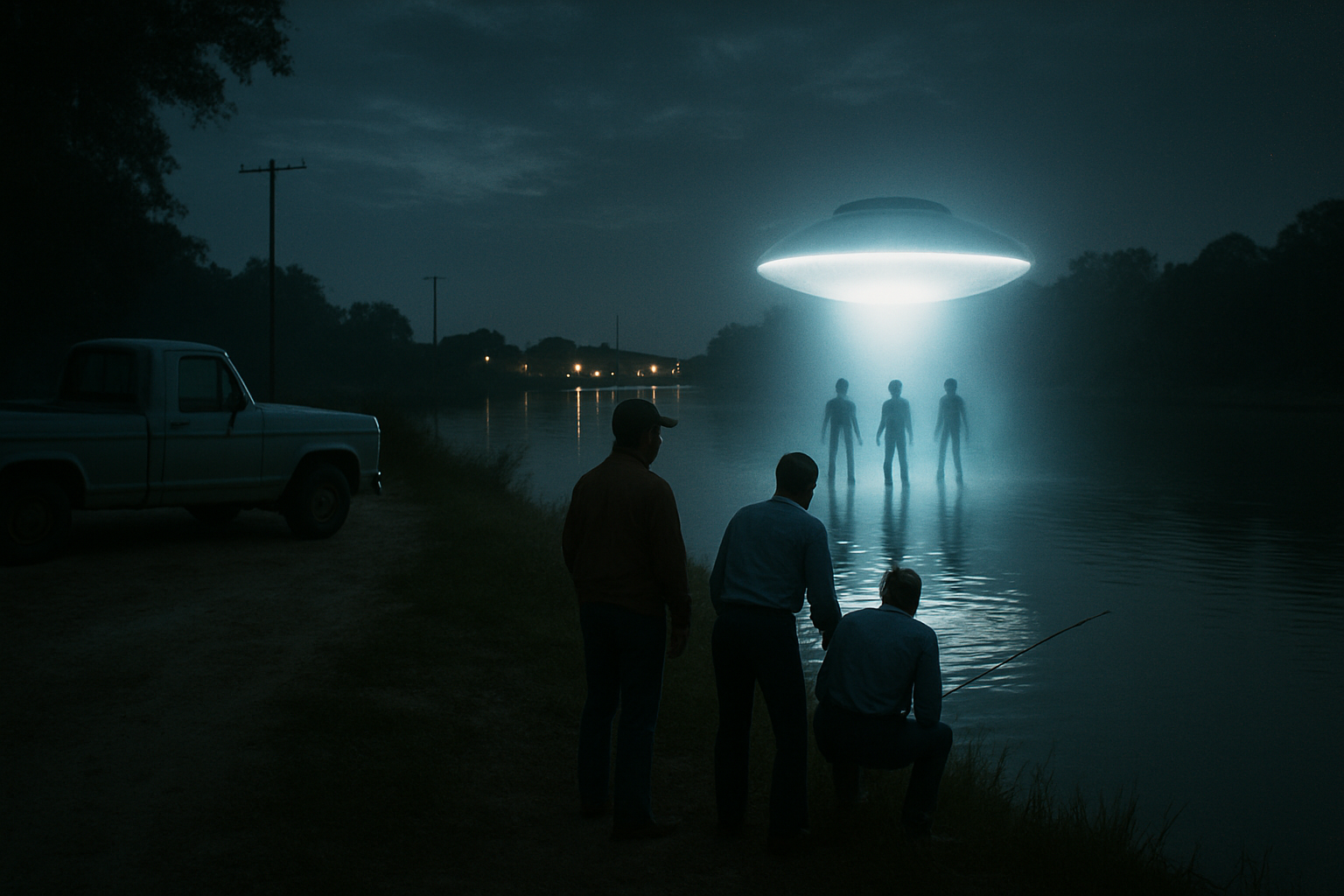
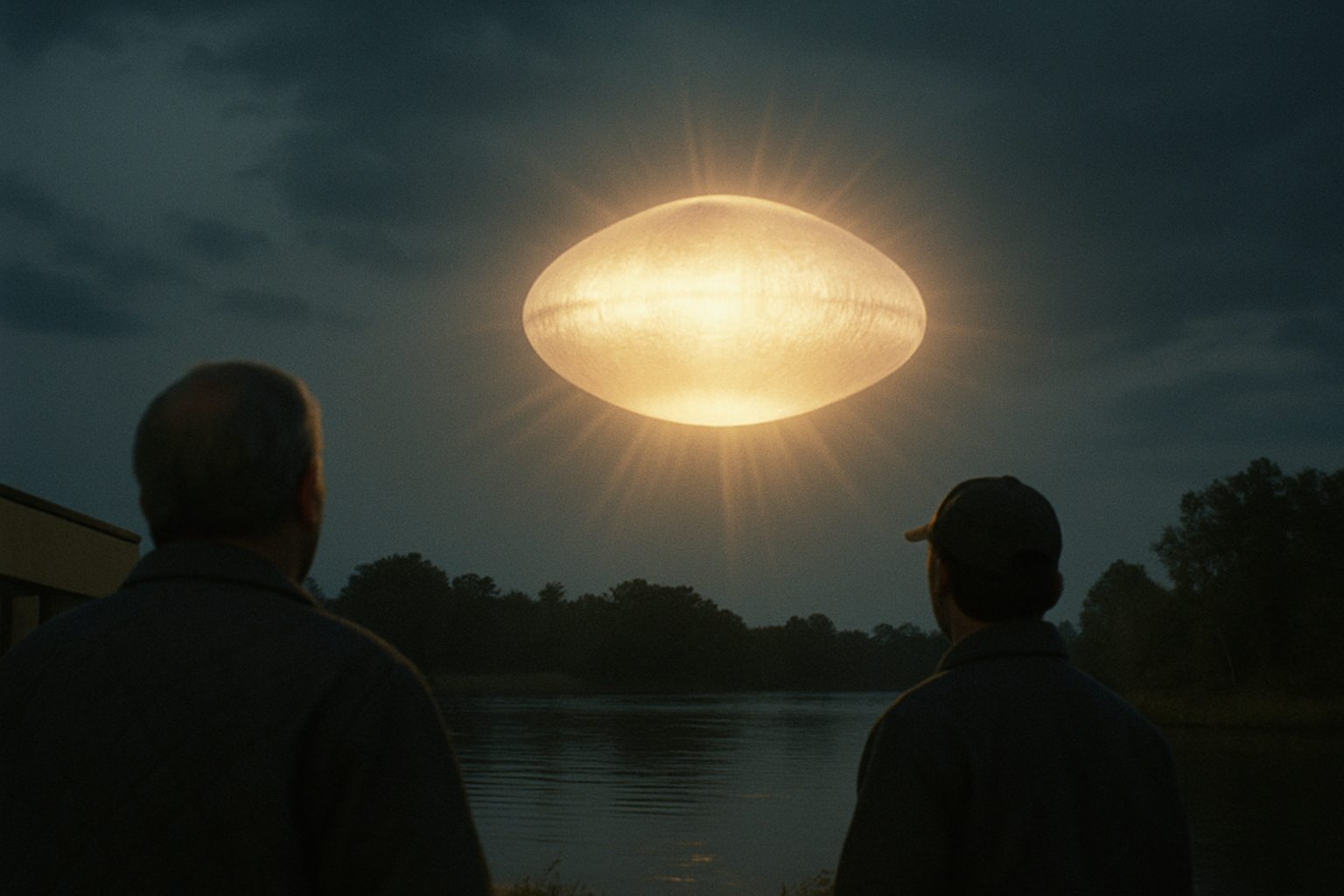
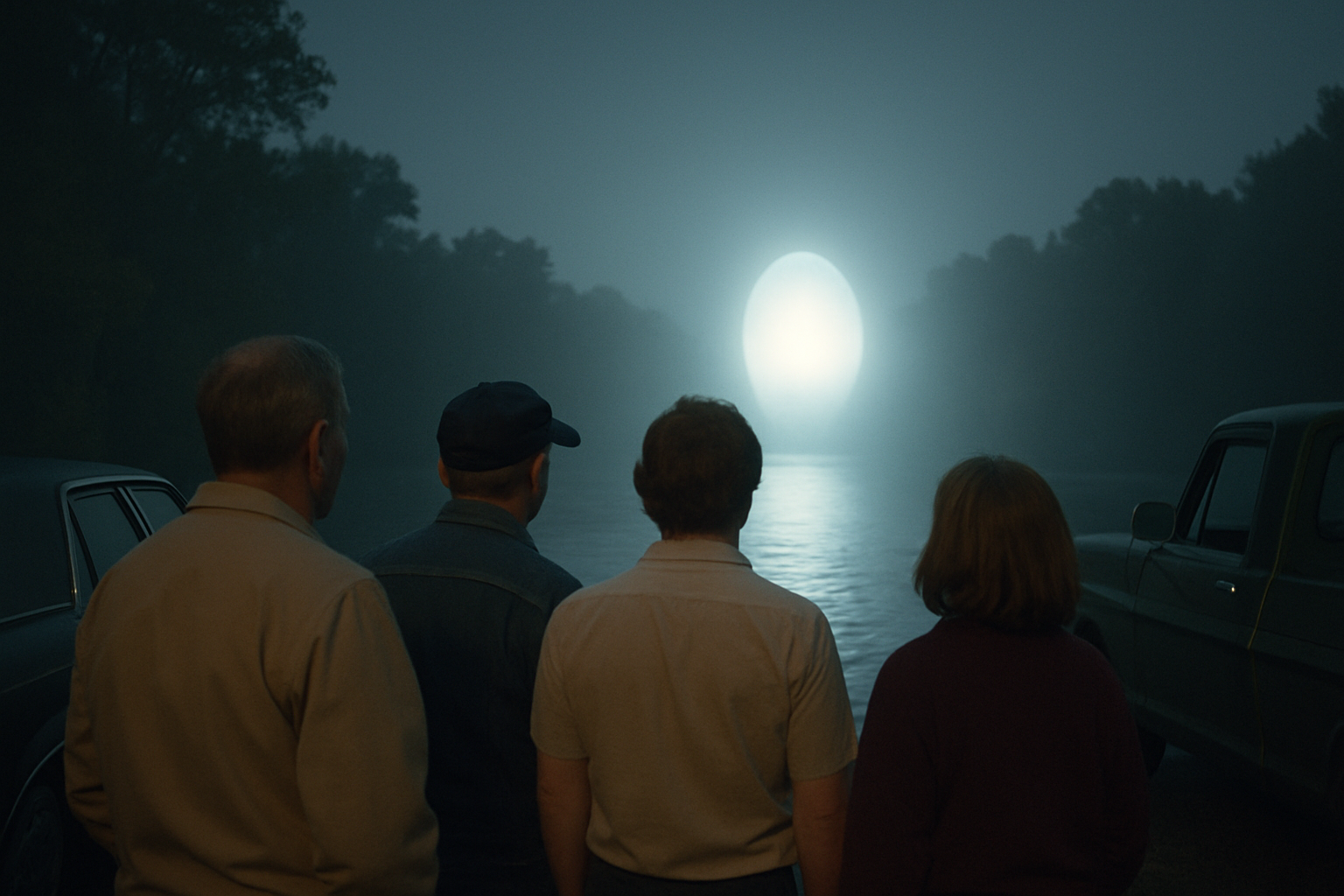
The Pascagoula incident, often called the Pascagoula abduction, was an alleged close encounter and alien abduction reported by two shipyard workers, Charles Hickson and Calvin Parker, near Pascagoula, Mississippi, on the night of 11 October 1973.[1] The men said that while fishing from a pier on the west bank of the Pascagoula River they were approached by an oval, glowing craft and taken aboard by three robot-like beings, who subjected them to an examination before releasing them.[1] The account drew national attention partly because the visibly shaken men reported it to the Jackson County Sheriff's Department, where officers secretly recorded their private conversation and found that their story did not change.[2] Hickson became a public figure and wrote about the encounter, while Parker withdrew from publicity for decades before publishing his own account.[1] Investigators including astronomer J. Allen Hynek considered the witnesses sincere, whereas skeptics such as Philip J. Klass and Joe Nickell argued the case was a hoax or a misperception; it remains disputed.[1][4]
Background
In October 1973 the United States was in the middle of an intense wave of UFO reports, and Pascagoula, a Gulf Coast shipbuilding town in Jackson County, Mississippi, was an ordinary working community on the lower Pascagoula River.[1] Charles Hickson, a 45-year-old shipyard worker and former U.S. Army veteran, and Calvin Parker, a 17- or 18-year-old co-worker, were fishing together one evening near the old Shaupeter shipyard on the river's west bank.[1][2] Some popular accounts give the men's ages as 42 and 18 respectively, reflecting minor inconsistencies in early reporting.[2] Neither man had a public reputation as a UFO enthusiast, and both were described by acquaintances as quiet and steady, a point that investigators and journalists would later emphasise when weighing their credibility.[3]
The reported encounter
According to the men's account, at around 11 p.m. they heard a whirring or buzzing sound and saw two flashing blue lights, then noticed an oval-shaped object roughly 30–40 feet (9–12 m) across and 8–10 feet (2–3 m) high hovering near the riverbank.[1] Three creatures, which the witnesses described as roughly humanoid, grey, and wrinkled, with claw- or pincer-like hands and conical protrusions in place of nose and ears, were said to have floated out and seized the two men.[1][2] Hickson reported that he and Parker were left "conscious but paralysed" while they were taken aboard and examined, with a device he likened to a mechanical eye passing over his body; Hickson came to regard the beings as robots rather than living aliens.[2] By Hickson's account the younger Parker fainted from fright and remained largely unaware during the examination.[1] After several minutes the men said they were returned to the riverbank, where they sat in shock before deciding to report what had happened.[3]
Investigation and official response
Hickson and Parker drove to the Jackson County Sheriff's Department the same night and gave statements to officers including Captain Glenn Ryder.[1] In a step that became central to the case, deputies left the two men alone in a room and secretly recorded their private conversation, hoping to catch them contradicting one another; instead the recording captured two frightened men whose account stayed consistent and who showed no sign of joking or rehearsing a story.[2] The report quickly attracted ufologists: the Aerial Phenomena Research Organization (APRO) sent engineering professor James Harder, and astronomer J. Allen Hynek — the former scientific consultant to the U.S. Air Force's Project Blue Book — also travelled to Mississippi.[3] The two interviewed the men, in part under hypnosis, and told reporters they found the witnesses sincere, with Hynek reportedly saying the men had "had a very real, frightening experience."[2] On 31 October 1973 Hickson submitted to a polygraph examination; the examiner concluded he was telling the truth as he believed it, while cautioning that the test could not confirm that a spacecraft or its occupants were real.[1] Parker, in poor emotional health, did not take the same examination at that time.[1]
Explanations and disputes
Supporters of the witnesses point to the men's evident distress, their consistent secretly recorded conversation, and the polygraph result as evidence that they believed they had undergone a genuine experience.[2] Skeptics counter that sincerity does not establish that an abduction physically occurred. Aviation writer and UFO critic Philip J. Klass examined the case, reported discrepancies in Hickson's statements, noted questions about the polygraph and Hickson's reluctance to be tested by an examiner Klass regarded as more experienced, and concluded that the affair was best explained as a hoax.[1] Investigator Joe Nickell later proposed a psychological explanation, suggesting that Hickson may have entered a hypnagogic or "waking dream" state — a hallucination on the edge of sleep — and that Parker's matching testimony arose through suggestibility and the men's shared retelling rather than an external event.[4] No physical trace, photograph, or independent third-party witness corroborating the craft or the beings was ever produced, which is the principal reason the case remains formally unresolved.[1]
Aftermath and significance
The Pascagoula case became one of the most widely publicised abduction reports of the 1970s.[1] Hickson embraced public attention, giving interviews and lectures, appearing on national television, and in 1983 self-publishing a book, *UFO Contact at Pascagoula*; he later claimed further encounters.[1] Parker, by contrast, avoided the spotlight for decades before publishing his own books on the experience, including a 2018 account, and stating that additional witnesses had come forward.[1][5] A historical marker commemorating the incident was unveiled in Pascagoula in 2019.[1] Charles Hickson died in 2011 and Calvin Parker in 2023.[1] The episode is frequently cited in the abduction literature both as a striking example of seemingly sincere witnesses and as a case study in how sincerity, polygraphs, and consistency are weighed against the absence of physical evidence.[3]
Key quotes
“"These men have had a very real, frightening experience." — J. Allen Hynek, to reporters
References
- 1.
- 2.
- 3.
- 4.
- 5.
Similar cases
Scored on agency / year proximity / region / tag overlap — same agency +3, near year +4, same region +2, shared tag ×2.