Pentagon UFO videos (Gimbal / GoFast)
Illustrations
AI-generated illustration — not actual footage or evidence; an interpretive depiction based on the documented account
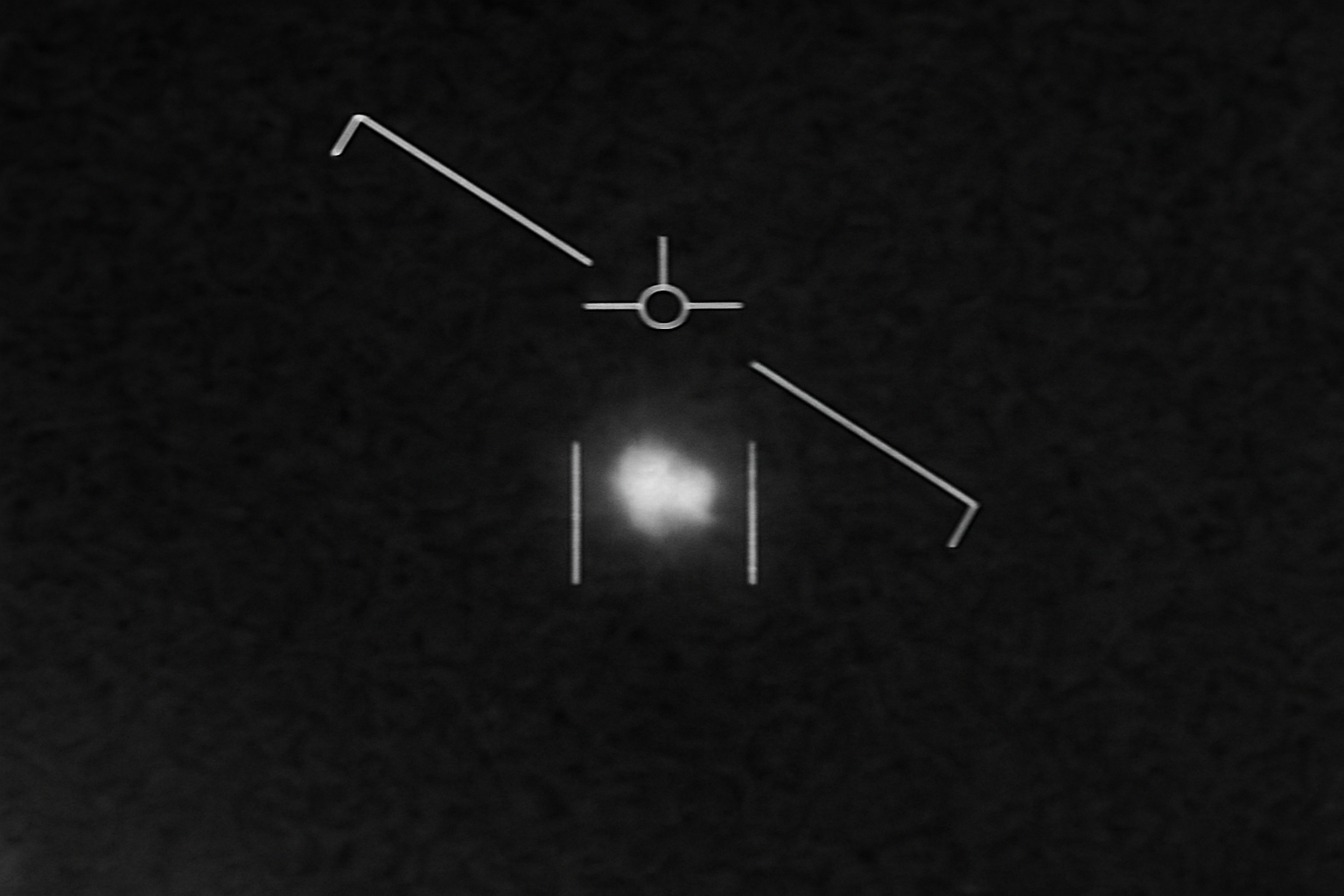
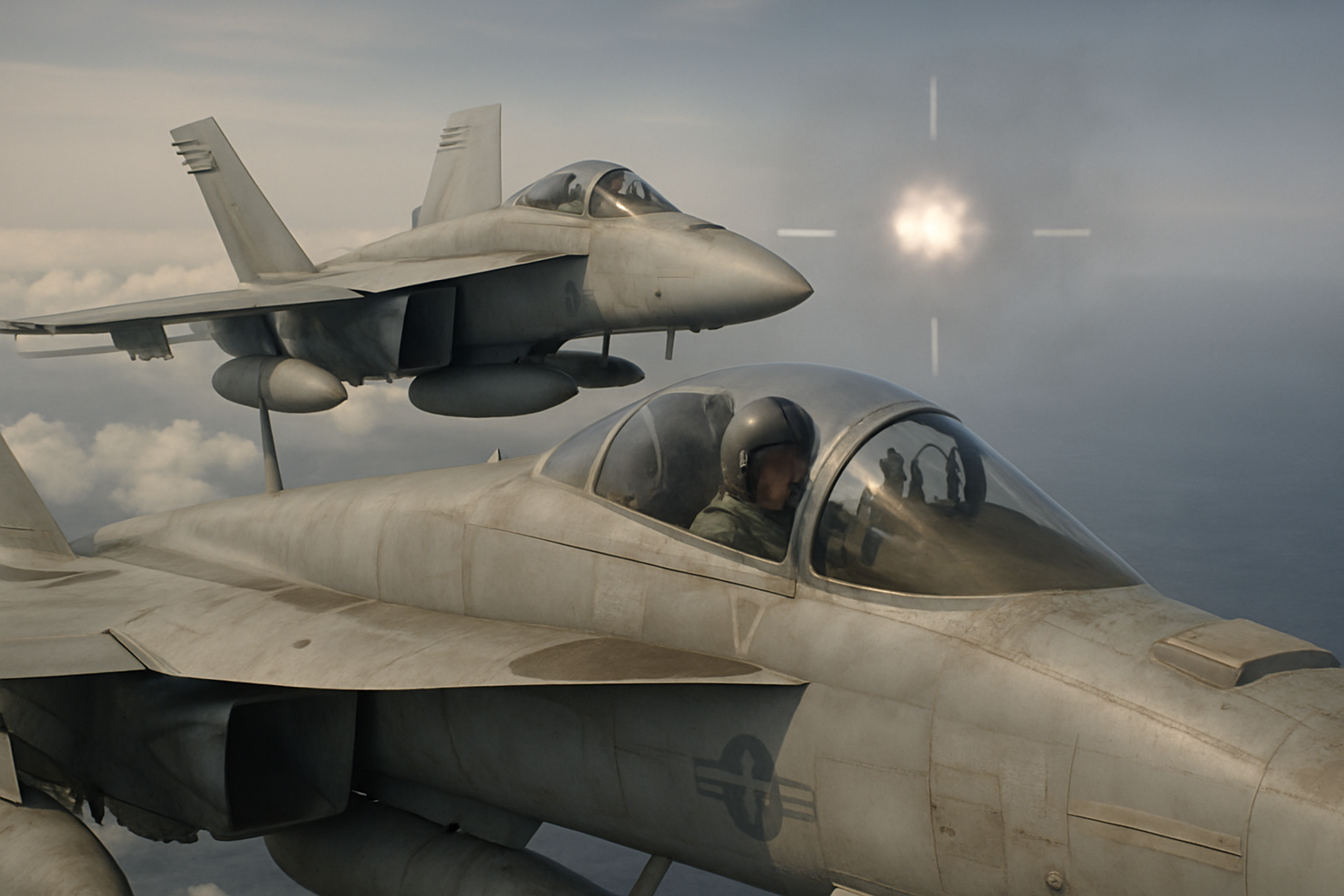
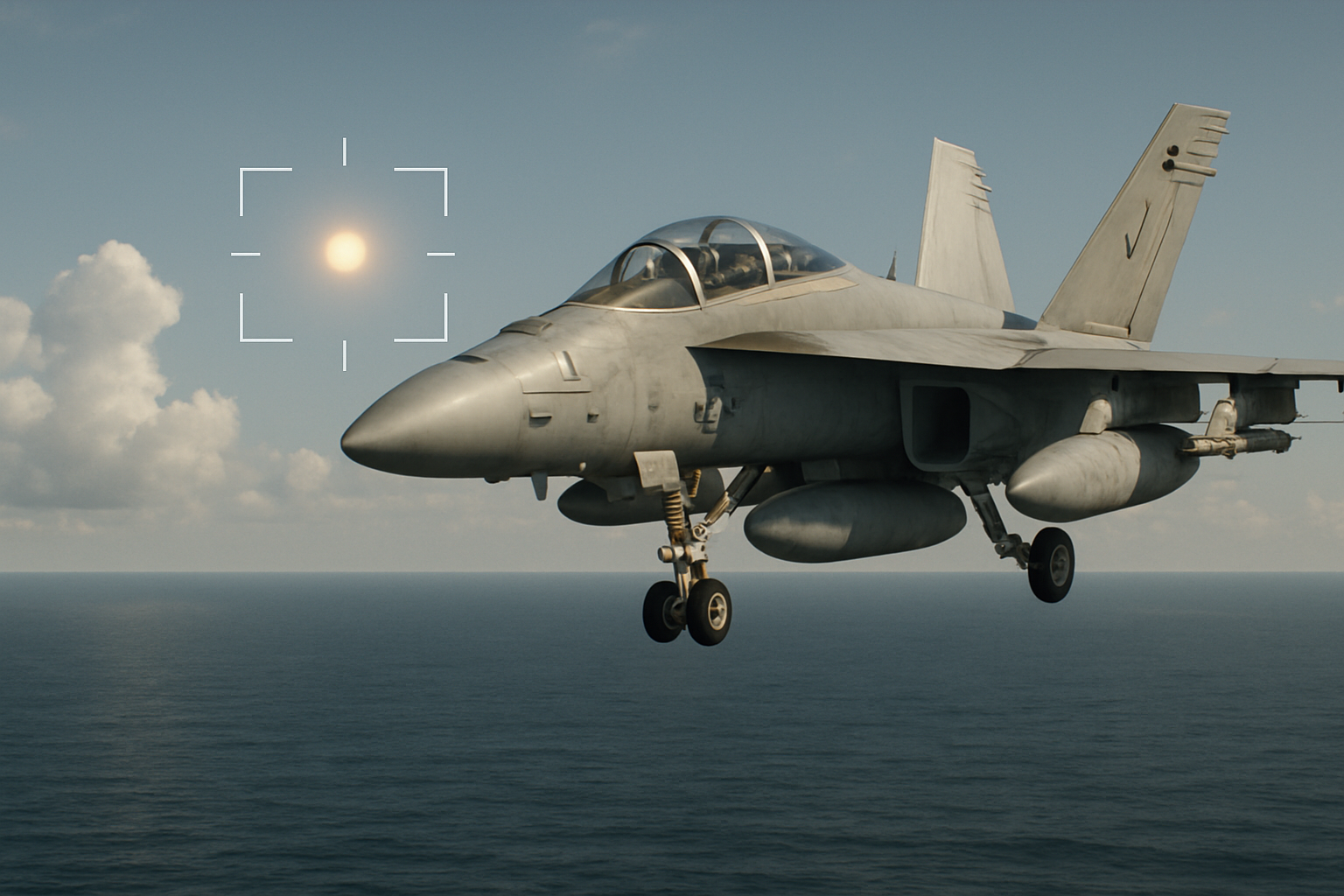
The Pentagon UFO videos are three short infrared clips recorded by U.S. Navy aviators and later released to the public, of which two — nicknamed "Gimbal" and "GoFast" — were captured off the U.S. East Coast in 2015 during operations associated with the USS *Theodore Roosevelt* Carrier Strike Group.[1] A third clip, "FLIR1" (the "Tic Tac" video), dates from a separate 2004 encounter near the USS *Nimitz* off Southern California.[1] The FLIR1 and Gimbal videos were first published by *The New York Times* on 16 December 2017, in reporting that also revealed the existence of a Pentagon program studying such sightings; the GoFast video was released several months later, in March 2018, by To The Stars Academy.[1][2][7] On 27 April 2020 the U.S. Department of Defense formally released all three videos, saying it did so "to clear up any misconceptions by the public on whether or not the footage that has been circulating was real," and described the objects as "unidentified aerial phenomena" (UAP) that remained "unidentified."[3] In 2024–2025 the All-domain Anomaly Resolution Office (AARO) concluded that the GoFast object's apparent speed was an artifact of parallax; AARO has not published a resolution of the Gimbal video, which remains officially unresolved, while skeptics such as Mick West argue the Gimbal object is consistent with rotating infrared glare — interpretations that proponents of an anomalous reading continue to dispute.[6][5][1]
Background
Origin of the footage
The clips were generated by the ATFLIR (Advanced Targeting Forward-Looking Infrared) sensor pods carried by U.S. Navy F/A-18 Super Hornet fighters, which display a magnified infrared image overlaid with targeting and navigation data.[1] The Gimbal and GoFast videos were recorded in 2015 by aircrew operating off the U.S. East Coast in airspace used by the USS *Theodore Roosevelt* Carrier Strike Group.[1] The earliest of the three Pentagon videos, FLIR1, came from a distinct November 2004 encounter off Southern California involving the USS *Nimitz* and was nicknamed the "Tic Tac" video for the shape of the object.[1]
Path to public release
The videos entered public discussion through figures associated with To The Stars Academy, a private venture co-founded by former government and intelligence personnel. Former Pentagon official Christopher Mellon helped provide footage to journalists, and Luis Elizondo, who said he had run a Pentagon effort called the Advanced Aerospace Threat Identification Program (AATIP), resigned in October 2017 citing what he viewed as insufficient official attention to the issue.[1][2] *The New York Times* reported on the program and published the FLIR1 and Gimbal clips on 16 December 2017; the GoFast clip was released separately by To The Stars Academy in March 2018.[2][7]
The videos
Gimbal
The Gimbal video shows an infrared object that appears to slow, stop, and rotate against a background of cloud, accompanied by audio of excited aircrew. The name derives from the gimballed motion the object appears to undergo on screen.[1] Skeptical analysts, including investigator Mick West, argued that the on-screen rotation corresponds to the rotation of glare produced inside the ATFLIR optical system as the pod's gimbal tracks a distant heat source, rather than to physical rotation of the object itself.[1]
GoFast
The GoFast video depicts a small object passing low over the ocean and is named for the aircrew's reaction to its apparent high speed.[1] The footage includes targeting-pod range and angle readouts that can, in principle, be used to estimate the object's position. The object's identity was not established at the time of release.[1]
Distinction from the Nimitz video
Gimbal and GoFast are frequently grouped with the 2004 FLIR1/"Tic Tac" video, but the three were recorded years apart and by different crews; only Gimbal and GoFast are tied to the 2015 East Coast operations.[1]
Investigation and official response
Confirmation of authenticity
In September 2019 a Navy spokesperson confirmed that the videos were genuine and that the objects in them were "unidentified."[1] On 27 April 2020 the Department of Defense formally released the three videos, stating that it did so "to clear up any misconceptions by the public on whether or not the footage that has been circulating was real," and that the aerial phenomena observed remained "unidentified."[3]
Intelligence assessment
In June 2021 the Office of the Director of National Intelligence issued a preliminary assessment on UAP, which examined a set of reports including military encounters. It concluded that the available data was insufficient to determine the nature of most incidents and proposed that such sightings probably did not have a single explanation, listing categories such as airborne clutter, atmospheric phenomena, sensor artifacts, and foreign or U.S. technology.[1][4]
AARO analyses
The All-domain Anomaly Resolution Office (AARO) was established to investigate UAP across the U.S. government. In testimony to the Senate Armed Services Subcommittee on Emerging Threats and Capabilities in November 2024, AARO director Dr. Jon Kosloski said that geospatial and trigonometric analysis assessed "with high confidence" that the GoFast object was "not actually close to the water, but is rather closer to 13,000 feet," so that its apparent velocity was largely an effect of parallax.[5] AARO subsequently published a case-resolution report on the GoFast video, dated 6 February 2025, finding no anomalous flight characteristics, though it did not conclusively identify the object.[6] AARO has not published an equivalent resolution of the Gimbal video, which remains officially categorized as unresolved; the rotating-glare explanation for Gimbal originates with skeptical analysts rather than with AARO.[1]
Explanations and disputes
Conventional explanations
Several analysts have argued that the apparent anomalies are artifacts of the imaging system and observer geometry rather than evidence of exotic craft:
- Glare and bokeh: Skeptical analysts, notably Mick West, have attributed the Gimbal object's shape and rotation to glare within the ATFLIR optics, with the triangular or oblong appearance linked to the camera's aperture and the rotation linked to the pod's tracking gimbal. This is a skeptical interpretation, not an official AARO finding; AARO has not published a resolution of Gimbal.[1]
- Parallax: AARO and independent analysts hold that the GoFast object only appears to race over the water because it is far more distant and higher than it looks, a classic parallax illusion when filmed from a fast-moving aircraft.[5][6]
- Ordinary aircraft and clutter: Skeptics including Mick West have suggested that some footage is consistent with distant aircraft, balloons, or other clutter distorted by infrared imaging.[1]
Anomalous interpretation
Proponents — including figures associated with the videos' release and some former military aviators — maintain that the objects displayed flight behavior and sensor signatures not readily explained by known aircraft, and note that even AARO's GoFast analysis stopped short of positively identifying the object.[1][6] Because the official GoFast assessment offers a conventional mechanism while leaving the precise identity formally undetermined, and because Gimbal remains officially unresolved, the cases continue to be genuinely disputed.[6][1]
Aftermath and significance
Policy and public impact
The release and official confirmation of the videos contributed to a marked shift in how the U.S. government publicly handles such reports, including adoption of the neutral term "unidentified aerial phenomena" (UAP), the creation of dedicated reporting and analysis offices, and a series of congressional hearings.[1][4] The footage became among the most widely circulated and discussed UAP material of its era.[1]
Status
The Pentagon's release of the videos affirmed they were genuine footage, while AARO's GoFast case-resolution report reframed that video's most striking apparent behavior — its seeming high speed — as a perspective effect. AARO has not issued a comparable resolution of Gimbal, which remains officially unresolved.[3][6][1] The objects' exact identity has not been formally certified, and the videos continue to be cited by both proponents and skeptics in the ongoing debate over UAP.[1]
Key quotes
“"The object is not actually close to the water, but is rather closer to 13,000 feet." — AARO director Dr. Jon Kosloski, congressional testimony, November 2024
“The Department of Defense said it released the videos "to clear up any misconceptions by the public on whether or not the footage … was real," with the phenomena remaining "unidentified."
References
- 1.
- 2.
- 3.
- 4.
- 5.
- 6.
Similar cases
Scored on agency / year proximity / region / tag overlap — same agency +3, near year +4, same region +2, shared tag ×2.