Kaikoura Lights (1978)
Illustrations
AI-generated illustration — not actual footage or evidence; an interpretive depiction based on the documented account
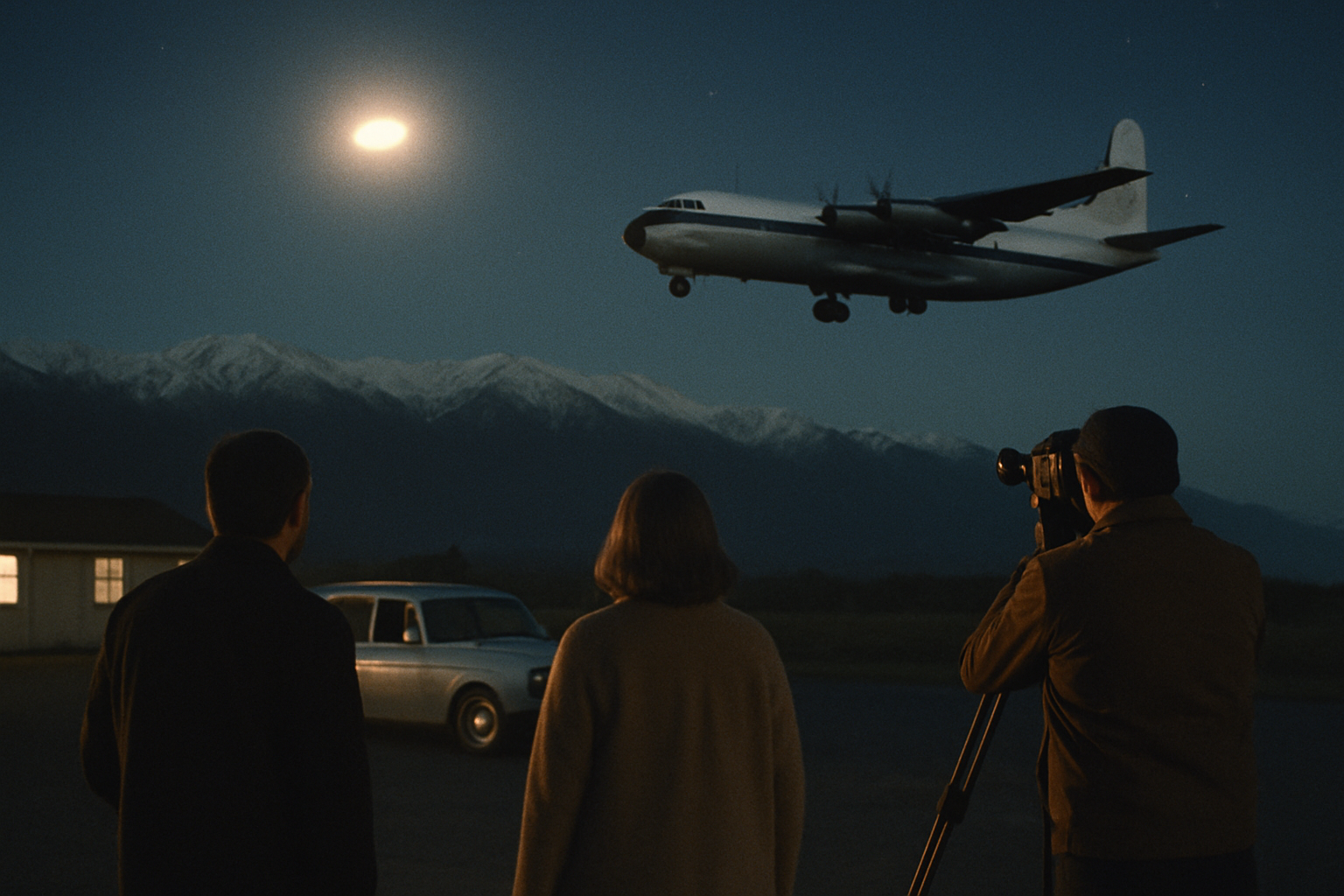
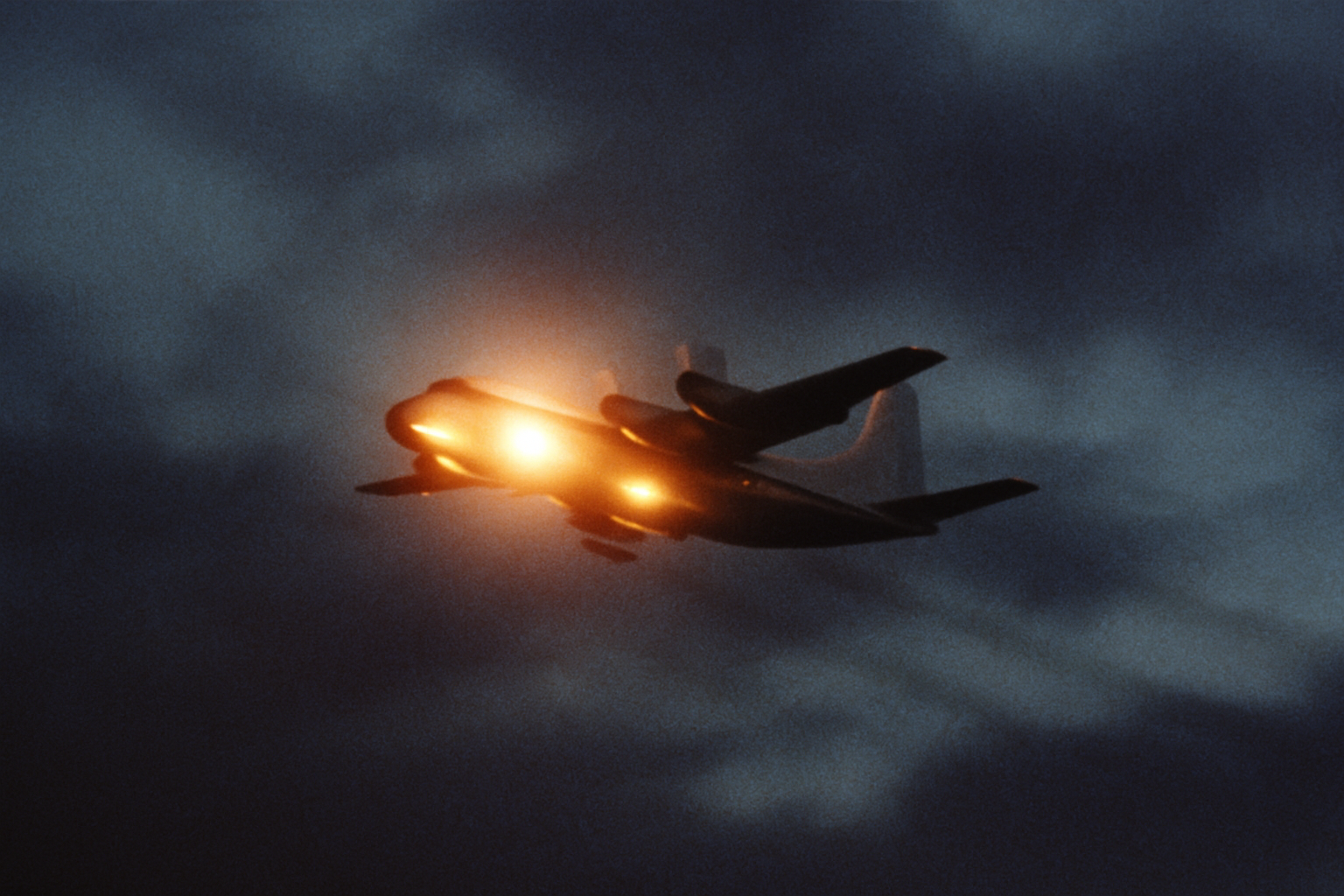
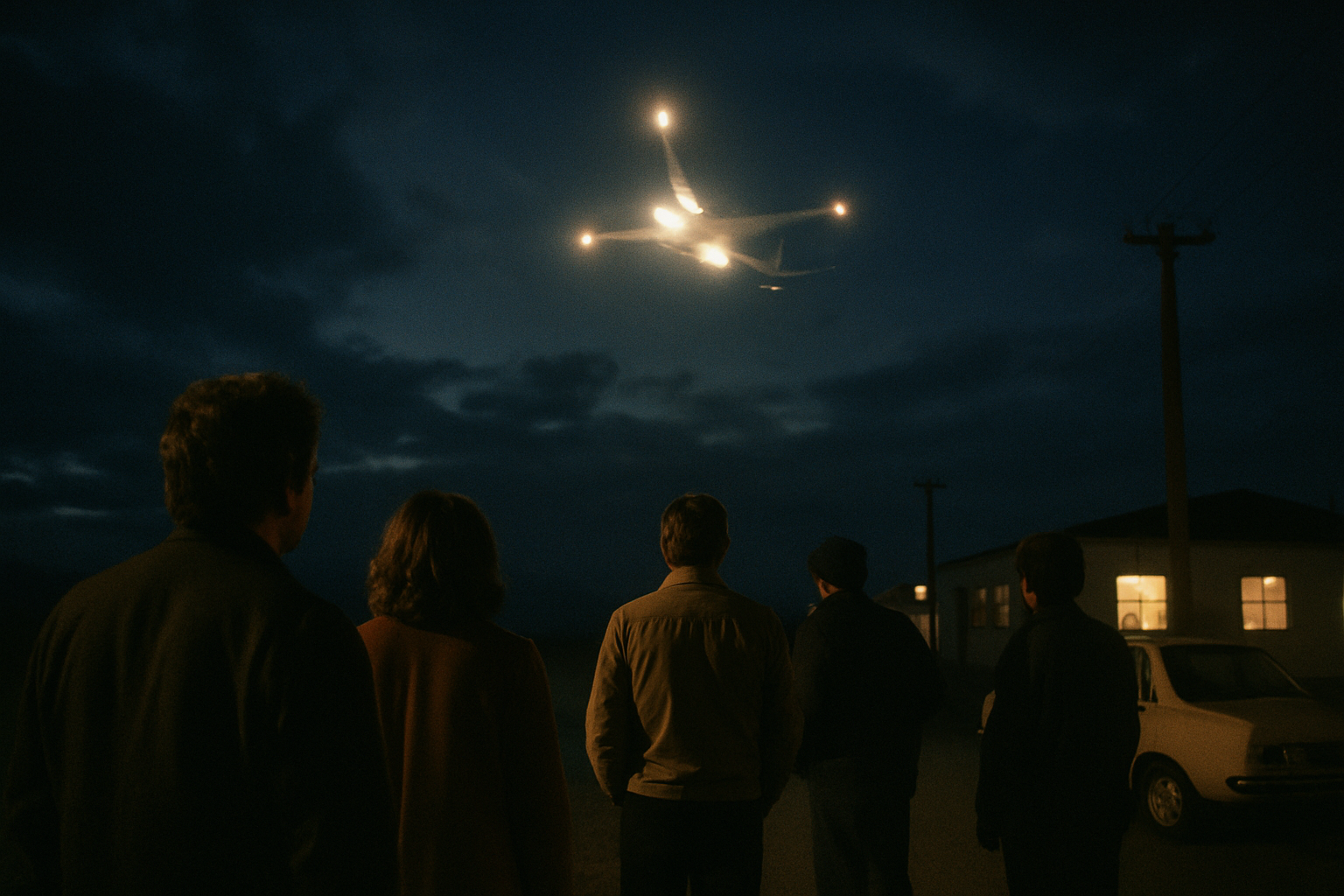
The Kaikoura lights were a series of sightings of unidentified flying objects (UFOs) reported in December 1978 over the Kaikōura ranges in the north-east of the South Island of New Zealand.[1] The episode involved crews of cargo aircraft operated by Safe Air Ltd, who twice described bright, moving lights around their Armstrong Whitworth AW.660 Argosy, with air-traffic-control radar at Wellington Airport registering returns in corresponding positions.[1] The flights of 30–31 December were accompanied by an Australian television crew who captured the lights on 16 mm colour film, making the case one of the most heavily documented in civilian ufology and the subject of sustained public attention, official inquiry and skeptical analysis.[5][4] While some witnesses and investigators regarded the lights as genuinely unexplained, scientific and military assessments attributed them to a combination of natural and mundane causes, and the case remains disputed.[2][1]
Background
Safe Air Ltd operated freight services across Cook Strait and along the eastern coast of the South Island using Armstrong Whitworth AW.660 Argosy turboprop cargo aircraft, including overnight newspaper runs between Wellington and Christchurch.[1] The route passes off the coast near Kaikōura, a region whose surrounding waters host a squid fishery in which boats use powerful lamps to attract their catch.[1][2]
The first reported sighting occurred on 21 December 1978, when pilots Vern Powell and Ian Pirie observed a series of strange lights around their Argosy while flying from Blenheim to Christchurch.[1] The objects were also said to have been tracked on radar by air-traffic control at Wellington Airport, and residents near Clarence and Kekerengu reported lights as well.[1][4] News of the December 21 sightings prompted a Melbourne television company, Channel 0, to arrange filming aboard a later Safe Air flight to record background material for a program about the reports.[1]
The 30–31 December flights
Late on 30 December 1978, a television crew boarded a Safe Air Argosy making the overnight newspaper run from Wellington to Christchurch.[1] Aboard were pilots Bill Startup and Bob Guard, Melbourne Channel 0 reporter Quentin Fogarty, cameraman David Crockett and his wife Ngaire Crockett, who operated a tape recorder.[1][4]
Outbound flight
- During the southbound leg between roughly midnight and 1:00 am on 31 December, the crew reported bright lights that appeared to track the aircraft, moving above, below and ahead of it.[1]
- Startup described seeing "a huge, bright white light with a red tinge to it," and Crockett filmed objects on 16 mm colour film while the recorder captured the crew's commentary.[1]
- Air-traffic control at Wellington reported radar returns in positions corresponding to some of the visual sightings.[1][4]
Return flight
On the return leg toward Blenheim, at about 2:16 am, the crew reported a large illuminated object that held a position off the aircraft and was filmed for an extended period—about fifteen minutes by several accounts.[1][4] The aircraft's own radar, used in a ground-mapping mode, was reported to show a target consistent with the light's position; Christchurch radar, by contrast, was reported to have shown nothing in the relevant area.[1] The footage and recordings made on these flights became the core evidence in the case.[5]
Investigation and documentation
The case attracted attention partly because of the unusual combination of evidence. A declassified U.S. Central Intelligence Agency document described the sightings as "unique among civilian UFO reports because there is a large amount of documentary evidence," listing the recollections of seven witnesses, two tape recordings made during the sightings, unusual ground and aircraft radar targets, and a 16 mm colour movie.[5]
U.S. optical physicist Bruce Maccabee analysed the film and recordings and argued they documented genuinely anomalous objects, characterising the case as among the most thoroughly "instrumented" in civilian ufology.[4] His calculations were said to imply a very bright object on the order of tens of metres across, which he argued made conventional plasma or ball-lightning explanations difficult.[1]
New Zealand's Department of Scientific and Industrial Research (DSIR) reviewed the material and reached different conclusions, and government defence files later released to the public set out the official position discussed below.[1][2]
Explanations and dispute
A range of conventional explanations has been advanced for the Kaikoura lights.
- Squid-boat lights. The DSIR concluded the lights were most likely from a fleet of stationary squid-fishing boats on the sea below the aircraft, whose powerful lamps could appear as bright points or be reflected off cloud.[1][2]
- Astronomical bodies. Astronomers suggested bright planets such as Venus, Jupiter or Mars, while noting that such objects would not produce radar returns.[1] British astronomer Patrick Moore proposed terrestrial origins such as a reflection, a balloon or an aircraft.[1]
- Other natural and mundane causes. Proposals included meteors or unburnt meteor fragments, ball lightning, and the lights of cars and trains; some accounts also mention city lights reflected off seabirds.[1][4]
- Radar anomalies and filming artefacts. Officials attributed some radar returns to anomalous propagation, and analysts noted that filming through an Argosy window could introduce visual distortions affecting the footage.[1][2]
Declassified New Zealand Defence Force files showed the Royal New Zealand Air Force (RNZAF) attributing the events to a combination of freak propagation of radio and light waves, an unusually bright Venus, anomalous returns on Wellington radar, and the lights of a squid-fishing fleet, cars and trains.[2] Wing Commander J. B. Clements wrote that "almost all the sightings can be explained by natural but unusual phenomena."[2] In 2000 a former DSIR scientist, William Ireland, published a retrospective analysis arguing the film showed squid vessels several kilometres away, with apparent motion produced by perspective, the zoom lens and the aircraft's own movement.[1] Proponents counter that no single explanation accounts for all of the visual, radar and film evidence together, and the case is generally treated as disputed rather than fully resolved.[5][4]
Aftermath and significance
The Kaikoura lights became one of the best-known UFO episodes in New Zealand and drew international coverage because of the film and radar evidence.[1][4] Reporter Quentin Fogarty and Captain Bill Startup each later wrote books about the incident, and David Crockett produced a documentary and gave lectures on the subject.[1]
Several participants remained guarded about the experience. Co-pilot Bob Guard said he did not believe in UFOs and expressed reluctance to report such incidents, remarking that "it's not worth the hassle," while Fogarty described the episode as "unfinished business" decades afterward.[1][3] On the 40th anniversary in 2018, surviving crew members publicly recalled the night, maintaining that they could not identify what they had seen while acknowledging the conventional explanations on record.[3] The original Argosy aircraft was later acquired by a private owner and featured in a 2008 documentary that focused on the witnesses' accounts rather than adjudicating the UFO question.[1]
Key quotes
“"Almost all the sightings can be explained by natural but unusual phenomena." — Wing Commander J. B. Clements
“A CIA document called the sightings "unique among civilian UFO reports because there is a large amount of documentary evidence."
References
- 1.
- 2.
- 3.
- 4.
- 5.
Similar cases
Scored on agency / year proximity / region / tag overlap — same agency +3, near year +4, same region +2, shared tag ×2.