Battle of Los Angeles: The 1942 Anti-Aircraft Barrage
Illustrations
AI-generated illustration — not actual footage or evidence; an interpretive depiction based on the documented account
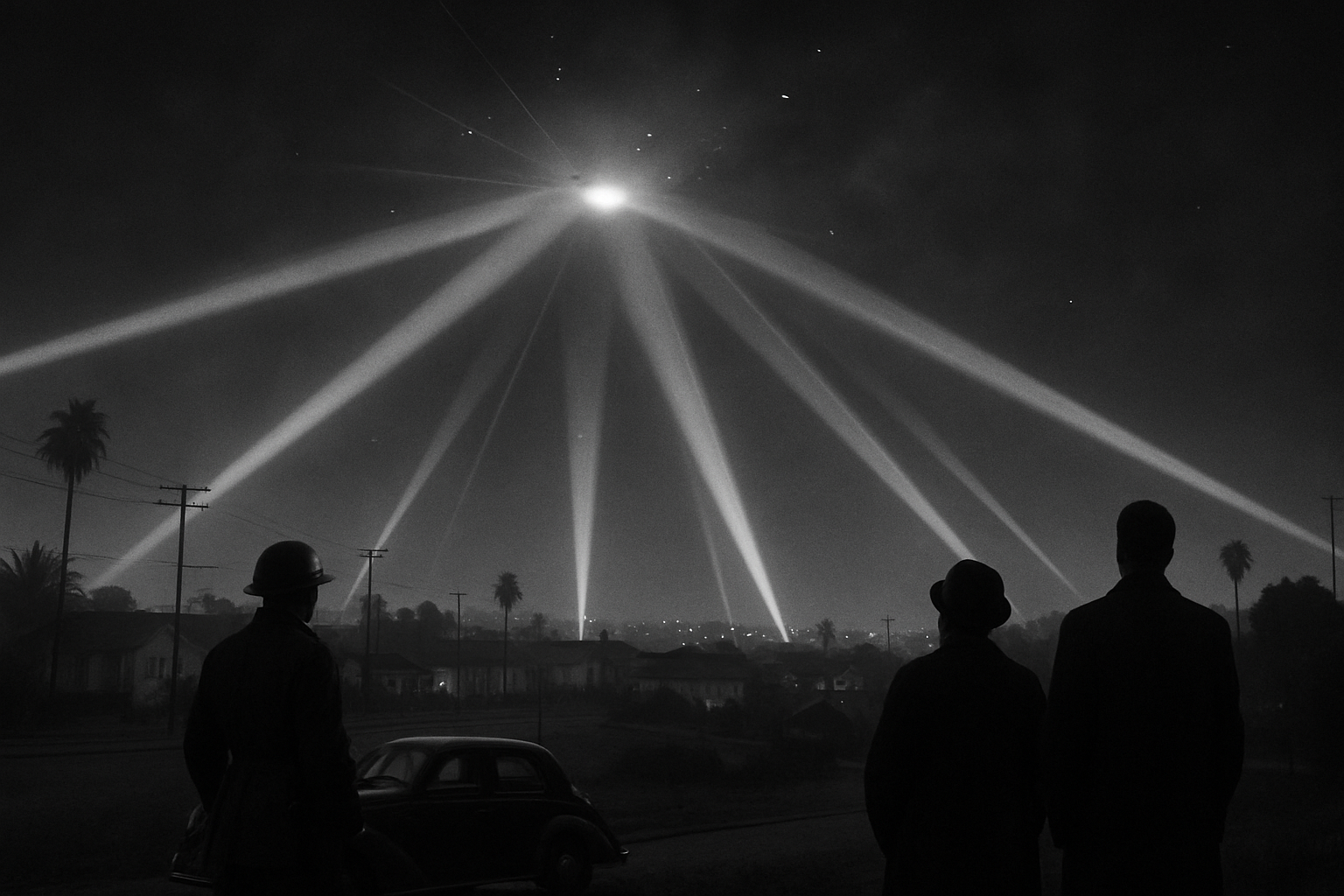
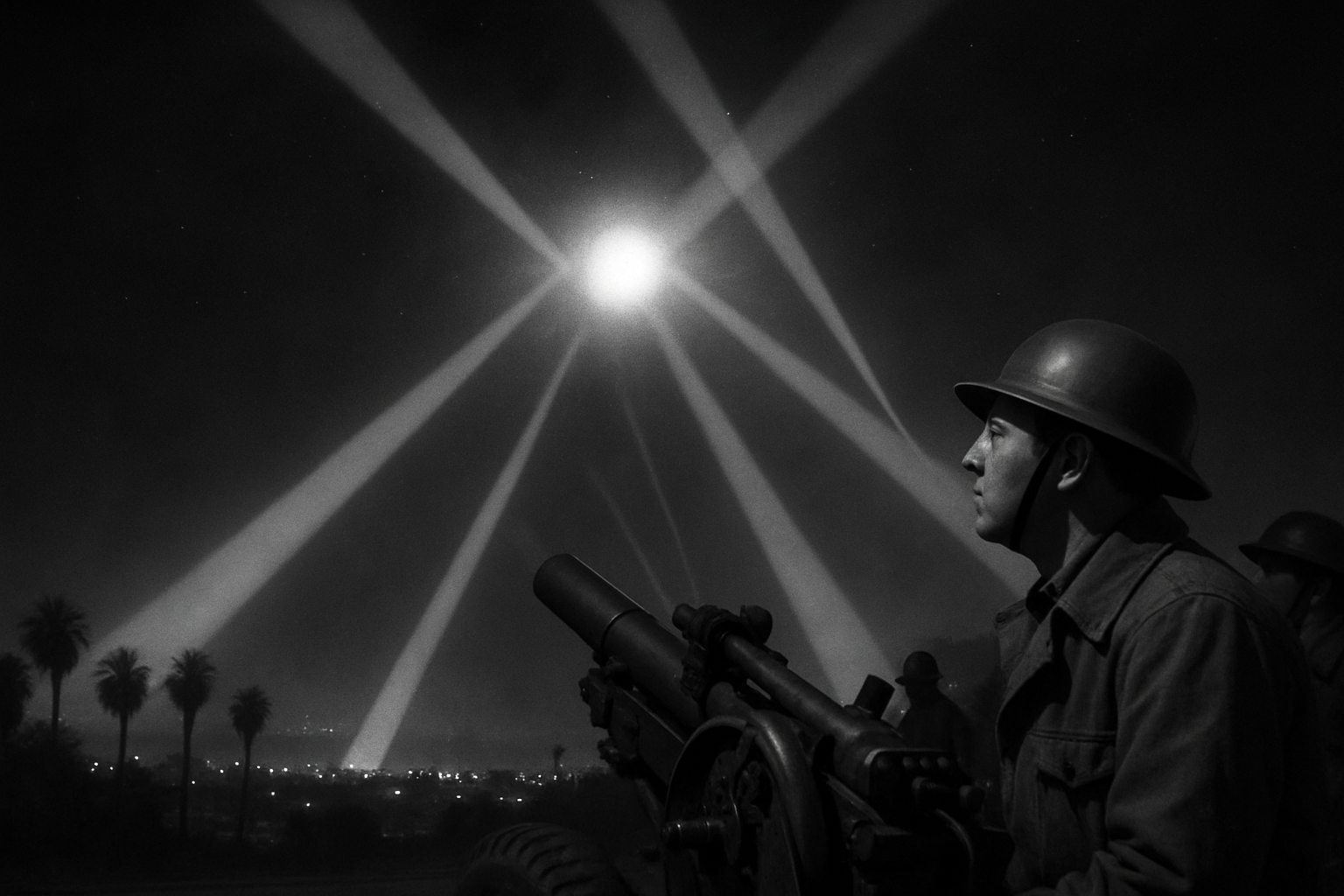
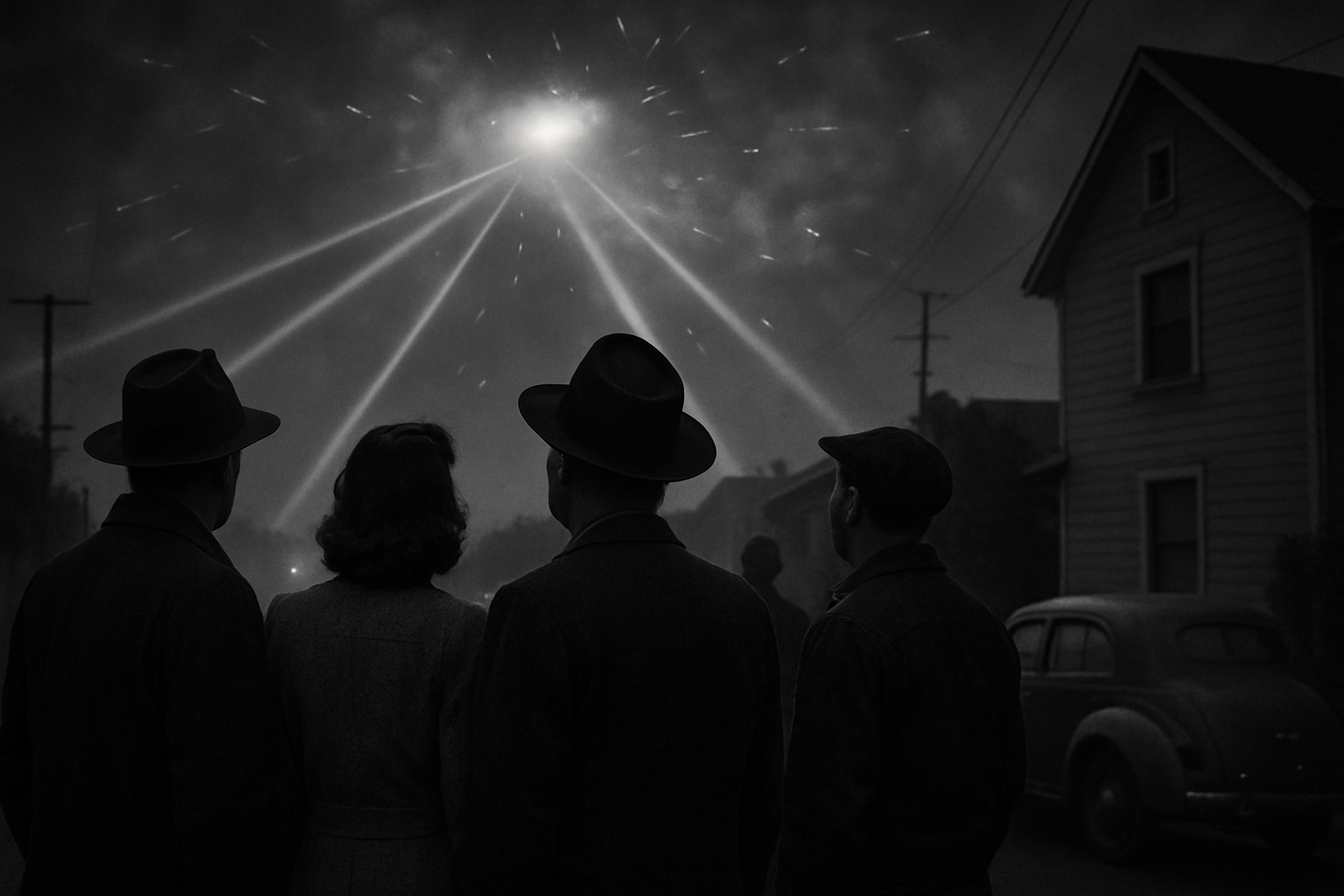
The Battle of Los Angeles, also called the Great Los Angeles Air Raid, was an anti-aircraft barrage fired over Los Angeles County, California, during the overnight hours of 24–25 February 1942, in response to a suspected attack by Imperial Japanese aircraft.[1] Coming less than three months after the attack on Pearl Harbor and one day after a Japanese submarine shelled the Ellwood oil field near Santa Barbara, the incident unfolded amid acute fears of an attack on the U.S. mainland.[2] After an air-raid alert and citywide blackout, the 37th Coast Artillery Brigade fired more than 1,400 rounds into the sky before an "all clear" was sounded.[3] No enemy aircraft were confirmed, and the Japanese later stated they had flown no planes over the area; at least five civilians died from blackout-related traffic accidents and heart attacks.[2] Government officials gave conflicting accounts in the days that followed, and a 1983 study by the U.S. Office of Air Force History attributed the episode to "war nerves" compounded by a meteorological balloon.[1] A widely reproduced *Los Angeles Times* photograph later became a touchstone for UFO interpretations of the event.[1]
Background
A jittery West Coast
In the weeks after the 7 December 1941 attack on Pearl Harbor, the U.S. West Coast was gripped by fear of further Japanese action against the mainland.[2] These anxieties were sharpened on the evening of 23 February 1942, when the Japanese submarine I-17 surfaced and shelled the Ellwood oil field near Santa Barbara — the first enemy shelling of the continental United States in the war.[2] The physical damage was minor, but the psychological impact was significant, reinforcing the belief that a larger strike might be imminent.[3]
On 24 February, naval intelligence warned that an attack could be expected within hours, and that evening residents reported seeing flares going off near defense plants.[3] Coastal radar, anti-aircraft batteries of the 37th Coast Artillery Brigade, and searchlight crews were on heightened alert.[3]
The night of 24–25 February
Alert and barrage
In the early hours of 25 February, radar reportedly tracked an unidentified target roughly 120 miles (190 km) west of Los Angeles, and a citywide blackout was ordered at around 2:21–2:25 a.m.[3] Searchlights swept the sky as gun crews scanned for aircraft.
At about 3:16 a.m. the 37th Coast Artillery Brigade opened fire, using 12.8-pound anti-aircraft shells and .50-caliber machine guns.[3] According to historian William Goss, a balloon carrying a red flare was seen over Santa Monica before the barrage began.[2] Over the next roughly one hour, more than 1,400 rounds were discharged into the night sky at targets that observers could not clearly identify.[3] Firing tapered off by about 4:14 a.m., and the "all clear" was sounded at 7:21 a.m.[1]
Casualties
No enemy aircraft were shot down, and no bombs were dropped.[1] At least five civilians died as an indirect result of the night's events: three in traffic accidents during the blackout and two from heart attacks attributed to the stress of the barrage.[2] Additional injuries were reported, especially among air-raid wardens rushing to their posts in the dark, and falling shell fragments damaged buildings and vehicles across the area.[3]
Conflicting official statements
Knox versus Stimson
Within a day, senior officials offered sharply different explanations.[1] Secretary of the Navy Frank Knox dismissed the episode as a "false alarm" driven by anxiety and "war nerves," stating that no planes had been over Los Angeles.[3]
Secretary of War Henry L. Stimson publicly contradicted him, suggesting that as many as 15 aircraft may have been involved and floating the possibility that they were commercial planes flown by enemy agents from secret airfields in Mexico, intended to spread panic or scout defenses.[3] Stimson later backpedaled on these claims.[4] After the war, Japanese officials stated that they had not sent any aircraft over the Los Angeles area at the time.[2]
Explanations and disputes
The 1983 Air Force review
In 1983 the U.S. Office of Air Force History reviewed the incident and concluded that it was most likely triggered by "war nerves" colliding with a meteorological balloon known to have been released over the area.[1] The study noted that, once firing began, "much of the confusion came from the fact that anti-aircraft shell bursts, caught by the searchlights, were themselves mistaken for enemy planes" — in effect, gunners firing at the smoke and flashes of their own shells.[1]
The Los Angeles Times photograph and UFO claims
A *Los Angeles Times* photograph published on 26 February 1942 appeared to show searchlight beams converging on a disc-shaped object in the sky.[3] The image was later embraced by UFO enthusiasts as evidence of an alien or otherwise anomalous craft over the city.[1] However, the photograph had been heavily retouched before publication — a routine practice of 1940s photo departments to improve contrast for newsprint — and the original negative showed only faint lights and unclear shapes rather than a solid craft.[3]
A neutral reading
Most historians regard the barrage as a false alarm produced by extreme tension, primitive radar, a stray balloon, and gun crews firing at their own shell bursts.[3] A minority of commentators continue to treat the event as unresolved, citing the conflicting official statements and the photograph; mainstream and government accounts hold that no attacking aircraft were present.[1]
Aftermath and legacy
Wartime impact
The incident underscored the fragility of West Coast air defenses and the destabilizing effect of "war nerves" early in the Pacific War.[2] It occurred against the backdrop of escalating wartime measures on the home front, including the forced relocation of Japanese Americans authorized by Executive Order 9066, signed days earlier on 19 February 1942.[5]
Cultural legacy
In the decades since, the "Battle of Los Angeles" has become a fixture of UFO literature and popular culture, frequently cited alongside the retouched *Los Angeles Times* photograph.[3] The episode lent its name to the 2011 science-fiction film *Battle: Los Angeles* and has featured in numerous documentaries and books, even as the documented record points to a false alarm rather than an enemy or extraterrestrial attack.[1]
Key quotes
“"A false alarm … there were no planes over Los Angeles last night." — Secretary of the Navy Frank Knox
“"As many as 15 planes may have been involved." — Secretary of War Henry L. Stimson
References
- 1.
- 2.
- 3.
- 4.
- 5.
Similar cases
Scored on agency / year proximity / region / tag overlap — same agency +3, near year +4, same region +2, shared tag ×2.