Cussac UFO encounter
Illustrations
AI-generated illustration — not actual footage or evidence; an interpretive depiction based on the documented account
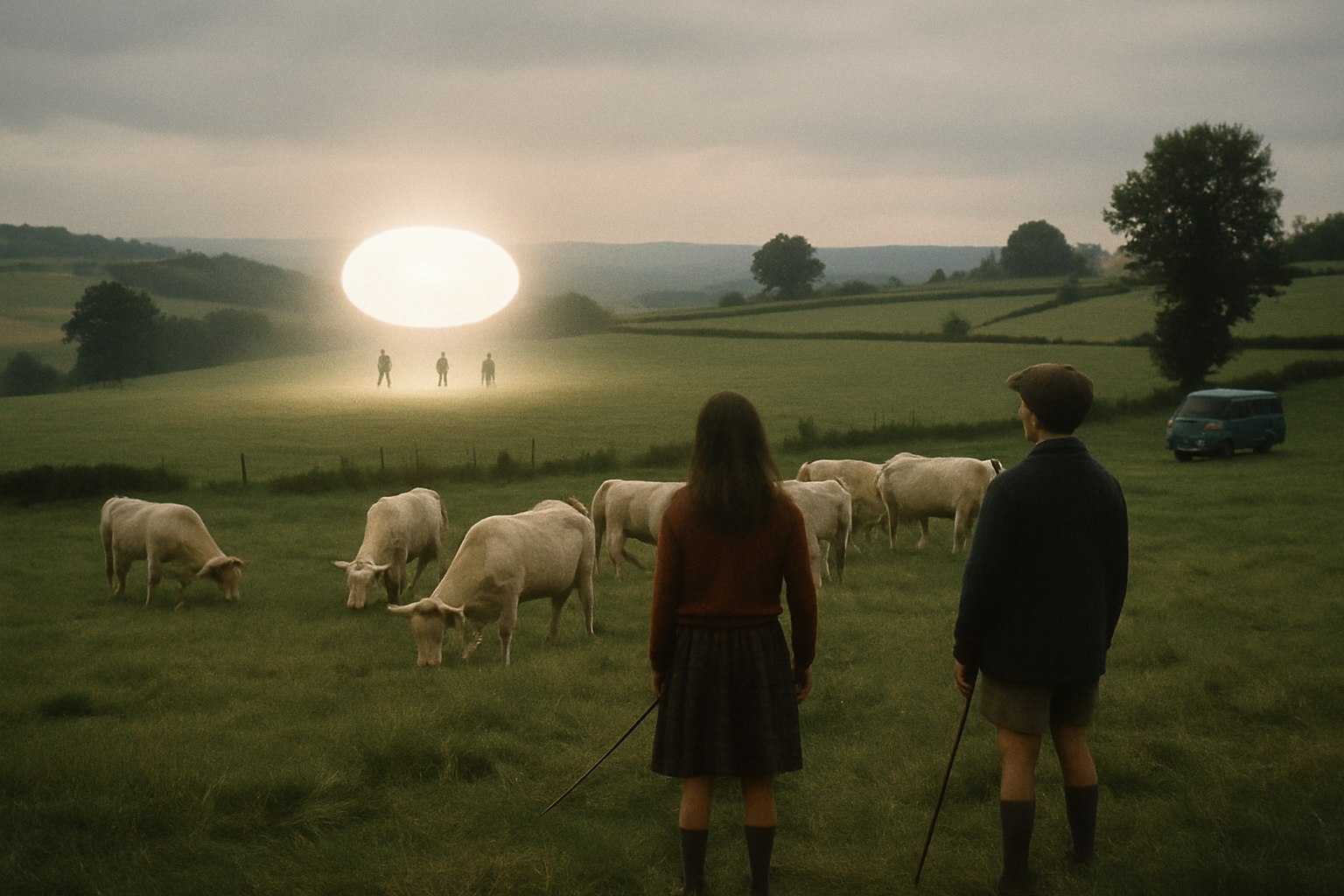
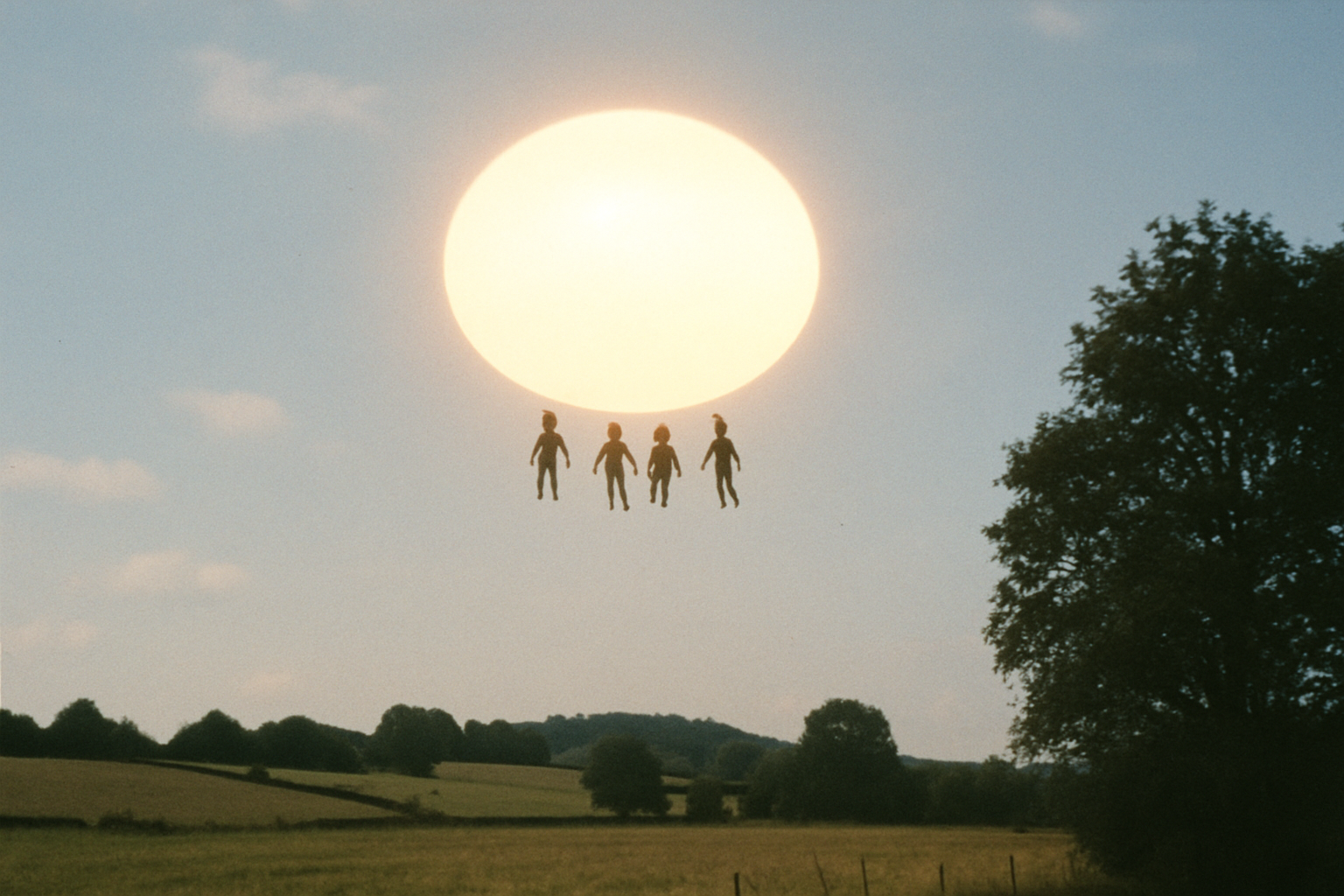
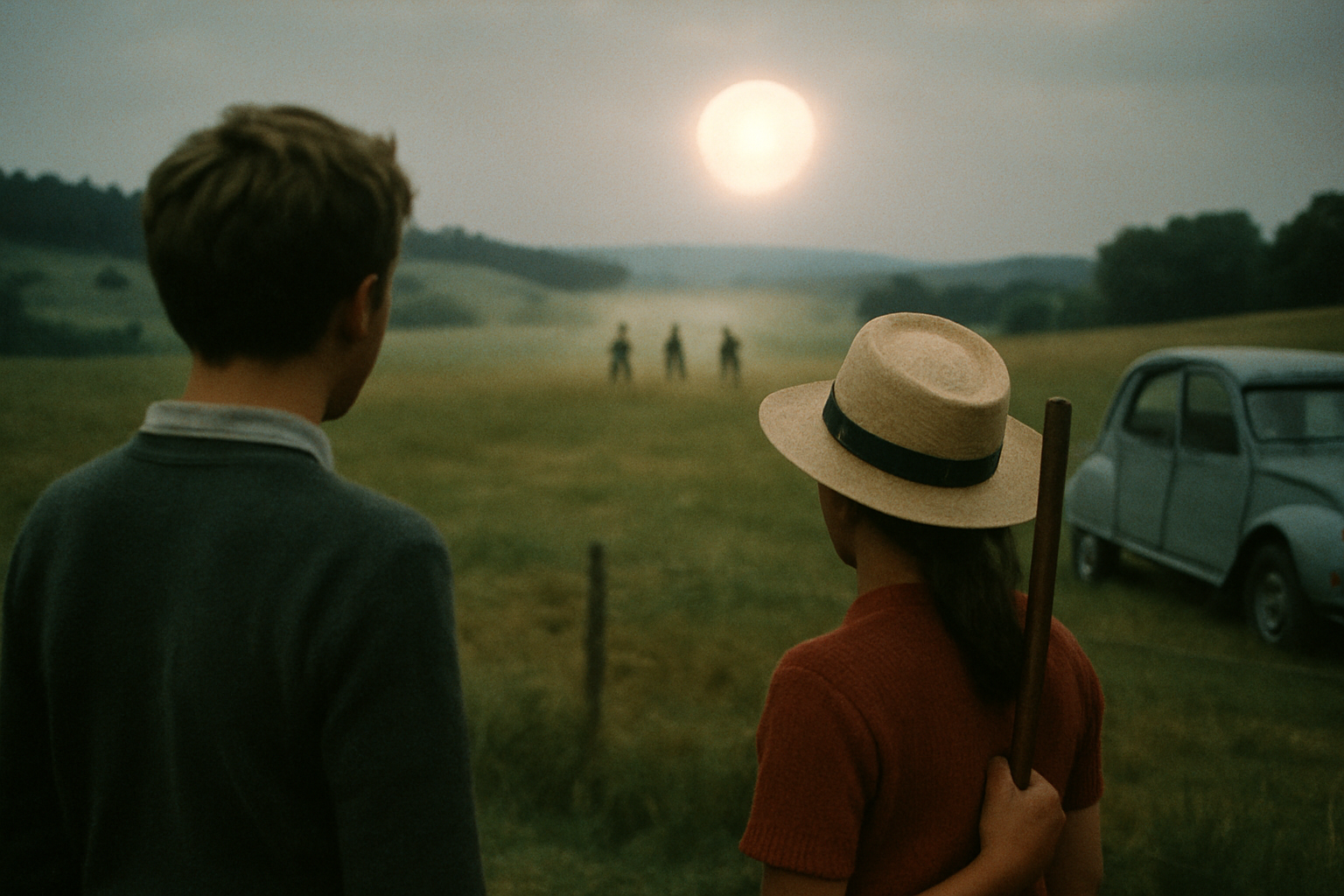
The Cussac UFO encounter (French: *Rencontre de Cussac*, also rendered *Close encounter of Cussac*) was a reported close encounter that took place on the morning of 29 August 1967 near the village of Cussac in the Cantal department of France.[1] Two siblings, François Delpeuch (about 13½) and his nine-year-old sister Anne-Marie, said that while watching their family's cattle they saw four small black humanoid beings, roughly 120 cm tall, and a bright spherical craft that hovered over a field before rising rapidly and disappearing.[2] A gendarme who reached the site shortly afterward noted a strong smell of sulphur and an area of dried grass at the place where the object was said to have departed.[1] The gendarmerie opened an inquiry the same day, and the case was later examined by GEPAN, the official unidentified-aerospace-phenomena study group of the French space agency CNES.[2] The episode became one of the most widely discussed close-encounter reports in France and has frequently been compared with the 1955 Kelly–Hopkinsville encounter in the United States.[1] It has never been given a definitive conventional explanation, although sceptical investigators have proposed mundane causes.[5]
Background
Cussac is a small commune on a high plateau of the Cantal in the Massif Central of south-central France, lying at roughly 1,000 m altitude with only a few hundred inhabitants.[2] The report belongs to the wave of European unidentified-flying-object accounts of the 1960s and is classed by ufologists as a "close encounter of the third kind," meaning a sighting said to involve apparent occupants of a craft.[1] At the time of the events France had no dedicated state body for such reports; the official study unit GEPAN (*Groupe d'Études des Phénomènes Aérospatiaux Non identifiés*) was not created within CNES until 1977, a decade after the encounter, and it later became GEIPAN.[3] Early documentation of the Cussac case therefore came first from the gendarmerie and from civilian investigators.[4]
The reported encounter
According to the children's account, at about 10:30 a.m. on 29 August 1967 they were tending cattle in a field a short distance west of Cussac, accompanied by their dog, when they noticed four small black figures near a wall or bush.[2] The beings were described as roughly 120 cm (about 47 inches) tall and entirely dark.[1] The witnesses said the figures rose into the air and one after another entered a brilliant round craft hovering nearby, variously reported as a sphere about 4 m wide, which then ascended and vanished at speed.[2] The intense brightness of the object was said to have briefly dazzled the boy.[2] When a gendarme arrived soon afterward, he recorded a strong odour of sulphur in the air and noted that the grass at the supposed departure point was dried out.[1] These physical traces, together with the children's apparent distress, were among the elements that led authorities to take the report seriously.[1]
Investigation and official response
The French gendarmerie opened an inquiry on the day of the events and recorded the witnesses' statements and the site conditions, including the reported sulphur smell and dried grass.[1] The case was first published in the ufological press in 1968 by investigators Joël Mesnard and Claude Pavy.[4] After CNES established GEPAN, the group revisited the affair: in 1978 it carried out an on-site reconstruction with the witnesses and prepared an internal report for its scientific council.[2] GEPAN treated the children's testimony as consistent and credible but did not publish a formal public conclusion identifying the phenomenon.[2] The Cussac encounter is among the cases later cited in the privately produced 1999 *COMETA Report* on unidentified aerospace phenomena.[2] When GEIPAN began placing its archives online in March 2007, public interest in such historic French cases — Cussac among them — was so high that the website was overwhelmed on its first day.[1]
Explanations and disputes
No conventional cause has been firmly established, and the case is generally listed as unexplained, a status comparable to GEIPAN's "category D" for reports that resist identification despite credible data.[3] Sceptical investigators have nonetheless offered prosaic hypotheses. In a series of analyses published in the 1990s and 2000s, Éric Maillot of the *Cercle Zététique* argued that the simplest explanation was the brief passage and landing of a helicopter — possibly a military Alouette II — which the young witnesses may have misperceived; however, no archived flight record was found to confirm such a flight.[5] Critics of the supernatural reading also point to inconsistencies that emerged across successive re-interviews, including a widely repeated quotation attributed to Anne-Marie that a 1977 re-inquiry indicated was inaccurate.[2] Defenders of the witnesses emphasise the consistency of the core account over time and the corroborating physical observations recorded by the gendarmerie.[2]
Aftermath and significance
The Cussac encounter became one of the best-known close-encounter reports in France and is routinely discussed in surveys of European UFO cases, often alongside the 1981 Trans-en-Provence case as an example that continues to feed debate at conferences.[3] In English-language literature it is frequently likened to the 1955 Kelly–Hopkinsville encounter because both involve children or rural witnesses reporting small dark humanoid beings.[1] The case is preserved in the French official archives now administered by GEIPAN and remains a reference point in discussions of how state bodies investigate and classify unidentified aerospace phenomena.[3]
Key quotes
“The gendarme who reached the site reported a strong smell of sulphur.
“The incident became as famous in France as the Kelly–Hopkinsville encounter in the United States.
References
- 1.
- 2.
- 3.
- 4.
- 5.
Similar cases
Scored on agency / year proximity / region / tag overlap — same agency +3, near year +4, same region +2, shared tag ×2.