Quarouble landing (Marius Dewilde)
Illustrations
AI-generated illustration — not actual footage or evidence; an interpretive depiction based on the documented account
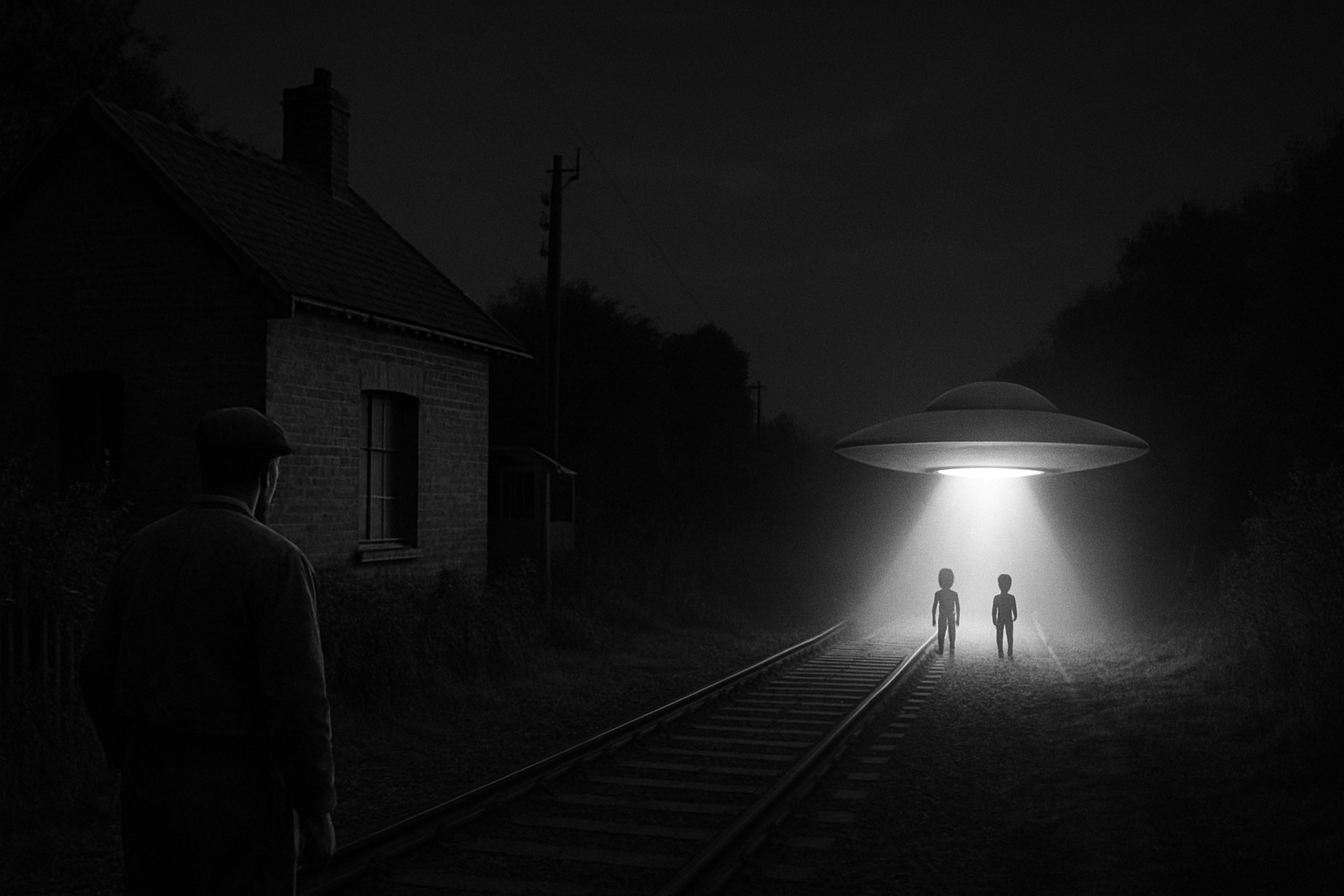
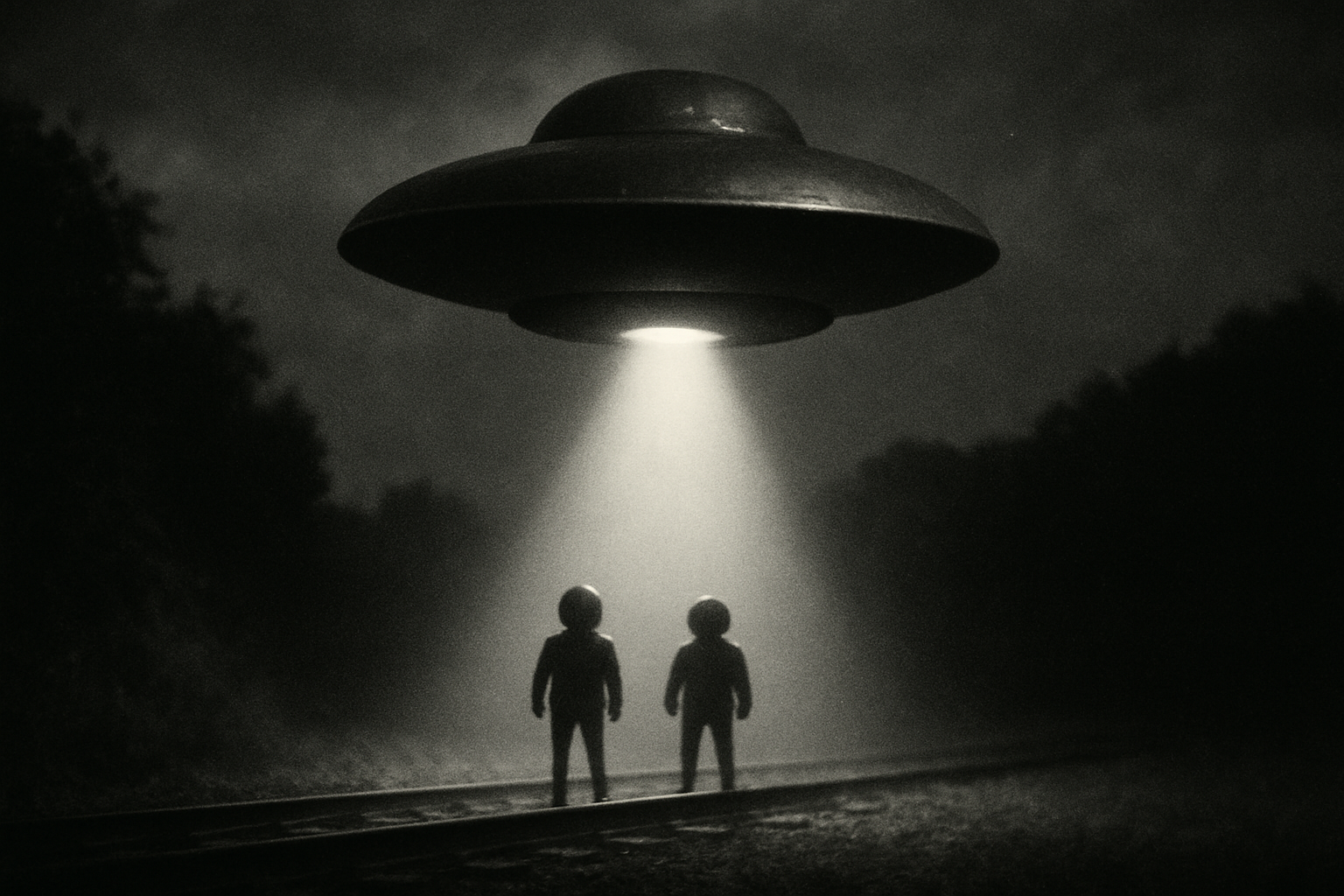
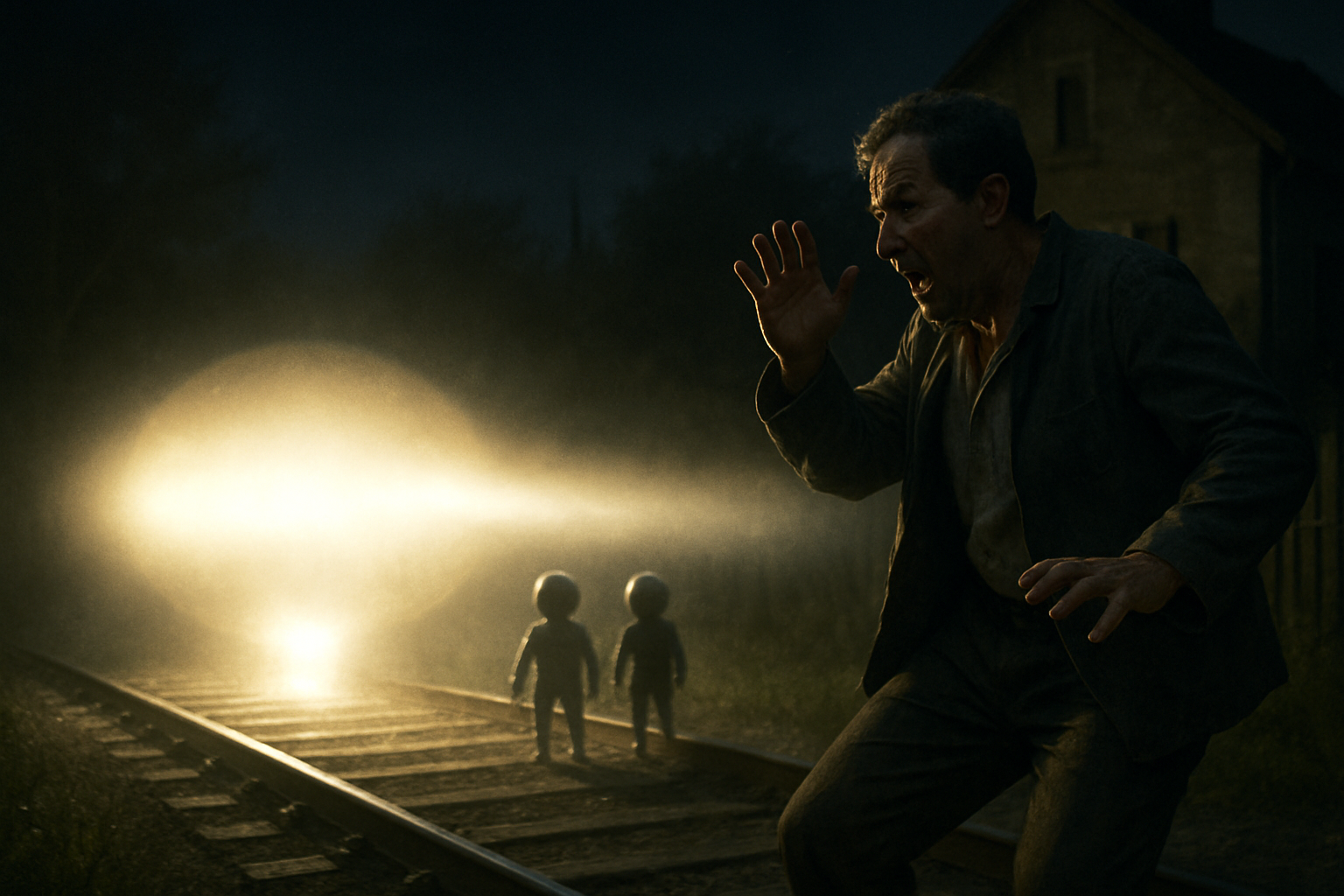
The Quarouble landing, also known as the Marius Dewilde case, was a reported close encounter that took place on the night of 10 September 1954 at the level crossing No. 79 in Quarouble, a village in the Nord department of France near Valenciennes.[1][2] Marius Dewilde (1921–1996), a metalworker who rented the railway crossing-keeper's house, said that at about 10:30 p.m. his dog began barking and that on going outside with a flashlight he saw a dark, oblong object resting on the railway tracks a few metres away, together with two short figures, roughly one metre tall, wearing helmets and dark clothing.[1][2] According to his account, as he moved toward them a beam of intense light from the object left him momentarily paralysed; the object then rose, emitting smoke or a whistling sound, and flew off.[2] The gendarmerie, the air police and the DST examined the site, where indentations were found on the wooden railway sleepers that railway engineers said would require the pressure of an object weighing about thirty tonnes.[1][3] The report came during the well-documented 1954 wave of UFO sightings in France and remains one of the most frequently cited French close-encounter cases, although a later claimed sighting by Dewilde and aspects of his testimony have been disputed.[1][3]
Background
Quarouble is a small commune in the Nord department of northern France, close to the Belgian border and to the industrial town of Valenciennes.[3] In 1954 Marius Dewilde, then aged 34, worked at the Blanc-Misseron steelworks and lived with his family in the keeper's house at railway crossing No. 79.[2] The episode took place during the autumn 1954 UFO wave, a period in which the French national and regional press reported a very large number of sightings — by some counts several thousand — with the Nord–Pas-de-Calais region among those most affected.[1][3] At the time France had no dedicated state body for investigating such reports; the official study group GEPAN (later GEIPAN) was not created within the French space agency CNES until 1977, so the initial documentation came from the gendarmerie, the police and the press.[4]
The reported encounter
According to Dewilde's account, at about 10:30 p.m. on Friday 10 September 1954 his dog began barking insistently. He went out with a flashlight and at first took a dark mass on the nearby tracks to be a farmer's cart.[2] He then said he saw two short, stocky figures, no more than about one metre tall, moving toward the object; he described their heads as large and protected by helmet-like coverings, and reported that when his flashlight beam fell on them it reflected "as if on glass."[2] The object itself was described as oblong with a dome, aluminium-coloured but dull, roughly six metres long and three metres high.[1][2] As he approached, Dewilde said, a square or beam of intense light was projected from the object and he was unable to move or cry out for a short time.[2] The object then rose vertically, giving off dark smoke or a whistling sound, and moved away to the west before disappearing; he estimated the whole episode lasted from a few seconds to about a minute.[2]
Investigation and physical traces
Shaken, Dewilde alerted his household and then reported the event to the police at Onnaing around midnight; the commissioner is recorded as finding him trembling and visibly distressed, and concluded that he did not appear to be inventing the story.[2] Over the following days the air police, the gendarmerie and the DST examined the site.[1][2] Investigators found a series of indentations on the wooden railway sleepers, described as small marks arranged in a regular line, and some of the ballast appeared disturbed or freshly broken.[2] Railway engineers reportedly judged that such impressions would correspond to the pressure of an object weighing about thirty tonnes.[1][3] No footprints attributable to the two figures were recovered, a point investigators linked to the hard, cattle-trampled ground.[2] The combination of an apparently sincere witness and unexplained ground marks helped make the case nationally known.[3]
Explanations and disputes
No conventional cause has been firmly established, and the Quarouble landing is generally listed among France's unexplained close-encounter reports.[3] Sceptical commentators noted that Dewilde had suffered a serious head injury in a workplace accident about a year earlier and had subsequently shown nervous troubles, and some press writers of the period — for example in *L'Aurore* and *Franc-Tireur* — argued for a waking hallucination influenced by contemporary science-fiction imagery, or for psychological contagion amid the broader 1954 "saucer" psychosis.[2] Other prosaic suggestions, such as a clandestine helicopter landing, were considered and regarded as unlikely given the rail-side hazards.[2] A second, more elaborate encounter that Dewilde reported on 10 October 1954 is treated by many ufologists as a fabrication and is often cited as casting doubt on his later credibility, though it is generally distinguished from the original September report.[1]
Aftermath and significance
The September 1954 report turned Dewilde into a widely publicised figure and the affair became one of the emblematic cases of the 1954 French wave, regularly revisited in books, documentaries and the regional press.[3] Marius Dewilde was born in 1921 and died in 1996.[1] In later decades the case continued to be re-examined by French ufologists and sceptics, and it features in retrospective coverage of the Valenciennes area's UFO history.[3] As one of the best-known close-encounter accounts from the 1954 wave, it remains a reference point in French discussions of how such reports were investigated before the creation of a dedicated official study group.[4]
Key quotes
“"The beam of my lamp was reflected off them as if on glass."
“The marks on the railway sleepers were said to correspond to the pressure of an object weighing about thirty tonnes.
References
- 1.
- 2.
- 3.
- 4.
Similar cases
Scored on agency / year proximity / region / tag overlap — same agency +3, near year +4, same region +2, shared tag ×2.