L'Amarante case (Nancy / Laxou, 1982)
Illustrations
AI-generated illustration — not actual footage or evidence; an interpretive depiction based on the documented account

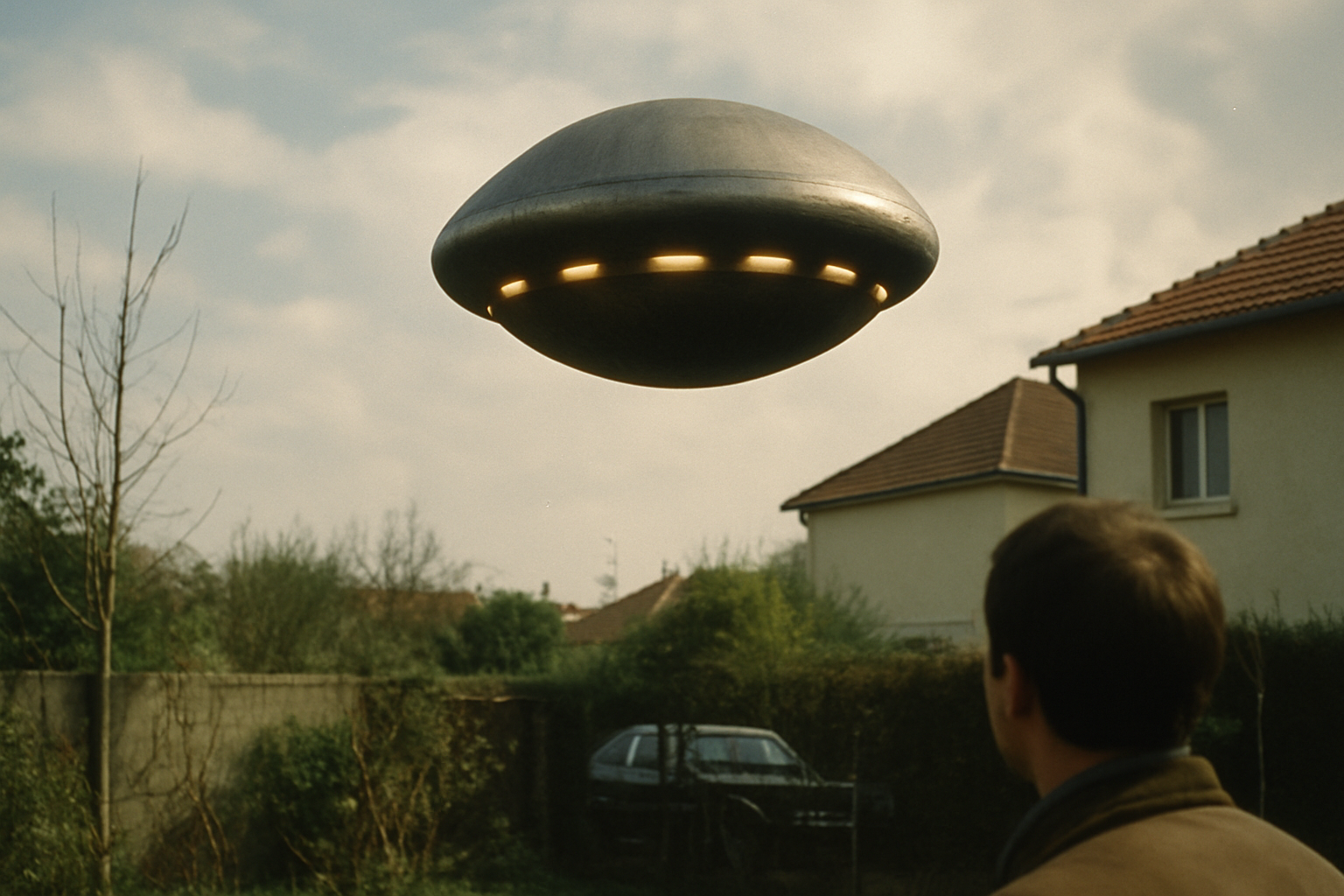
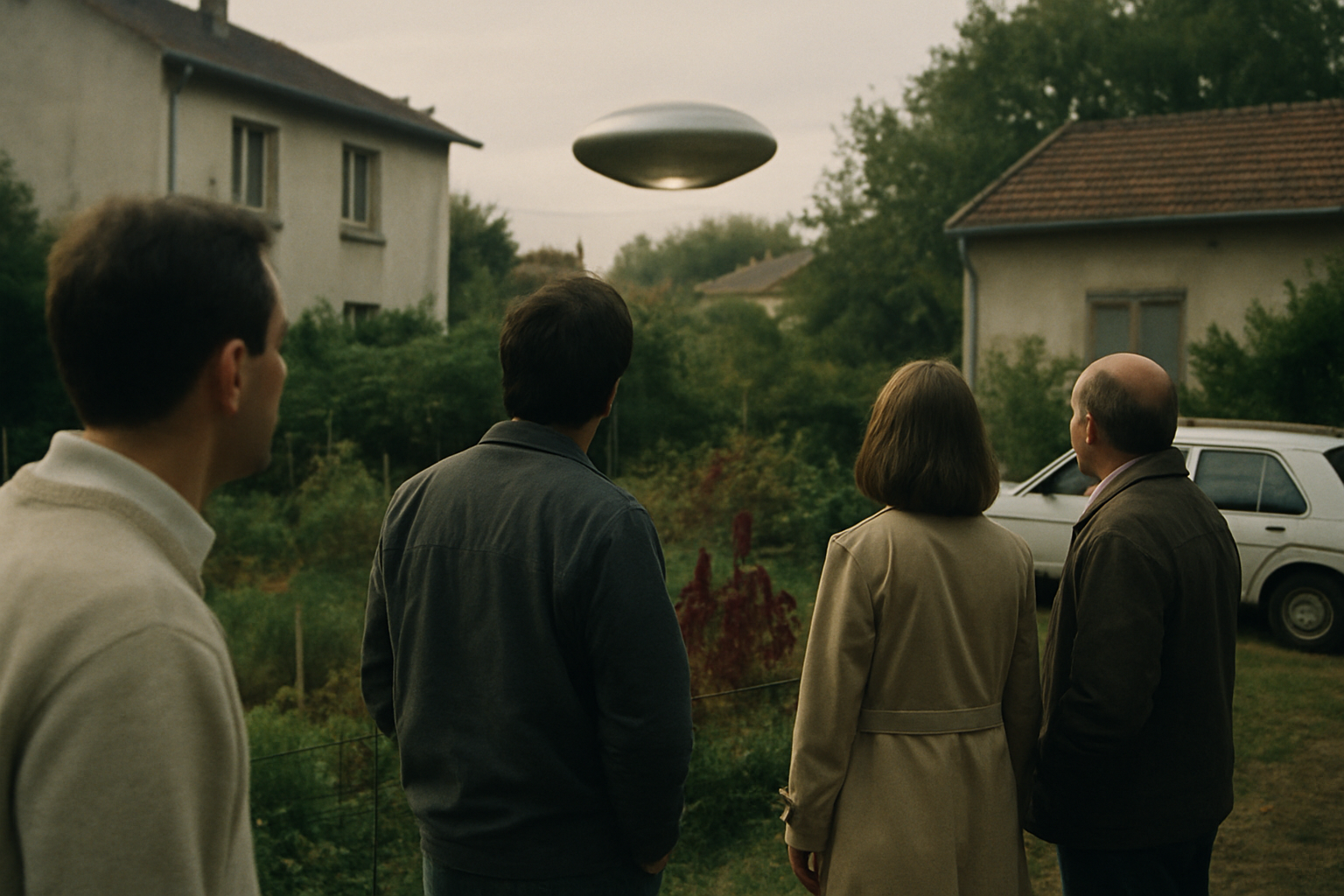
The L'Amarante case (French: *l'Amarante*, after the amaranth plants involved) is a French unidentified-aerospace-phenomenon report from 21 October 1982 in Laxou, a suburb of Nancy in the Meurthe-et-Moselle department.[1][2] A 30-year-old biology researcher, referred to in the official report under the pseudonym "M. Henri," stated that an ovoid metallic object about 1.5 metres across descended into his small enclosed garden, hovered roughly one metre above the ground for about twenty minutes, and then rose vertically at high speed.[1] The case is one of the better-known French "close encounter" reports because it was investigated on site by GEPAN, the UFO-study group of the national space agency CNES, and because withered amaranth plants near the reported position were sampled and analysed.[1][3] GEPAN set out its findings in Technical Note No. 17, published in Toulouse on 21 March 1983, and classified the case as unexplained (type D).[1] The botanical and biochemical analyses were ultimately inconclusive, and a later reanalysis by the skeptical investigator Éric Maillot argued that the observation could be explained as a visual illusion involving a deflated metallised balloon.[1][5]
The report
According to the gendarmerie statement, the witness was at home in Laxou around midday on Thursday 21 October 1982 when, at about 12:35, he saw a shining object approaching from the south-east that he first took to be an aircraft.[1] As it drew overhead he stepped back several metres and saw that it had an ovoid form; it came to rest, hovering and completely stationary, about one metre above his small garden.[1]
The witness described the object as roughly 1.5 metres in diameter and about 0.8 metres thick, with a polished metallic lower half (which he likened to beryllium) and a translucent blue-green ("lagoon") upper half; he reported no sound, heat, cold, radiation or electromagnetic effect.[1][2] He said he moved around the garden to observe it from several positions, approaching to within about 0.5 metres, went indoors to fetch a loaded camera, but found the shutter jammed when he tried to photograph it.[1] After an interval he estimated, by his watch, at about twenty minutes, the object rose vertically at high speed — "as if aspirated" — and disappeared from view at around 12:56.[1][3]
Investigation by GEPAN
The local gendarmerie brigade took the couple's statement on the evening of 21 October 1982 and drew up a report.[1] A telex reached GEPAN — the *Groupe d'Étude des Phénomènes Aérospatiaux Non identifiés*, then part of CNES in Toulouse — on 23 October, and the group decided to open an inquiry, carrying out an on-site investigation at the end of the month.[1]
What distinguished the case in GEPAN's view were two reported physical effects in the garden: the temporary straightening of blades of grass beneath the object just before its departure, and the withering of a border of amaranth plants growing close to the reported position.[1][3] Vegetation samples were collected — first by the gendarmerie the day after the sighting, then by GEPAN during its visit — and sent for laboratory analysis.[1] Investigators recorded a markedly lower water content in the most affected plants than in control specimens further away, together with a colour change from bright red toward a dull brown.[1][2]
GEPAN also considered whether an intense electric field could account for the effects, estimating that a field of at least several tens of kilovolts per metre would be required to lift the grass; it noted that a field strong enough to act at the distance where the witness had stood would have been hazardous to him.[2][4] The report assessed the witness as credible and found nothing in his account or manner to suggest fabrication, while emphasising that the case rested on a single witness.[1]
Analyses and conclusion
GEPAN published its study as Technical Note No. 17 (*Note Technique n° 17, « L'Amarante »*), dated Toulouse, 21 March 1983.[1] The biochemical analyses of the plant samples did not yield firm results: the report noted that the first samples had been uprooted soon after the event and had not been kept at a sufficiently low temperature, so that no conclusion could be drawn from them.[1] On this basis the case was retained as unexplained — classified as a type D (PAN D) report, GEPAN's category for observations that remained unidentified after investigation — rather than as confirmed evidence of any particular cause.[1][3]
The Amarante case is frequently cited in French ufology alongside the 1981 Trans-en-Provence case as an example of a report involving alleged physical traces examined by an official body.[2][3] As with such single-witness reports, the GEPAN file does not establish what the object was; it documents the testimony, the site, and the laboratory work, and records that no ordinary explanation was identified at the time.[1]
Skeptical reanalysis
The case was later re-examined by the skeptical investigator Éric Maillot, who argued that it could be accounted for without any unidentified craft.[5] In his analysis, what the witness saw was most plausibly a deflated metallised (mylar) decorative balloon that had come to rest among the bent stems of hollyhocks and amaranth in the garden; supported by the plants, it could have remained roughly in place for the duration of the sighting before warming in the midday sun, expanding and lifting off.[5] On this reading the reported shape, the metallic and blue-green colouring, and the sudden vertical departure are interpreted as features of a near-at-hand object misjudged for an unusual aerial one.[5]
Regarding the plants, Maillot contended that the withering of the amaranth was consistent with ordinary autumn senescence of the species rather than damage from the reported object, and that the inconclusive sampling did not demonstrate any anomalous effect.[5] This interpretation has been discussed within French skeptical circles; it has not been universally accepted, and the case continues to be listed by GEIPAN as unexplained.[5][1]
Key quotes
“The witness described the object's lower half as polished metal "like beryllium" and its upper half as "lagoon blue-green."
References
- 1.
- 2.
- 3.
- 4.
- 5.
Similar cases
Scored on agency / year proximity / region / tag overlap — same agency +3, near year +4, same region +2, shared tag ×2.