Falcon Lake incident
Illustrations
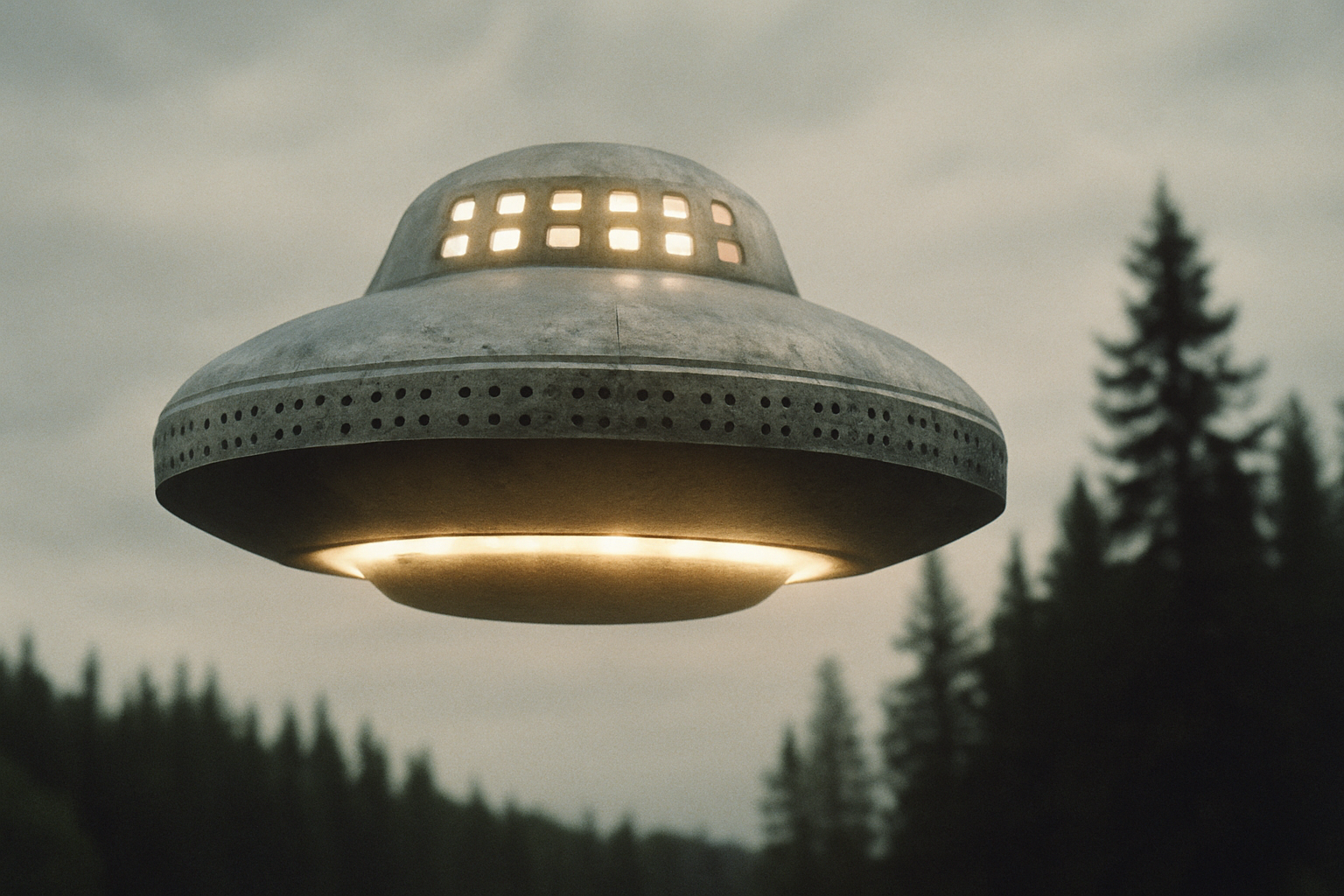
AI-generated illustration — not actual footage or evidence; an interpretive depiction based on the documented account
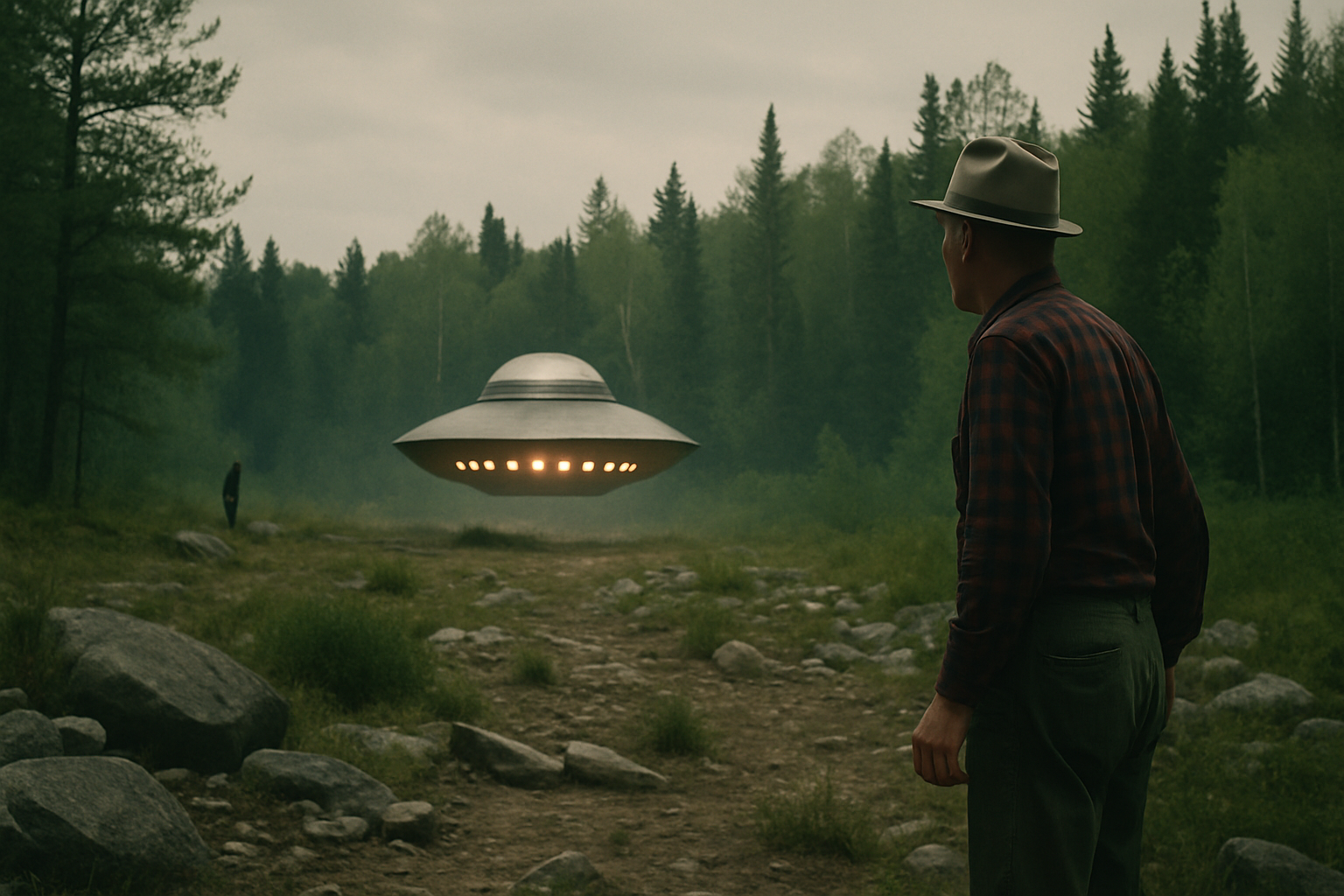
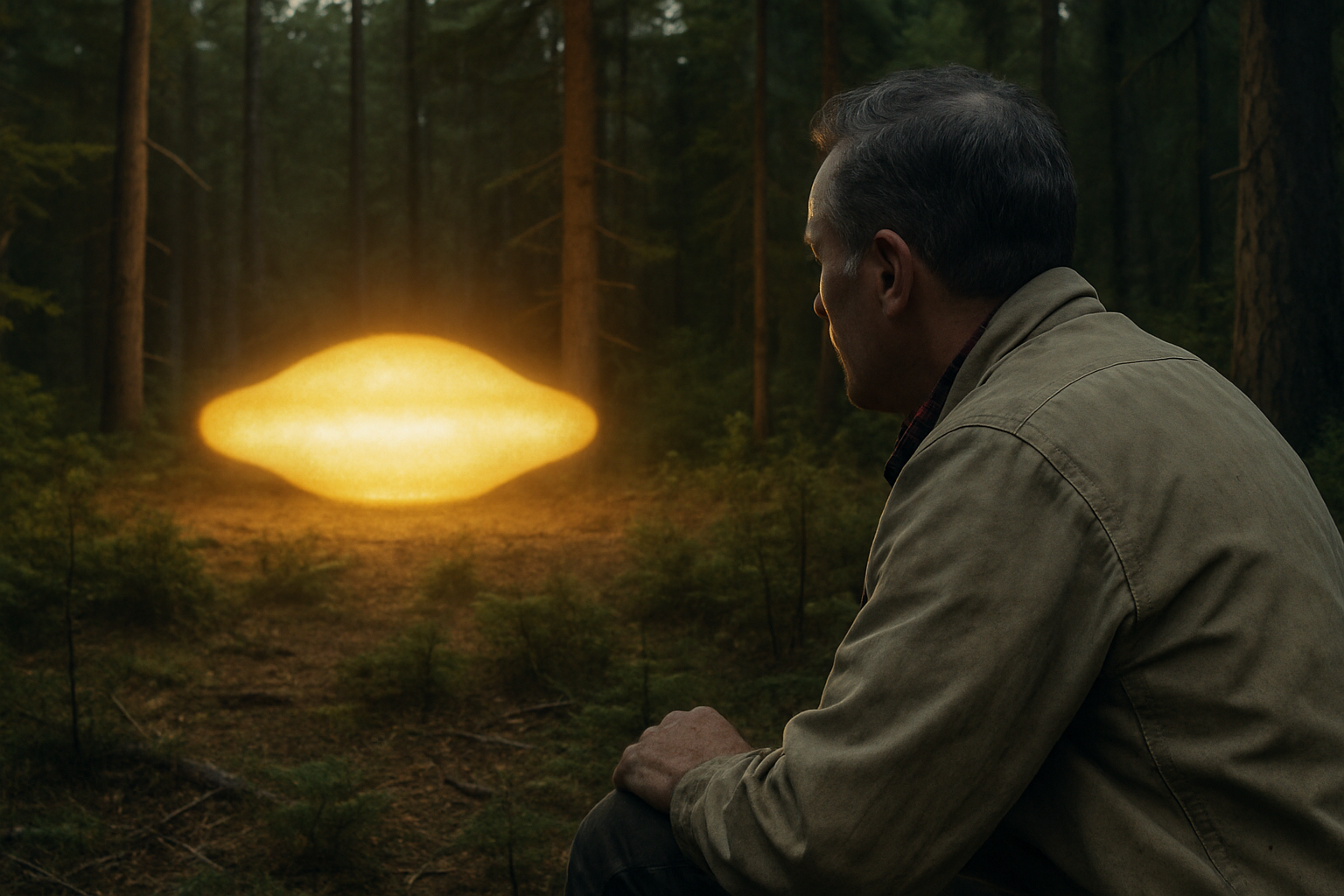
The Falcon Lake incident was a reported close encounter with an unidentified flying object that allegedly took place on 20 May 1967 near Falcon Lake in Whiteshell Provincial Park, Manitoba, Canada.[1] The sole witness, 50-year-old industrial mechanic and amateur prospector Stefan "Steve" Michalak, said he saw two glowing, red, disc-shaped craft, one of which landed on a flat rock near him; when he approached and touched it, he was struck by a blast of hot gas that set his shirt alight and left burns on his chest and abdomen.[1][2] The case drew investigations by the Royal Canadian Mounted Police (RCMP), the Royal Canadian Air Force (RCAF) and several Canadian and American agencies, and trace radioactivity was later detected at the alleged landing site.[3] CBC News has described it as "Canada's best-documented UFO case," while skeptics have argued the burns stemmed from a mundane accident; the Canadian Department of National Defence continues to list the case as unsolved.[2][3]
Background
Stefan Michalak was a 50-year-old industrial mechanic of Polish-Canadian origin who worked in Winnipeg and pursued amateur prospecting as a hobby.[1] Over the May long weekend in 1967 he travelled to Falcon Lake, in Whiteshell Provincial Park about 150 km east of Winnipeg, intending to search the wilderness for quartz and silver.[1][2]
Falcon Lake lies in southeastern Manitoba near the Ontario border, an area of exposed Canadian Shield bedrock long used by hobbyist prospectors. Michalak said he was familiar with the region and had staked an interest in a possible mineral claim there, a detail that would later feature in competing explanations of the event.[1]
The reported encounter
According to Michalak's account, at about 3:00 p.m. on 20 May 1967 he was examining a rock outcrop when the cackling of startled geese drew his attention to two glowing, red, cigar- or disc-shaped objects descending from the sky.[1] He said one craft flew off while the other landed on a large flat rock roughly 45 metres (about 160 feet) away.[1][2]
Michalak described the landed object as metallic and roughly 10.7 metres (35 feet) across, with a sulphurous smell and a sound of hissing air.[1] He reported that:
- A door opened, emitting a brilliant violet light from inside.[1]
- He heard what he believed were muffled, "definitely human" voices and called out in several languages, but received no reply.[1]
- When he touched the craft's surface, his glove melted, and the object began to move.[1]
- As it lifted, a blast of hot gas shot from a grid-like vent onto his chest, setting his outer shirt and undershirt on fire and inflicting severe burns.[1][2]
Michalak said he tore off the burning shirt and, feeling nauseous, made his way out of the bush. Later that day he flagged down an RCMP constable, G. A. Solotki, on the Trans-Canada Highway, reporting that he had seen "two spaceships." He then took a Greyhound bus to Winnipeg, where he was treated as an outpatient for first-degree burns.[1]
Investigation and official response
The widespread press coverage that followed triggered overlapping civilian and official inquiries in both Canada and the United States.[1]
Physical injuries and medical examination
Medical records described "several round and irregular shaped burns the size of a silver dollar" on Michalak's abdomen; he also reported a roughly 6 kg (13 lb) weight loss, nausea, vomiting, headaches and a strange taste and odour in the days afterward.[1] RCMP officers who visited his home characterised the injuries as an "exceptionally severe sunburn" localised to one area.[1]
Search and physical evidence
The RCMP and RCAF conducted aerial and ground searches but could not initially locate the landing site.[1] Weeks later Michalak said he had relocated the spot with a companion and collected soil and a burnt shirt. Investigators recovered:
- Soil samples from a crevice at the site that tested significantly radioactive.[3]
- Pieces of metal found in 1968 that an analysis by astronomer Peter Millman identified as roughly 95 percent silver and slightly radioactive.[1]
Canadian health and atomic-energy authorities concluded the radiation resembled that of luminous radium-based paint rather than any exotic source, and Millman suggested the silver pieces could have been deliberately contaminated with pitchblende (uranium ore).[1][3]
Government and scientific bodies
The case was examined by the RCMP, the RCAF, the Canadian Departments of National Defence and Health, and Atomic Energy of Canada, as well as the U.S.-based Aerial Phenomena Research Organization (APRO) and the University of Colorado's Condon Committee, whose investigator Roy Craig interviewed Michalak in 1967.[1][3] On 6 November 1967, Minister of National Defence Léo Cadieux stated that the government would not publicly release its official report.[1]
Explanations and disputes
Investigators were unable either to confirm or to refute Michalak's account, and the case remains contested.[3]
Anomalous interpretation. Supporters note that Michalak's burns, the persistent nausea and weight loss, the radioactive soil and the ring of disturbed vegetation at the alleged site were never fully explained. A Library and Archives Canada summary of the RCMP file states that "certain facts, such as Mr. Michalak's illness and burns and the very evident circle remaining at the site," are unexplainable.[3]
Skeptical interpretation. Skeptics argue that the injuries are more consistent with a mundane accident than with an exotic craft:
- Falcon Hotel staff reported that Michalak had consumed several beers the night before, contradicting his denials, leading some writers to suggest an alcohol-related accident that the UFO story concealed.[1]
- A grid-like pattern of evenly spaced marks photographed in January 1968 differed markedly from the irregular May 1967 burns; a Mayo Clinic psychiatrist who examined Michalak in August 1968 found the later lesions "obviously factitial" (self-inflicted), while noting "no overt evidence of significant mental or emotional illness."[1]
- Reviewers such as John B. Alexander, writing in the Journal for Scientific Exploration, catalogued inconsistencies in the testimony, and some skeptics proposed that the UFO claim served to deflect attention from a mineral-prospecting dispute.[1]
The radioactivity and the recovered metal are likewise explained by skeptics as contamination from accessible commercial radium paint or as a deliberately fabricated artifact.[1][3]
Aftermath and significance
Michalak published a 40-page bilingual (Polish and English) pamphlet, *My Encounter with the UFO*, in late 1967, and by November 1968 he himself accused the authorities of a cover-up to prevent public panic.[1] The Canadian Department of National Defence continues to classify the incident as unsolved, noting that "no one has been able to disprove or prove Mr. Michalak's claims."[3]
The event has retained a prominent place in Canadian popular culture and has been called "Canada's best-documented UFO case" by CBC News.[2] Notable developments include:
- A 2017 book, *When They Appeared—Falcon Lake 1967*, by Michalak's son Stan Michalak and researcher Chris Rutkowski, published for the 50th anniversary.[2]
- The donation of investigation documents and the burned articles to the University of Manitoba Archives in 2019.[1]
- A 2018 commemorative C$20 silver coin issued by the Royal Canadian Mint featuring glow-in-the-dark elements.[1]
Key quotes
“"Canada's best-documented UFO case." — CBC News
“"Despite the fact that his lesions have been diagnosed as obviously factitial, I can find no overt evidence of significant mental or emotional illness." — Mayo Clinic psychiatrist, August 1968
References
- 1.
- 2.
- 3.
Similar cases
Scored on agency / year proximity / region / tag overlap — same agency +3, near year +4, same region +2, shared tag ×2.