Kera Incident (1972)
Illustrations
AI-generated illustration — not actual footage or evidence; an interpretive depiction based on the documented account
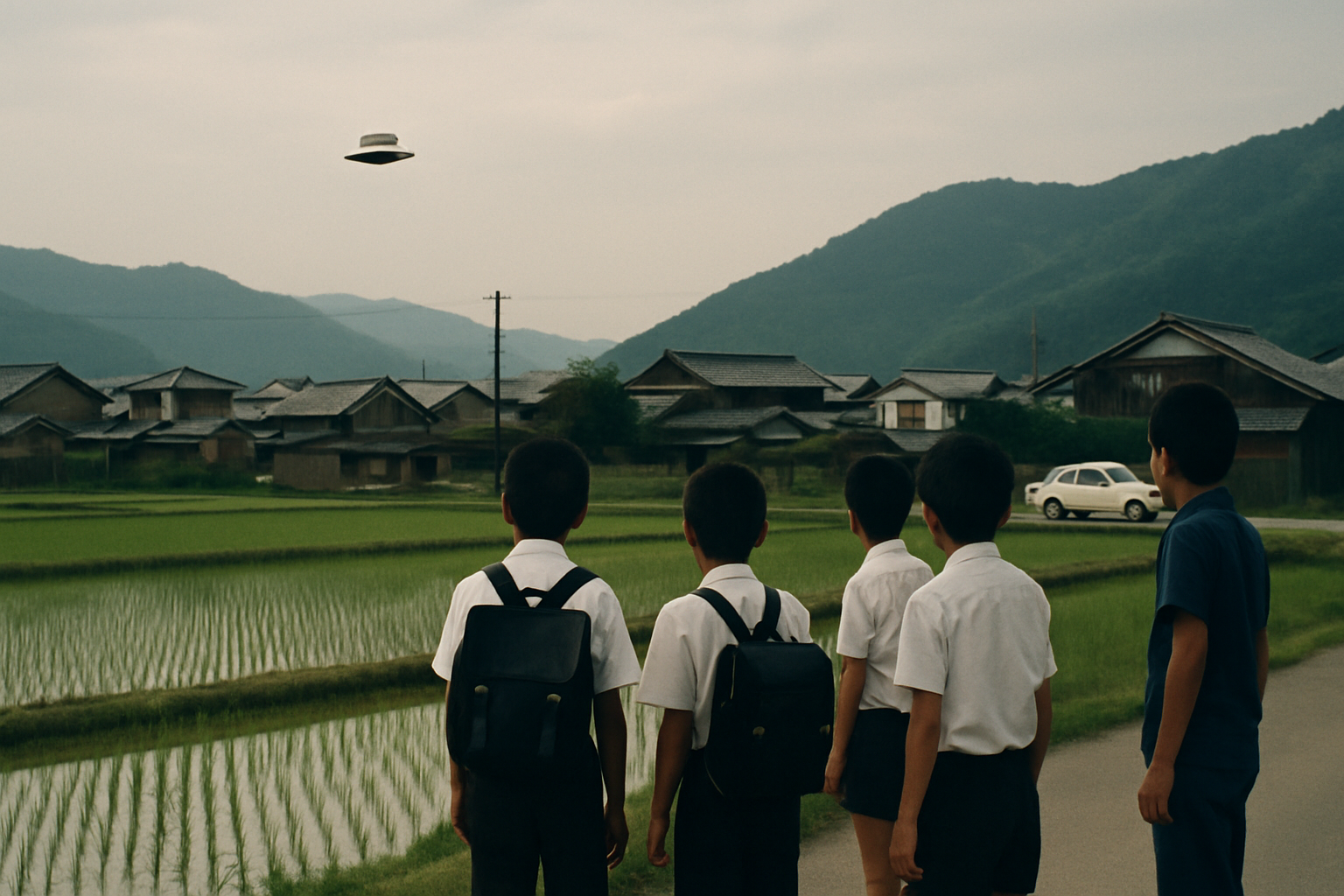
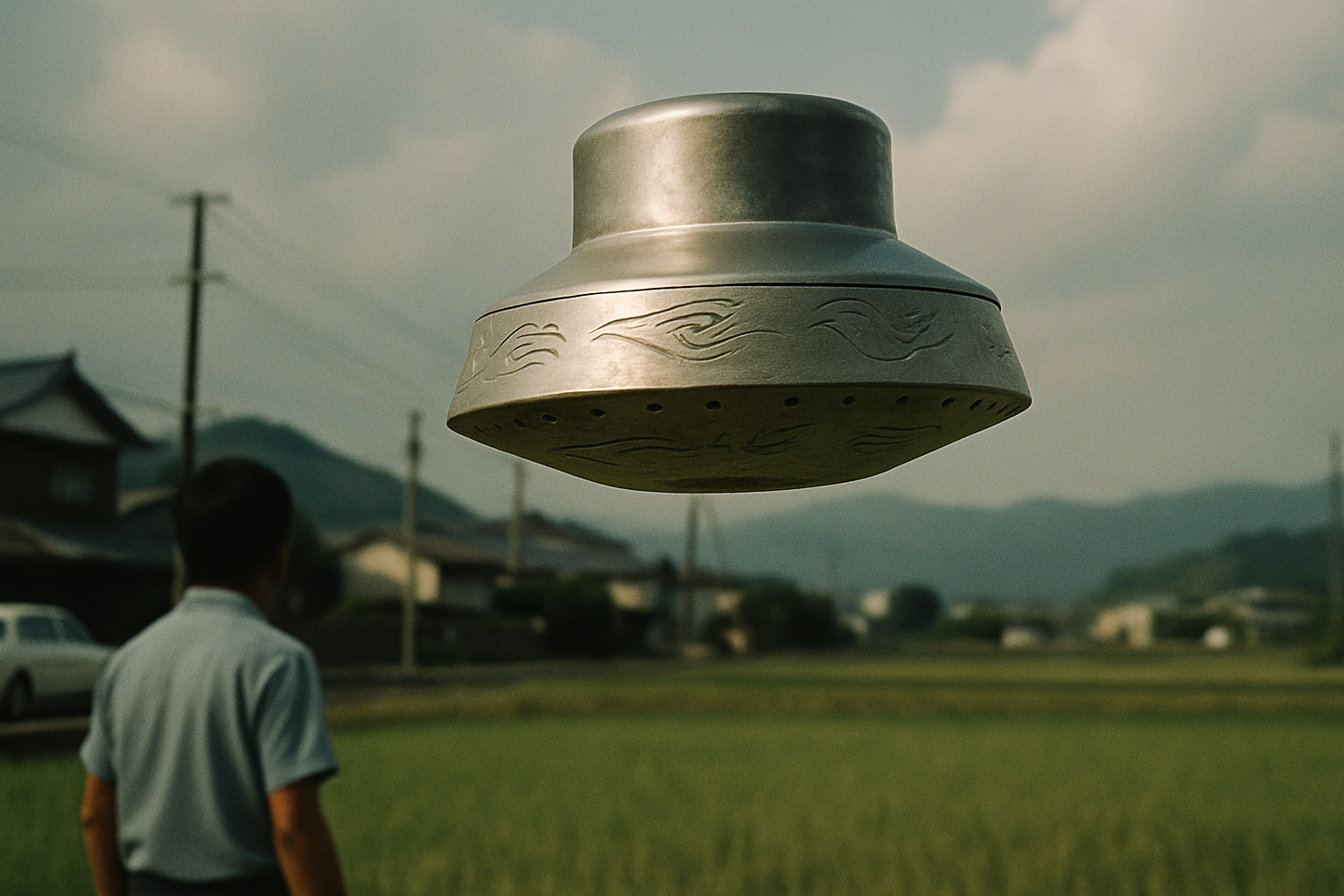
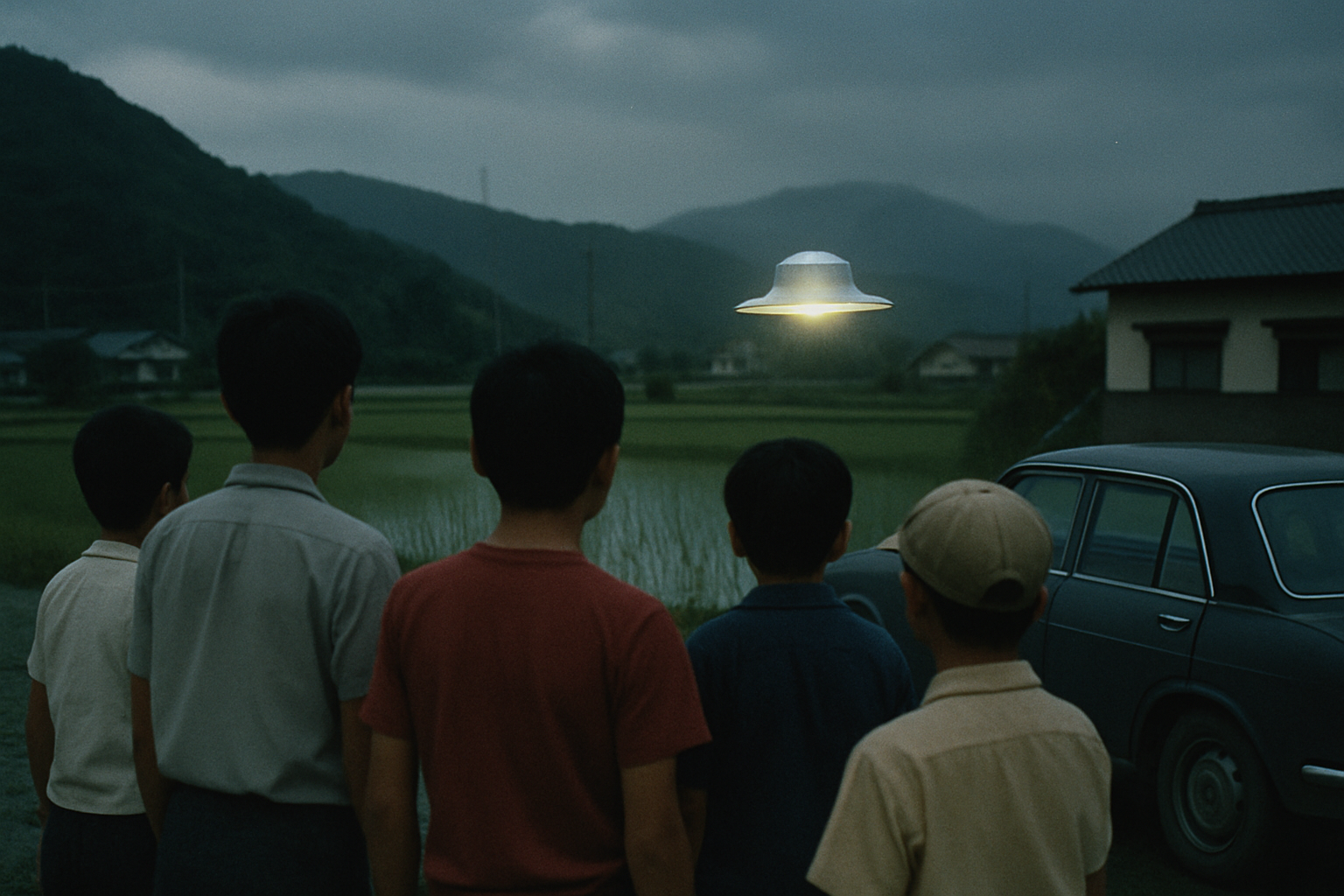
The Kera Incident (介良事件, *Kera-jiken*) is a Japanese unidentified-flying-object case from 1972, in which several junior-high-school boys in the Kera district of Kōchi City, Kōchi Prefecture, reported sighting and then physically capturing a small, hat-shaped object above local rice paddies.[1][2] The case is sometimes called the "Kera small-UFO capture incident" (介良小型UFO捕獲事件) and is, alongside the 1975 Kōfu incident, frequently described in Japanese popular culture as one of the country's most famous UFO episodes.[1][4] As a capture case rather than a mere sighting, it is sometimes informally likened to the Roswell incident. Accounts hold that the captured object repeatedly disappeared from storage and was found again nearby before vanishing for good, leaving only sketches and a single distant photograph as documentation.[1][2] Conventional explanations—principally that the object was a silver-painted cast-iron ashtray used in a boys' prank—have been advanced from the time of the events onward and were later supported by skeptical researchers, while the surviving witnesses have continued to recount the experience; the case remains disputed.[3][4]
Background and first sightings
The events are set in the Kera district in the eastern part of Kōchi City, on the island of Shikoku, a then-rural area of rice fields and housing developments.[1][4] The first sightings are generally dated to late August 1972: several local junior-high-school boys reported seeing a small, glowing object hovering and darting roughly a metre above the rice paddies near the Yokobori housing area, sometimes close enough to frighten them into fleeing.[1][4]
The case first reached a wider audience after the object had disappeared, when one of the boys telephoned a radio program hosted by the Kōchi-based amateur astronomer Seki Tsutomu (関勉) to describe what they had seen.[1][2] Only a few of the boys are said to have seen the object actually in flight; the larger group encountered it after it was caught.[2]
Capture and disappearances
In September 1972 the boys reportedly found the object resting on the ground and seized it, in one account striking it and placing it in a plastic bag before carrying it home in a satchel.[4][1] The captured object was described as silver-coloured and shaped like a top hat, about 18 cm across the brim and roughly 7 cm tall, weighing about 1.3 to 1.5 kg.[1][2] Its underside was said to bear *seigaiha* (wave) and bird patterns and a cluster of small holes, inside which radio-like components could be seen.[1][2]
The most distinctive feature of the story is that the object did not stay caught. According to the witnesses, it repeatedly disappeared from the place where it was being kept and was then found again nearby, a cycle said to have recurred several times before the object vanished permanently and was never seen again.[1][2] Attempts to photograph it largely failed: detailed photographs reportedly did not develop, leaving only one distant image and the boys' sketches.[1]
Media coverage and investigations
The case entered wider circulation through Japanese media. The amateur astronomer and comet discoverer Seki Tsutomu (関勉), based in Kōchi, is credited with first reporting the incident on radio and in an astronomy magazine, and the story was later featured on the late-night television program *11PM*.[1] The novelist Endō Shūsaku (遠藤周作) interviewed the boys for a 1976 essay collection.[1]
Decades afterward the witnesses were revisited. The photographer Satō Kenji (佐藤健寿) interviewed former participants for an NHK radio production in 2016, and in April 2020 a Kera witness appeared on the television program *Sekai no Nanda Kore!? Mystery*, reportedly the first such public appearance since 1972.[1][3] The 50th anniversary in 2022 prompted renewed visits to the original site by Japanese paranormal media.[4]
Skeptical explanations and dispute
From the time of the events, a prosaic explanation circulated: that the object was an ashtray and the affair a boys' prank.[3][1] One adult who saw it remarked that it looked like a silver-painted tobacco tray or ashtray, and skeptical researchers later identified cast-metal ashtrays closely matching the witnesses' descriptions and sketches, including the *seigaiha* wave motif.[1][3] Members of the skeptical organisation ASIOS (Association for Skeptical Investigation of Supernatural), among them chairman Honjō Tatsuya (本城達也), reported finding an iron ashtray strikingly similar to the sketched object, which had been offered at auction.[3]
A hoax interpretation also gained currency: it was noted that one of the central boys was skilled at conjuring tricks, and a 2016 NHK radio program is reported to have stated that, when later asked directly by a schoolteacher, the central figure answered that the affair had been fabricated.[1] Set against this, some of the original witnesses have continued to maintain their accounts into adulthood, and the repeated-disappearance element has never been conclusively explained.[4][3] In the absence of the object itself or definitive physical evidence, the case is generally treated as disputed rather than settled.[1][3]
Key quotes
“Witnesses described the captured object as silver and top-hat-shaped, with wave and bird patterns and small holes on its underside, and said it repeatedly vanished from storage and was found again nearby.
“Skeptics note the object's strong resemblance to a cast-iron ashtray, and a 2016 NHK radio program reported that the central boy later said the affair had been fabricated.
References
- 1.
- 2.
- 3.
- 4.
Similar cases
Scored on agency / year proximity / region / tag overlap — same agency +3, near year +4, same region +2, shared tag ×2.