Manises UFO incident
Illustrations
AI-generated illustration — not actual footage or evidence; an interpretive depiction based on the documented account
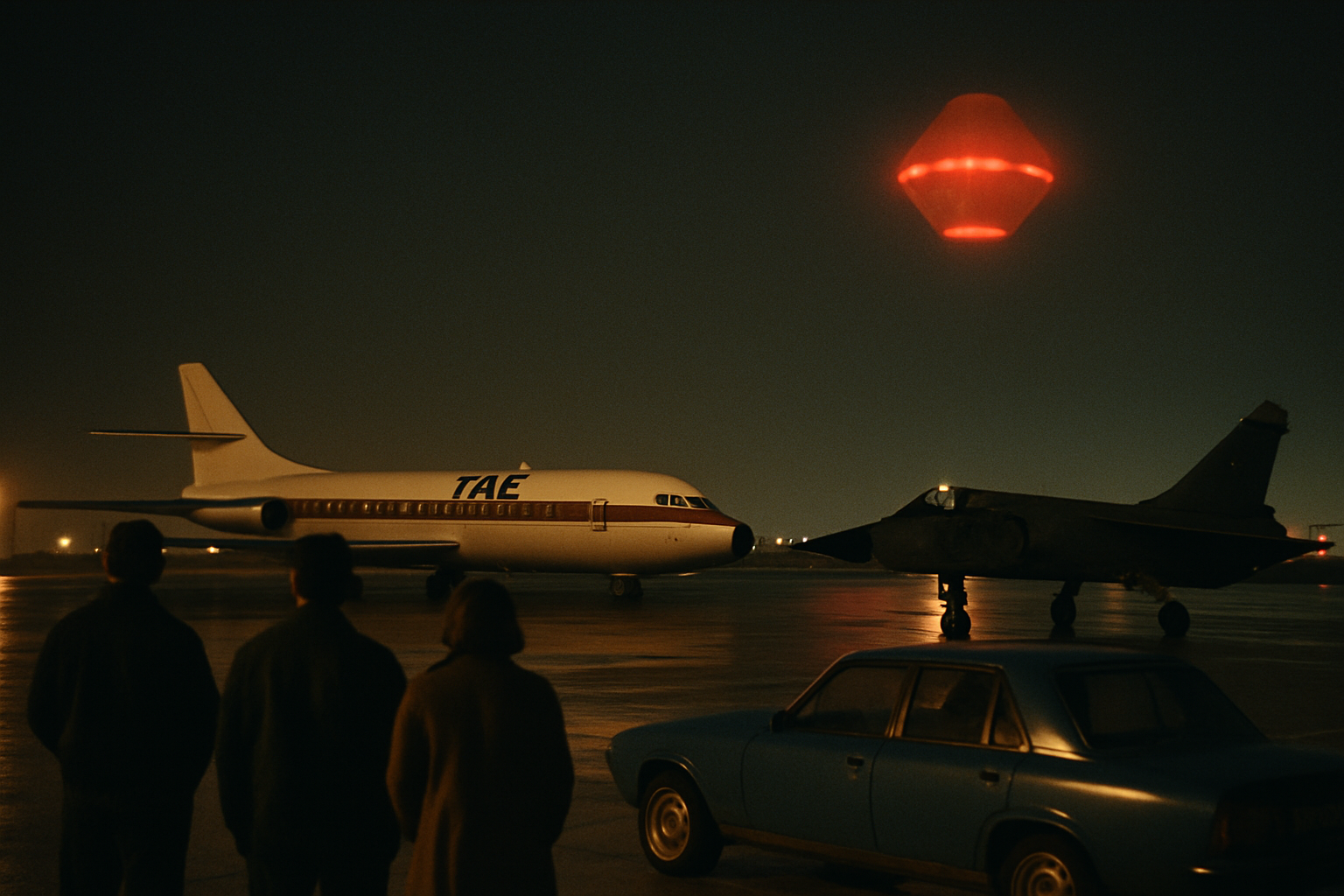
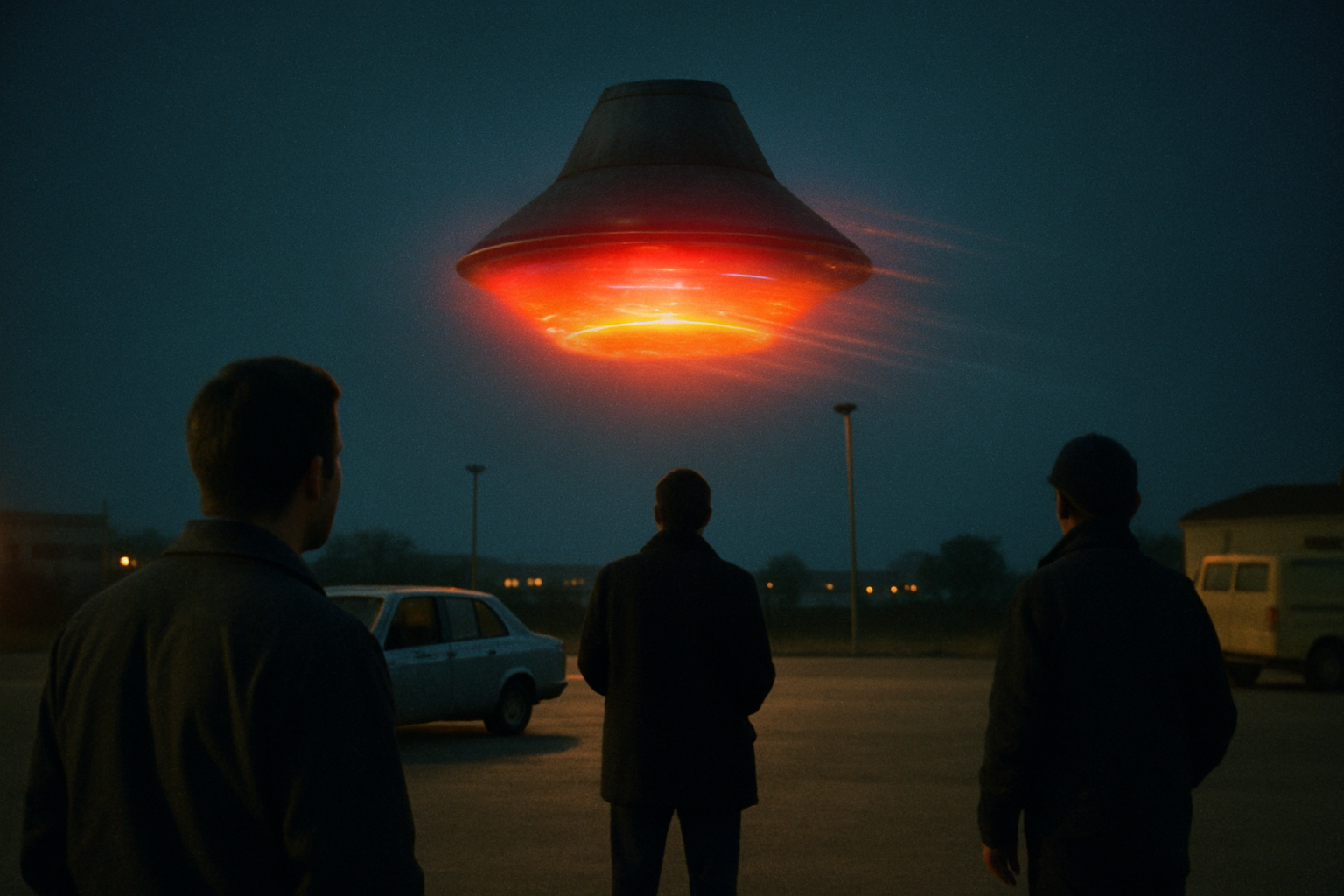
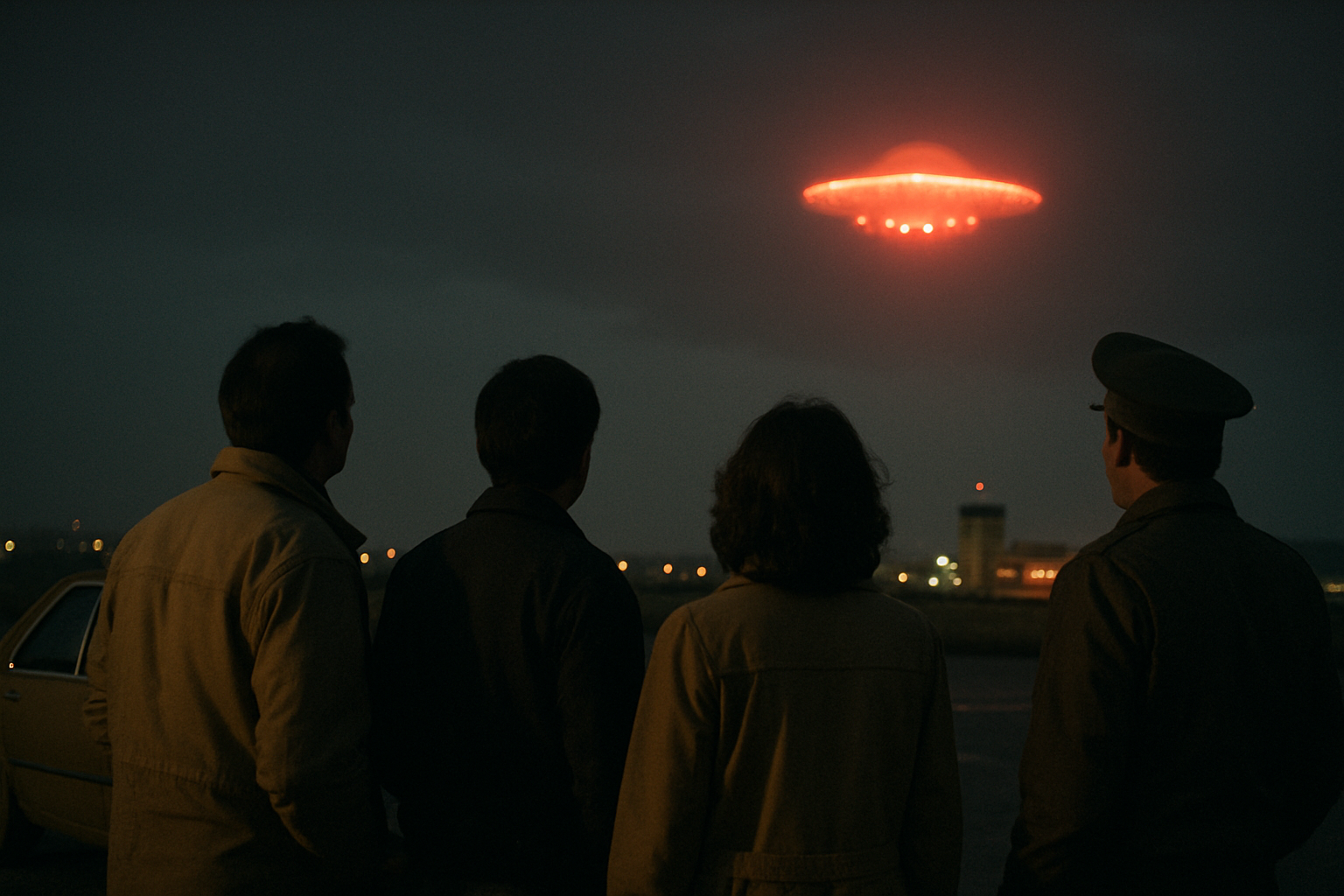
The Manises UFO incident was a 1979 aviation encounter in which a Spanish commercial airliner made an emergency landing at Manises airport near Valencia, Spain, after its crew reported being shadowed by unexplained lights, an event widely described as the first time a passenger flight was forced down because of a UFO report.[1] On the night of 11 November 1979, a Supercaravelle SE-210 of the airline TAE (Transportes Aéreos Españoles, then operating under the name Trabajos Aéreos y Enlaces), flying as JK-297 from Salzburg to Las Palmas with 109 passengers, was approached over the western Mediterranean near Ibiza by a set of red, colour-changing lights that the captain, Francisco Javier Lerdo de Tejada, took to be on a possible collision course.[1][2] When the lights appeared to mirror the aircraft's manoeuvres and remain about half a kilometre away, the captain diverted and landed at Manises.[1] The Spanish Air Force scrambled a Dassault Mirage F1 interceptor, flown by Captain Fernando Cámara, which the pilot said made brief visual contact with a colour-changing, truncated-cone shape before fuel forced his return.[1][2] The case became the subject of a parliamentary question and was declassified in 1994; the official report attributed the lights to flashes from a distant chemical-industry complex together with stars and planets, a conclusion that the participants and several investigators rejected, leaving the incident regarded in Spain as its most famous and one of its most thoroughly documented UFO cases.[1][2]
Background
By the late 1970s, Spain's air force, the Ejército del Aire, maintained a formal procedure for recording reports of unidentified aerial phenomena, and the country had an active community of investigators and journalists who followed such cases.[2] The Manises episode is frequently described as the most famous UFO sighting in Spain and as one of the most complete and complex cases in Spanish ufology, in part because it involved a civil airliner, ground radar and military aircraft on the same night.[1][2]
The flight at the centre of the case was operated by TAE, a Spanish charter carrier. The aircraft was a Sud Aviation Supercaravelle SE-210, a French-built twin-jet then common on European charter routes, flying as JK-297 with 109 passengers aboard.[1] It had departed Salzburg, Austria, made a refuelling stop at Palma de Mallorca, and set course for Las Palmas de Gran Canaria in the Canary Islands.[1][2]
The encounter and emergency landing
At about 23:00 on 11 November 1979, as the Supercaravelle was over the western Mediterranean near Ibiza, the crew noticed a set of intense red lights that appeared to approach the aircraft rapidly.[1][2] Captain Francisco Javier Lerdo de Tejada judged that the lights might be on a collision course.[1]
According to the accounts, the captain asked ground controllers and radar stations — including facilities associated with Torrejón de Ardoz and Barcelona — whether other traffic was present, and was told that the phenomenon could not be identified.[2] When he changed course and altitude, the lights were said to mirror the aircraft's manoeuvres, holding a distance of roughly half a kilometre.[1] Judging a safe evasive manoeuvre impossible, the captain diverted and requested an emergency landing at Manises airport near Valencia — described as the first time a commercial flight was forced to land because of a UFO report.[1] Around the airport, ground radar was reported to have detected unidentified returns, described in some accounts as several signals roughly 200 metres across.[1][2]
Military interception
After the airliner had landed, the Spanish Air Force scrambled a Dassault Mirage F1 interceptor to investigate.[1] The fighter was flown by Captain Fernando Cámara — later a colonel — and took off from the Los Llanos air base at Albacete in the early hours.[1][2]
Cámara reported that he made brief visual contact with a light that, on approach, changed from being static to moving ahead of him at his own speed, and that he could distinguish a shape resembling a truncated cone of changing colour, like an inverted cup.[1][2] He said his aircraft's onboard radar did not lock onto the object, while its radar-warning receiver indicated at moments that the fighter was being illuminated or targeted from outside, of the kind associated with anti-aircraft fire-control or missile systems.[2] After an extended pursuit at high speed and without remaining fuel reserves, he broke off and returned to base.[1][2]
Investigation and official response
The incident drew rapid public attention and became the subject of a parliamentary question, reportedly raised in 1980 by a deputy, which pressed the government on what had happened.[2] The associated file was held by the Ejército del Aire as part of its handling of UFO reports.[1]
In the 1990s, Spain's Ministry of Defence carried out a broad declassification of its UFO archives, and the Manises file was released in 1994.[1] The declassified report concluded that the captain and crew might have been misled by "flashes emitted from a distant chemical industry complex" — said to be on the order of 100 miles away — together with some stars and planets.[1] The documentation nonetheless acknowledged that the origin of the lights had not been fully determined.[2]
Explanations and disputes
The official explanation has been widely contested. Critics note that it was, in the words of summaries of the case, rejected by essentially everyone involved, including the aircrew and the fighter pilot.[1]
A prominent later hypothesis, associated with Spanish skeptical investigators, holds that the lights were flares from the combustion towers of the Escombreras oil refinery near Cartagena, made unusually visible by a temperature inversion and exceptional atmospheric clarity that night.[2] Captain Cámara explicitly disputed this, stating that he knew the Escombreras area well and that the light he chased was moving toward the interior — "toward Zaragoza, not Escombreras."[2]
Proponents of an anomalous interpretation emphasise the convergence of evidence: independent observations by an experienced airline crew, the diversion of a passenger flight, reported radar returns and the testimony of a military interceptor pilot, none of which, they argue, are well explained by static industrial flares or astronomical objects.[1][2] Skeptics counter that misidentification of bright lights under unusual atmospheric conditions, compounded by the stress of a perceived collision threat at night, can account for the principal features without an exotic cause.[2]
Aftermath and significance
The Manises incident became a touchstone in Spanish discussion of unidentified aerial phenomena and a central exhibit in arguments over the value of the country's military UFO archives.[1][2] Its mixture of civilian, radar and military elements — a forced airline diversion, a scrambled Mirage F1, and a subsequent official investigation — distinguished it from most sighting reports and gave it lasting prominence.[1]
The 1994 declassification allowed researchers to study the original file directly and fuelled continued debate between those who accept the official industrial-flares-and-stars explanation and those, including the participants, who reject it.[1][2] Decades later the case remained a fixture of Spanish books, documentaries and broadcasts on the subject, frequently cited as the country's best-known UFO event and one of the most extensively documented; no single explanation has achieved consensus, and it continues to be classed as unexplained.[1][2]
Key quotes
“The Mirage F1 pilot, Fernando Cámara, disputed the industrial-flares explanation, saying the light "was heading toward Zaragoza, not Escombreras."
References
- 1.
- 2.
Similar cases
Scored on agency / year proximity / region / tag overlap — same agency +3, near year +4, same region +2, shared tag ×2.