Trindade Island UFO incident
Illustrations
AI-generated illustration — not actual footage or evidence; an interpretive depiction based on the documented account
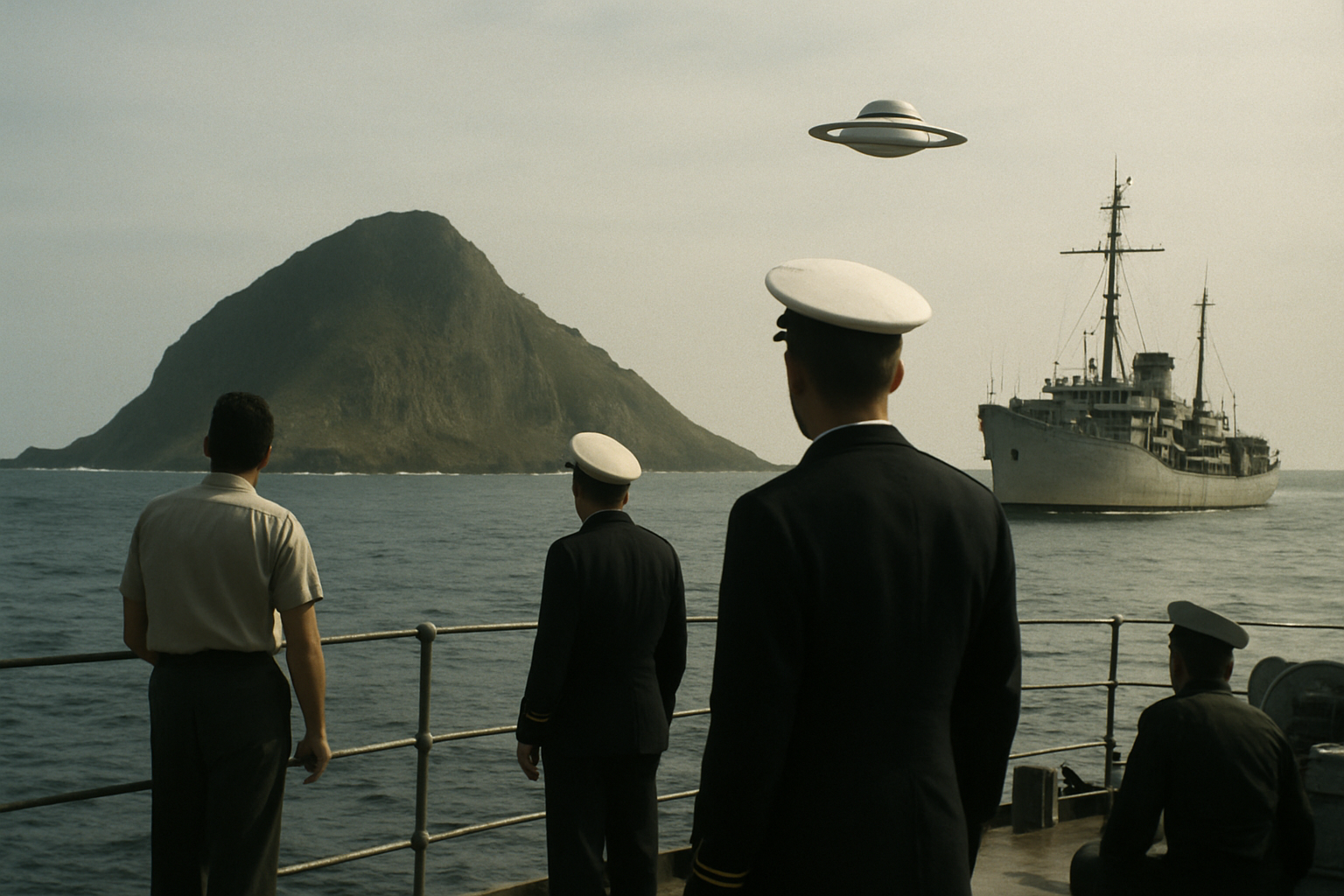
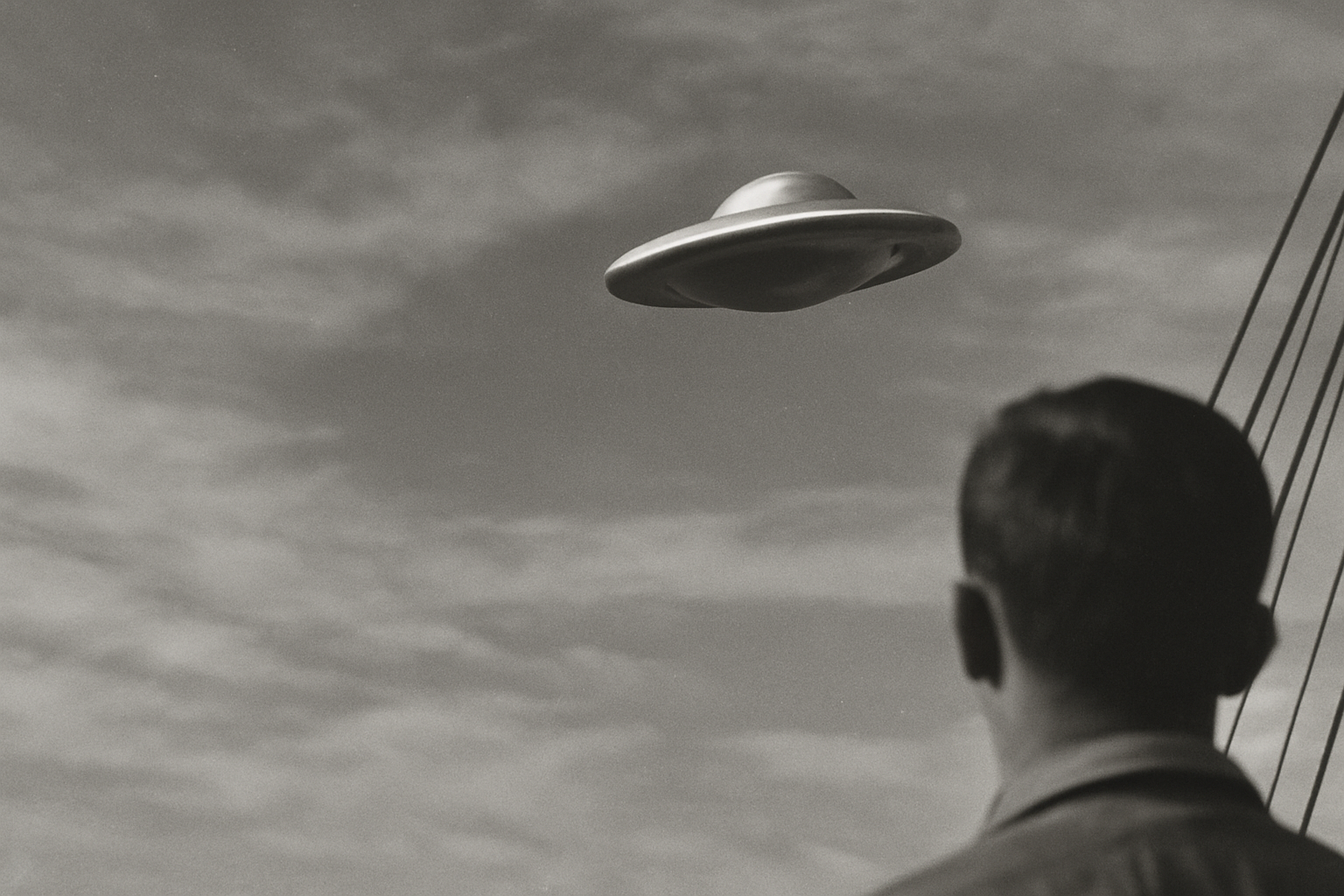
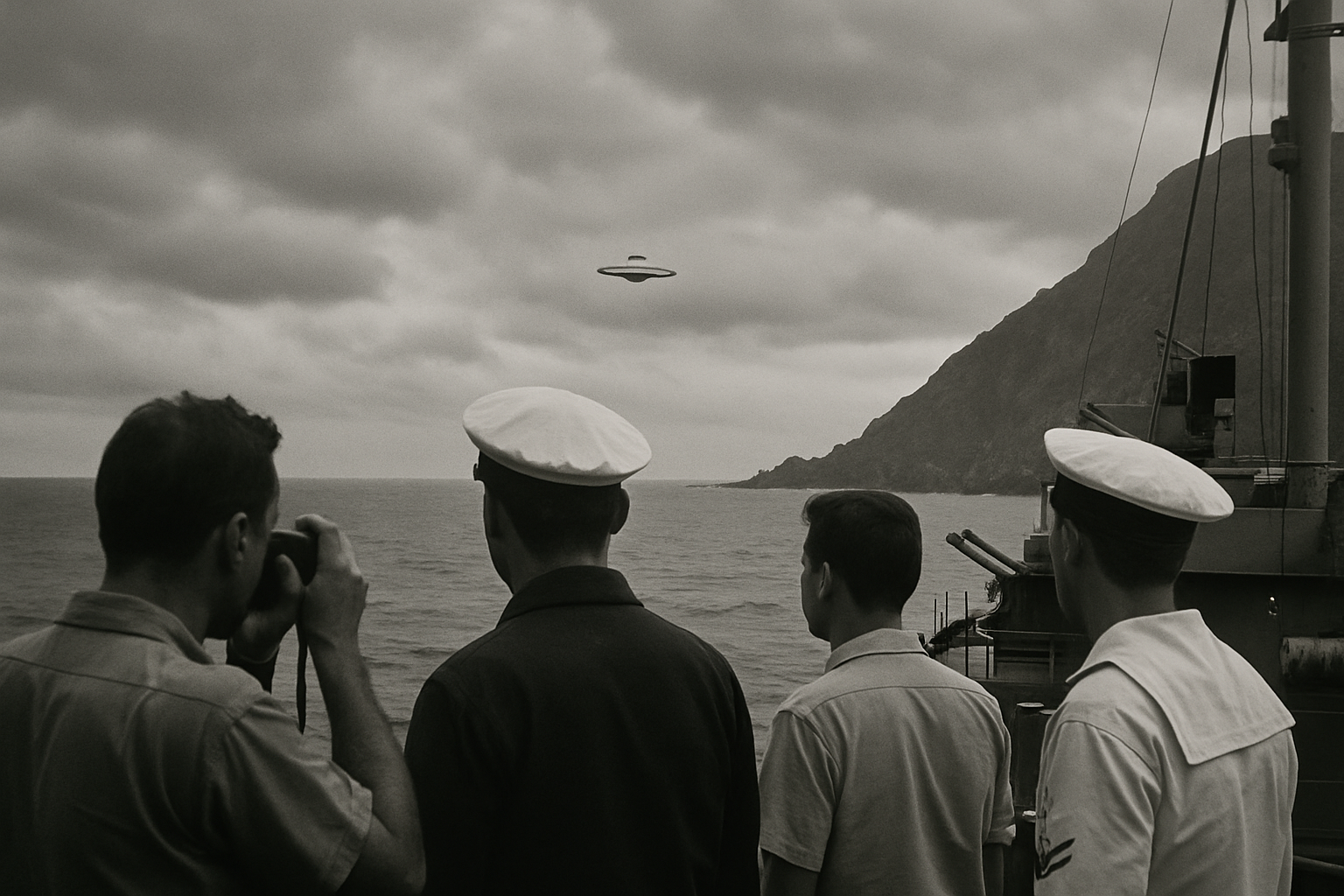
The Trindade Island UFO incident refers to a series of photographs taken on 16 January 1958 near Trindade Island (Ilha da Trindade), a small, isolated volcanic island in the South Atlantic Ocean about 1,100 km east of the Brazilian state of Espírito Santo.[1][2] The pictures were taken by Almiro Baraúna, a civilian professional photographer who was aboard the Brazilian Navy training ship NE Almirante Saldanha, which was supporting research connected with the International Geophysical Year (IGY).[1][2] According to the accounts, a silvery object encircled by a ring "like Saturn" was seen moving rapidly near the island, and Baraúna obtained several exposures of it before it departed.[1] After Brazilian newspapers published the photographs in February 1958, the case became one of Brazil's most famous UFO episodes, with the Navy Minister reported to have personally vouched for the images after a meeting with President Juscelino Kubitschek.[3] The U.S. Air Force's Project Blue Book and later skeptics concluded that the photographs were a hoax, citing technical problems with the images, and in 2010 a Brazilian television programme broadcast claims describing how the fake was allegedly produced.[2][4] The case remains disputed, with proponents and the Navy's contemporary handling on one side and skeptical and documentary evidence on the other.[2]
Background
Trindade Island is a small, rugged volcanic island in the South Atlantic, lying roughly 1,100 km off the coast of Espírito Santo and forming part of the Trindade and Martim Vaz group.[1] In the late 1950s the island hosted a small Brazilian presence connected with the International Geophysical Year (IGY), an international scientific programme running in 1957–1958, and the Navy training ship NE Almirante Saldanha was used in support of this work.[1][2]
Among those aboard was Almiro Baraúna, a civilian professional photographer from Niterói who specialized in underwater photography and had been engaged in connection with oceanographic and related research.[2] The episode took place during a period of heightened public interest in flying saucers in Brazil, when such reports were widely covered in the popular press.[1]
The sighting and photographs
By the accounts that later circulated, around midday on 16 January 1958—reported variously between about 12:00 and 12:20 local time—an object was noticed in the sky near the island while the ship was preparing to depart.[1][3] Witnesses described it as a silvery, disc-shaped body encircled by a ring, likened to the planet Saturn, that moved silently and at high speed; in some accounts it approached from the sea, passed near a prominent peak on the island, then turned and sped away.[1][2]
When the object was seen, Baraúna was called to photograph it; he retrieved his camera, moved onto the deck, and reportedly managed to capture a sequence of images in the short time the object was visible.[1] Baraúna stated that he made six exposures, of which four were usable, two being spoiled by the commotion on deck.[2] Navy documents later released in 2011 instead recorded that, after the film was developed aboard ship, a disputed "strange mark" appeared on three frames rather than four.[2]
Estimates of how many people witnessed something also varied widely. Baraúna spoke of roughly fifty people aboard, while some catalogues of the case cite figures in the order of "at least 47" or 48 observers; by contrast, a naval officer is reported to have said that only about eight people actually saw an object.[3][2]
Official response and publication
The Brazilian Navy initially handled the matter with caution, and accounts indicate that officers were concerned that sensational publicity could cause public alarm.[2] The film was developed and examined, and Baraúna later claimed that the negatives were assessed as genuine by Navy facilities and by the aerial-survey firm Serviço Aerofotogramétrico Cruzeiro do Sul; however, documents released in 2011 did not corroborate the specific technical conclusions—such as calculated speed and size of the object—that he attributed to such analyses.[2]
The case reached the public in February 1958 after copies of the enlarged photographs, said to have been offered to President Juscelino Kubitschek, came into the hands of the press; the daily *Correio da Manhã* and other Brazilian papers published the sequence, with *Correio da Manhã* carrying it on 21 February 1958.[2][3] Following a meeting with the President, the Navy Minister, Admiral Antônio Alves Câmara, was reported to have vouched personally for the authenticity of the pictures.[3] Accounts of the film's handling later proved inconsistent: the officer Carlos Alberto Ferreira Bacellar described an "strange mark" on the negatives without the clear disc shape seen in the later enlargements, and the 2011 documents indicated that Baraúna was allowed to take the negatives away after the ship docked, removing them from continuous military oversight.[2]
Explanations and disputes
The photographs received mixed evaluations from the outset. Some Brazilian analyses treated them as genuine, while the U.S. Air Force's Project Blue Book and several skeptical investigators concluded that the images were a hoax; Blue Book classified the case as "probably a hoax," and the analysis attributed to its scientists noted that the object showed little contrast and cast no clear shadow under the near-midday sun.[2][4]
Skeptics also raised circumstantial concerns: Baraúna was known to have produced trick photographs in the past, including a 1953 demonstration showing how a flying-saucer image could be faked, and he had access to the negatives for a period before they were examined.[3][2][4] Doubts were further fed by the wide discrepancies in witness numbers and in descriptions of the object.[2]
The most direct hoax claims came decades later. On 15 August 2010 the Globo television programme *Fantástico* broadcast testimony from an acquaintance of Baraúna, Emília Bittencourt, who said he had confessed to fabricating the object from two kitchen spoons joined together and photographed against his refrigerator as a backdrop.[2][4] In January 2011 a photographer nephew of Baraúna was reported to corroborate that his uncle had described staging the images in his home laboratory; other accounts instead point to a relative who initially seemed to confirm the fraud and later disputed having done so, so the family testimony is not fully consistent.[2] Proponents of the case continue to emphasize the Navy's contemporary endorsement and the multiple alleged witnesses, so the incident remains genuinely disputed rather than settled.[2]
Aftermath and significance
The Trindade Island photographs became one of the best-known UFO cases in Brazil and were widely reproduced in international ufological literature as a rare instance of a daylight, multi-frame photographic sequence with apparent official endorsement.[3][2]
The release of Brazilian Navy archival documents around 2011 reframed the case for many researchers by exposing inconsistencies between Baraúna's public account and the contemporary records, including the number of marked frames, the handling of the negatives, and the absence of the technical findings he had cited.[2] Together with the 2010 broadcast of alleged confessions, this material strengthened the skeptical reading of the episode.[2][4] Even so, the case is still cited and debated, and it endures as a landmark in the history of Brazilian UFO reports and in discussions of how photographic evidence and official responses are weighed.[3][2]
Key quotes
“The U.S. Air Force's Project Blue Book ultimately classified the Trindade photographs as "probably a hoax," with its review noting that the object showed low contrast and cast no clear shadow under the near-midday sun.
“An acquaintance reportedly said Baraúna confessed to faking the object from "two kitchen spoons joined together," photographed against his refrigerator.
References
- 1.
- 2.
- 3.
- 4.
Similar cases
Scored on agency / year proximity / region / tag overlap — same agency +3, near year +4, same region +2, shared tag ×2.