Molyobka anomalous zone (M-Triangle)
Illustrations
AI-generated illustration — not actual footage or evidence; an interpretive depiction based on the documented account
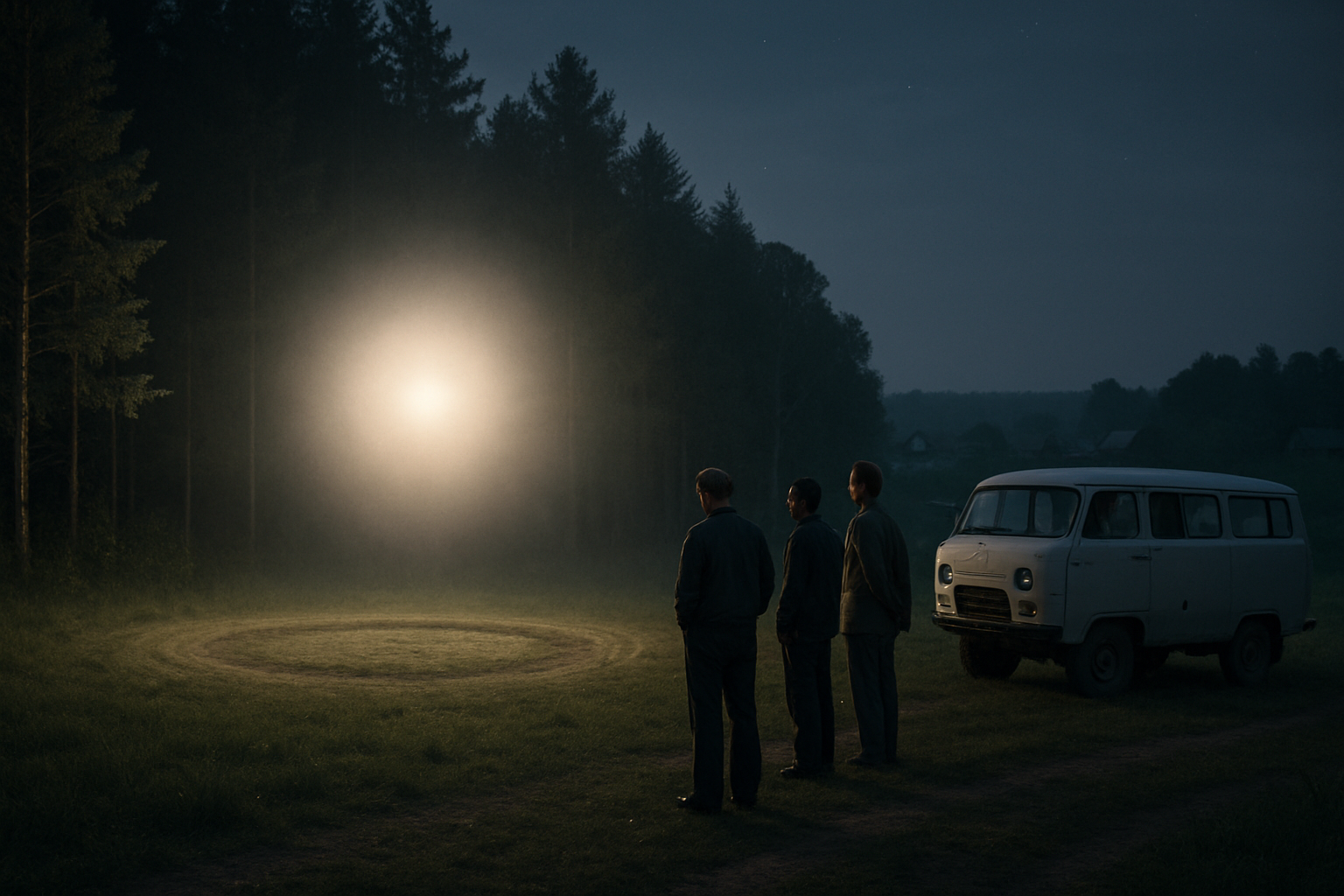
The Molyobka anomalous zone (Russian: *Молёбская аномальная зона*, *Molyobskaya anomalnaya zona*), widely known as the M-Triangle (*М-ский треугольник*, *M-sky treugolnik*), is a forested area of roughly 70 km2 on the left bank of the Sylva River, between the villages of Molyobka (*Молёбка*) and Kamenka (*Каменка*) on the border of Perm Krai and Sverdlovsk Oblast, in the former USSR.[1] It became one of the best-known "anomalous zones" (*аномальная зона*) in the Soviet Union and post-Soviet Russia after media reports of UFOs and other phenomena.[2]
The zone is generally traced to the Perm geologist Emil Bachurin, who reported observing a glow over the forest and finding a circular mark about 62 metres across in October 1983.[3][2] Wider public interest followed the 1989 newspaper series by the Riga journalist Pavel Mukhortov.[1] Reported phenomena have never been confirmed scientifically; a 1992 expedition by Perm State University found no magnetic-field anomalies and gave mundane explanations for the features claimed as anomalous.[1] The site has since become a tourist attraction, including a wooden roadside statue of an alien ("Alyosha") erected near Molyobka.[5]
Discovery and naming
The zone is usually attributed to Emil Fyodorovich Bachurin (*Эмиль Фёдорович Бачурин*), a geologist from Perm. According to accounts of the case, in October 1983 Bachurin saw a glow over the forest near Molyobka and afterwards found a circular trace about 62 metres in diameter on the ground, which he interpreted as the landing site of a craft.[3][2] Some Russian-language sources date the discovery of the 62-metre circle to October 1984 rather than 1983, and the discrepancy is unresolved in the literature.[2]
The area became nationally famous in 1989, when the Riga journalist Pavel Mukhortov (*Павел Мухортов*) published a sensational series of articles titled *М-ский треугольник, или Чужие здесь не ходят* ("The M-Triangle, or Aliens Don't Walk Here") in the newspaper *Sovetskaya Molodyozh*.[1] The abbreviation "M" is generally taken from Molyobka. On 12 October 1989 *Komsomolskaya Pravda* published a related account, and dozens of further articles appeared in 1989–1990, after which large numbers of visitors began travelling to the site.[1][2]
Reported phenomena
Visitors and self-described ufologists have reported a range of phenomena in the zone. These include glowing spheres and similar bodies said to arrange themselves into regular geometric figures, columns of light, multicoloured flashes, "sound mirages," alleged time distortions, and malfunctions of photographic and video equipment and battery charges.[1][2] Some accounts describe headaches, fevers, or claimed telepathic contact with extraterrestrials.[1] Skeptics note that the reported "columns of light" are consistent with the beams of other tourists' flashlights swept across the night sky.[2]
Guides have given popular names to particular spots in the forest, such as the "Witch Rings" and the "Astral clearing."[3] Skeptical commentators note that many reported "anomalies" are consistent with photographic artefacts, insects, fog, and the strong expectations of visitors who travel to the site specifically to encounter the unusual.[2]
Investigations and skeptical explanations
Members of the Russian research association Kosmopoisk (*Космопоиск*), coordinated by Vadim Chernobrov (*Вадим Чернобров*), are among the groups that have organised expeditions to the zone as part of their wider study of "anomalous" sites in Russia.[4]
Conventional investigations have not supported claims of genuine anomalies. In the summer of 1992, staff and students of Perm State University surveyed the area and reported that no variations in the magnetic field were detected and that soil samples revealed nothing unusual.[1] The same survey concluded that the small "pyramids" sometimes presented as artificial were heaps of slag left from copper smelting that had once operated in the area, and noted that geologists had buried magnets near the zone as an experiment or prank in the late 1980s, which may account for some reported "magnetic" effects.[1] In 1990, a group of nearly one hundred Molyobka residents reportedly issued an open letter denying that any anomalies occurred there.[2]
Tourism and legacy
Following the 1989 reports, the zone became a destination for tourists and UFO enthusiasts, with up to several hundred people visiting at a time during the 1989–1992 peak.[2] Perm Krai authorities later promoted the site for tourism; in 2008 the region received around 450,000 tourists, a large share of whom were said to visit the anomalous zone, with figures of roughly 100,000 visitors cited for 2011.[1] A half-metre wooden roadside statue of an alien (nicknamed "Alyosha"), carved from pine by the local craftsman Viktor Sazanov, was installed at the entrance to Molyobka in 2011 as a tourist landmark; it was restored and repainted in 2019.[5] Public interest declined after the 1990s, although the zone remains part of Perm Krai's regional tourism identity.[2]
Key quotes
“"The M-Triangle, or Aliens Don't Walk Here" — the title of Pavel Mukhortov's 1989 series that made the zone famous across the USSR.
References
- 1.
- 2.
- 3.
- 4.
- 5.
Similar cases
Scored on agency / year proximity / region / tag overlap — same agency +3, near year +4, same region +2, shared tag ×2.