Unidentified objects on screen and page
How sci-fi, film, TV, books, comics, games and urban legends depict UFOs, USOs and ULOs — and how the fiction drew from, and reshaped, real sightings and files. Every entry links back to the real case and object form it mirrors.
69 works
Film
Arrival (2016)
Denis Villeneuve's science-fiction drama in which a linguist is recruited to communicate with aliens whose ships appear over Earth. It reframes first contact as a problem of language rather than warfare.
Close Encounters of the Third Kind (1977)
Spielberg put astronomer J. Allen Hynek's "close encounter" taxonomy on screen, turning alien contact from invasion-dread into awe and communication.
Cocoon (1985)
Ron Howard's 1985 sci-fi drama in which benevolent aliens dredge up 'cocoons' holding their own kind from the seabed—and a swimming pool charged with life force restores youth to a group of Florida retirees.
Communion (1989)
A psychological thriller adapted from Whitley Strieber's memoir, with Christopher Walken as the author who claims alien abduction — its big-black-eyed 'Grey' all but fixed the popular image of the alien.
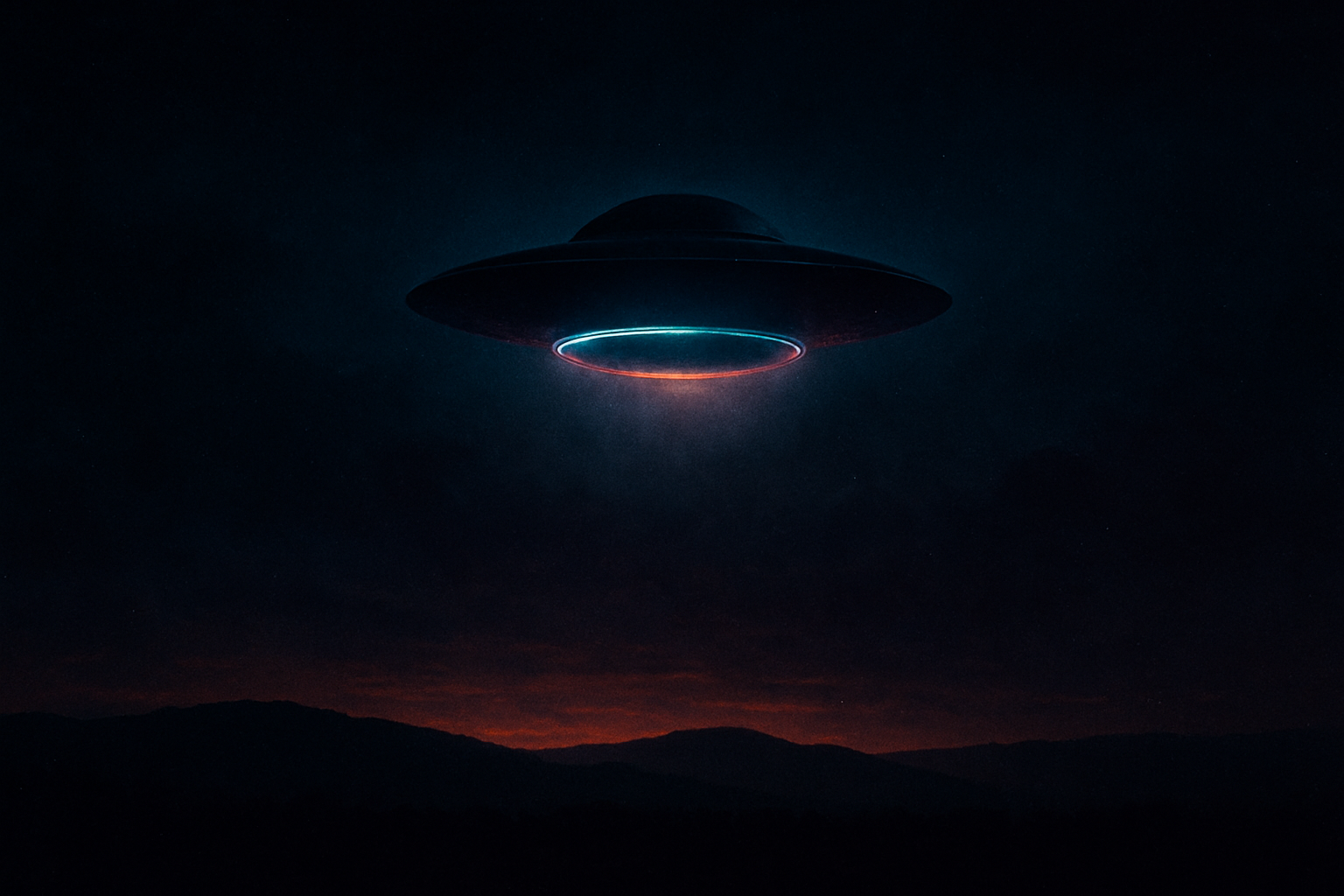
Contact (1997)
Robert Zemeckis's adaptation of Carl Sagan's novel, in which a SETI radio astronomer intercepts a signal from Vega and drags first contact back into the realm of data and peer review.
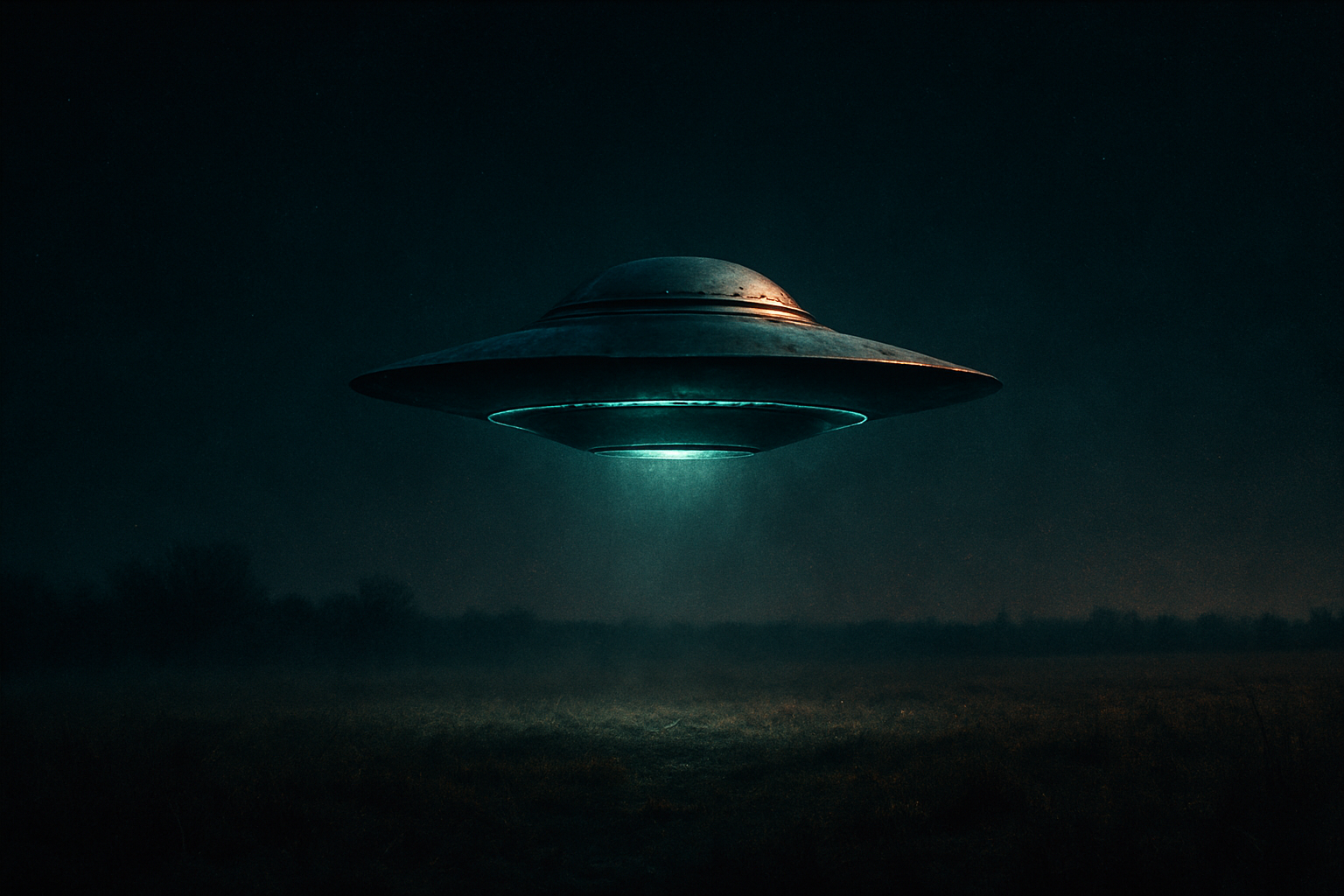
District 9: A Stranded Mothership Over Johannesburg as Apartheid Allegory
Neill Blomkamp's mockumentary sci-fi turns an alien mothership stalled over Johannesburg into a searing allegory for South African apartheid.
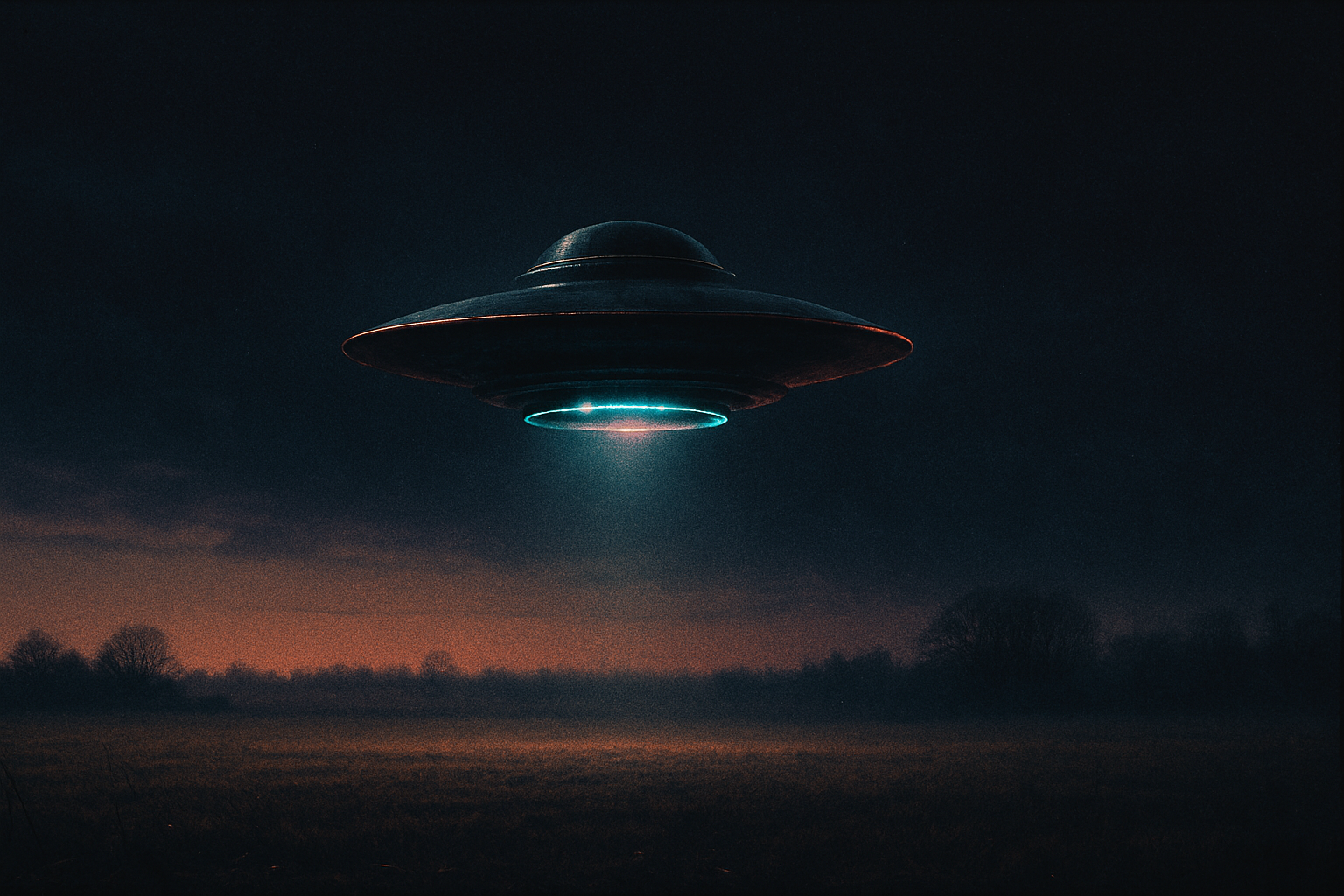
Earth vs. the Flying Saucers (1956)
A black-and-white 1956 sci-fi feature in which Ray Harryhausen's stop-motion saucers lay siege to Washington, D.C. — one of the most iconic screen echoes of Cold War flying-saucer panic.
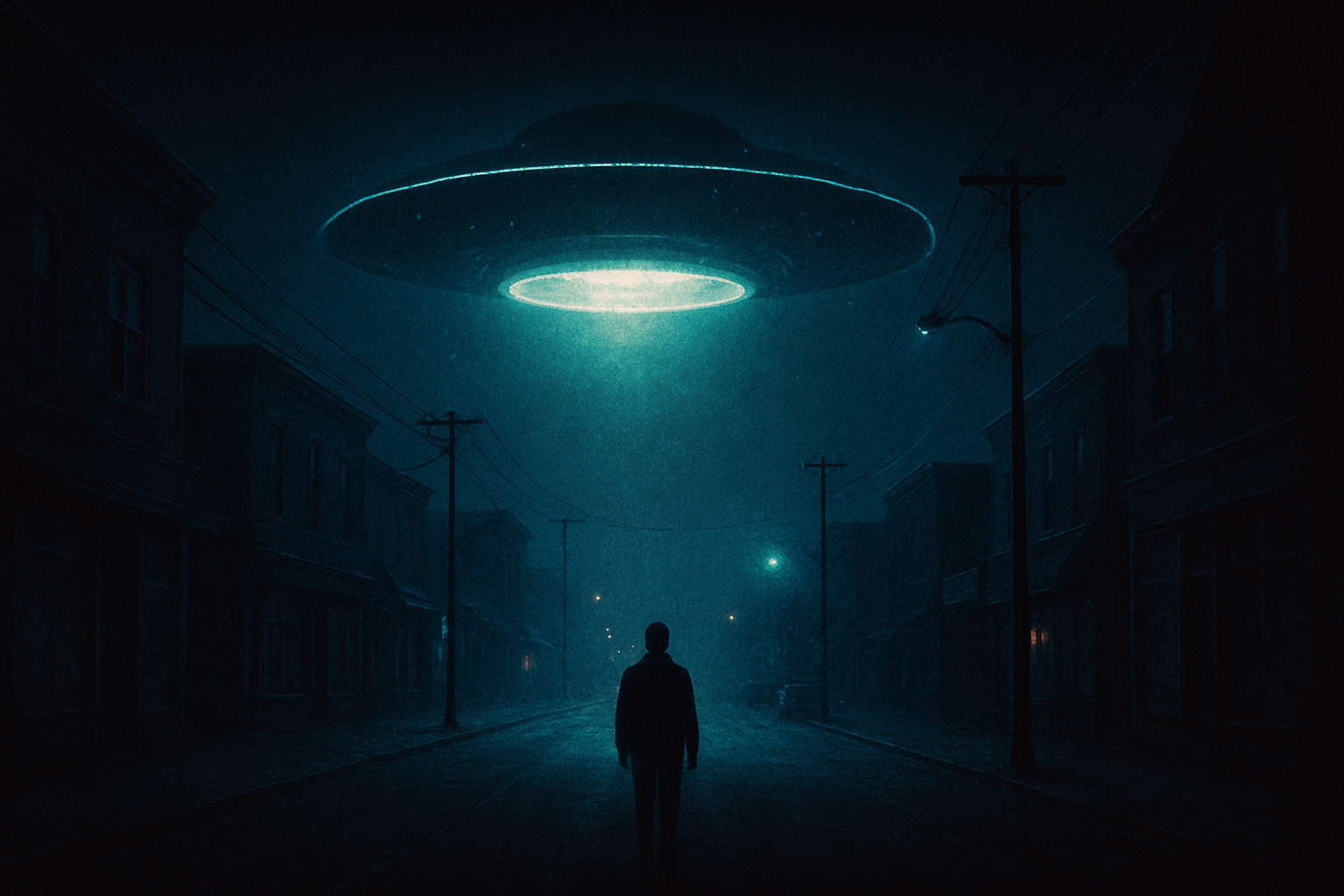
E.T. the Extra-Terrestrial (1982)
Spielberg recast the alien from Cold War invader into a gentle, homesick castaway — redefining "contact" through a child's eyes.
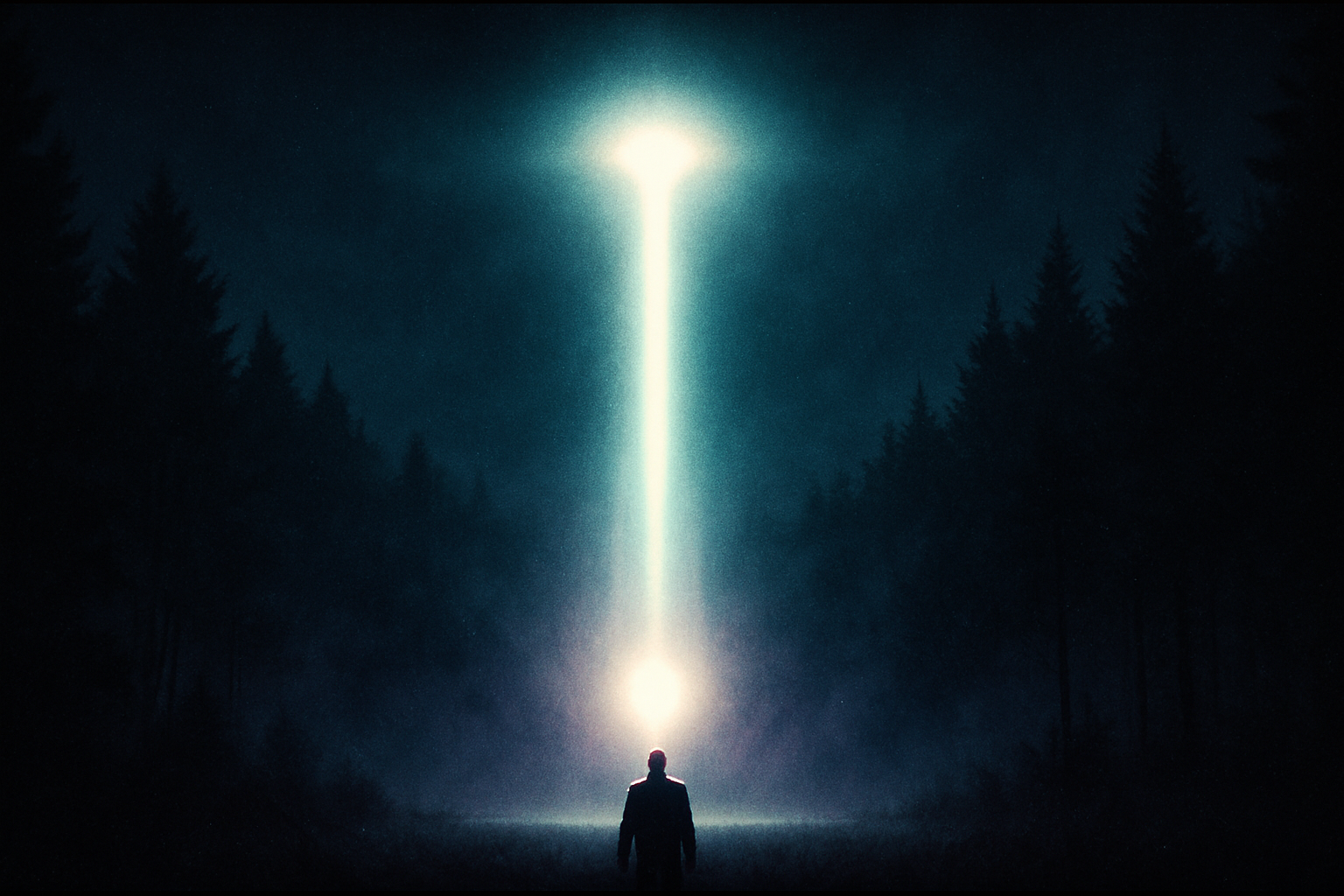
Fire in the Sky (1993)
A UFO-abduction film adapted from logger Travis Walton's own account — one of the few built on a named, multi-witness case that went through legal and media scrutiny.
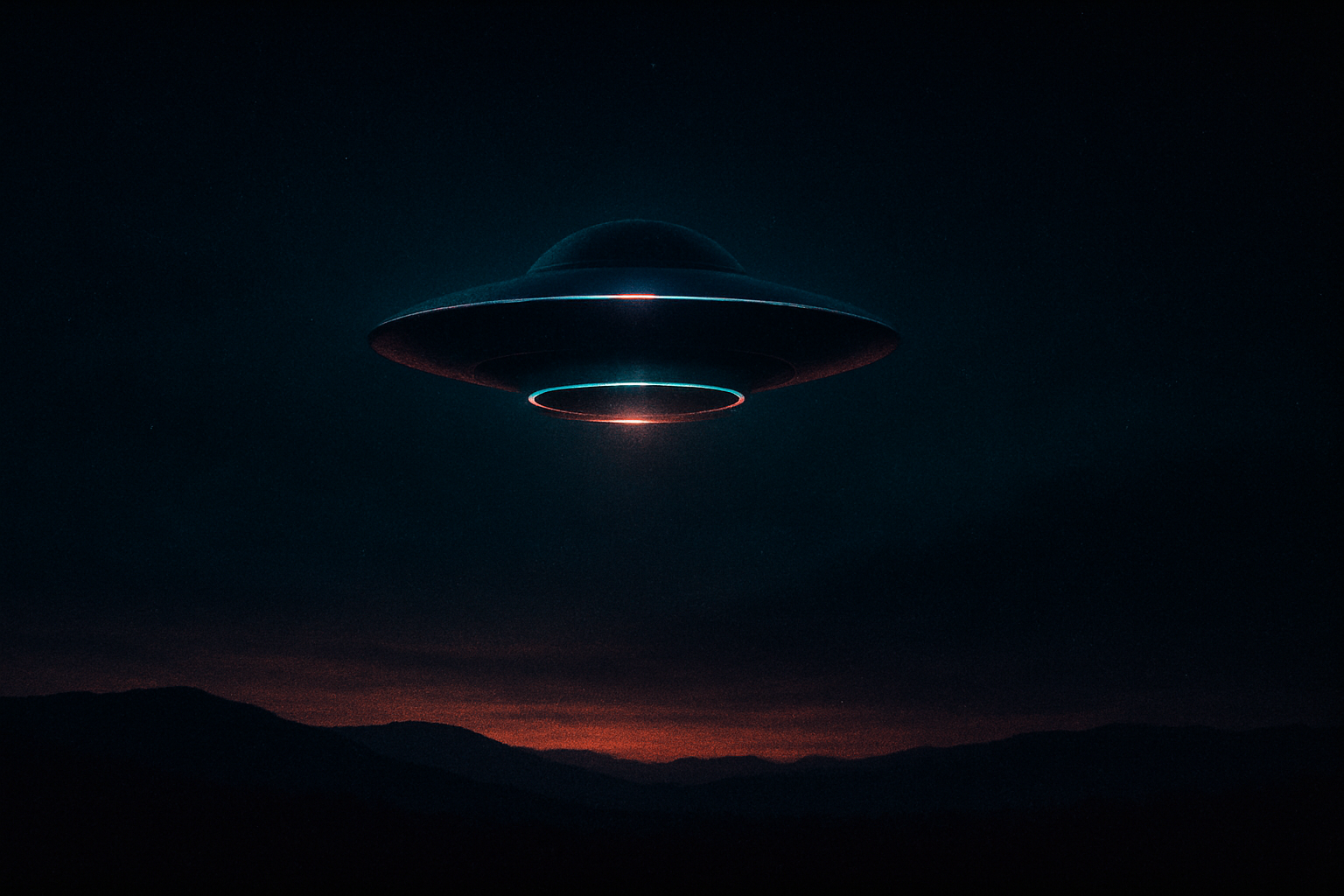
Flight of the Navigator (1986)
Disney's 1986 family sci-fi wraps "missing time" and a benevolent alien intelligence in a boy's-adventure package — a sentient, mirror-chromed craft carrying a memory-implanted kid across the galaxy.
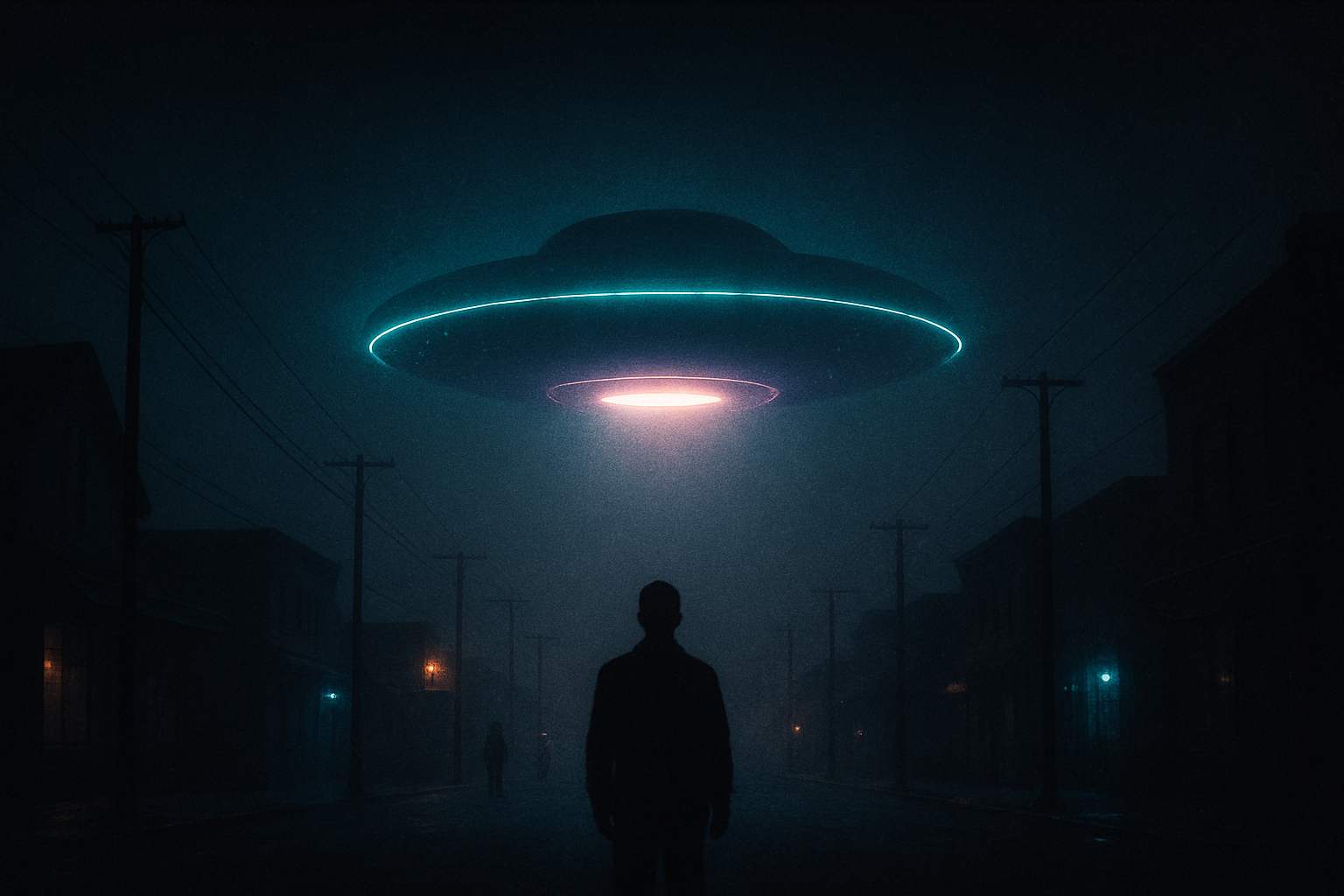
Independence Day (1996)
Roland Emmerich's alien-invasion blockbuster, in which a mothership over 550 km wide unleashes 15-mile-wide 'City Destroyers' and drags the Roswell and Area 51 legends onto the big screen.
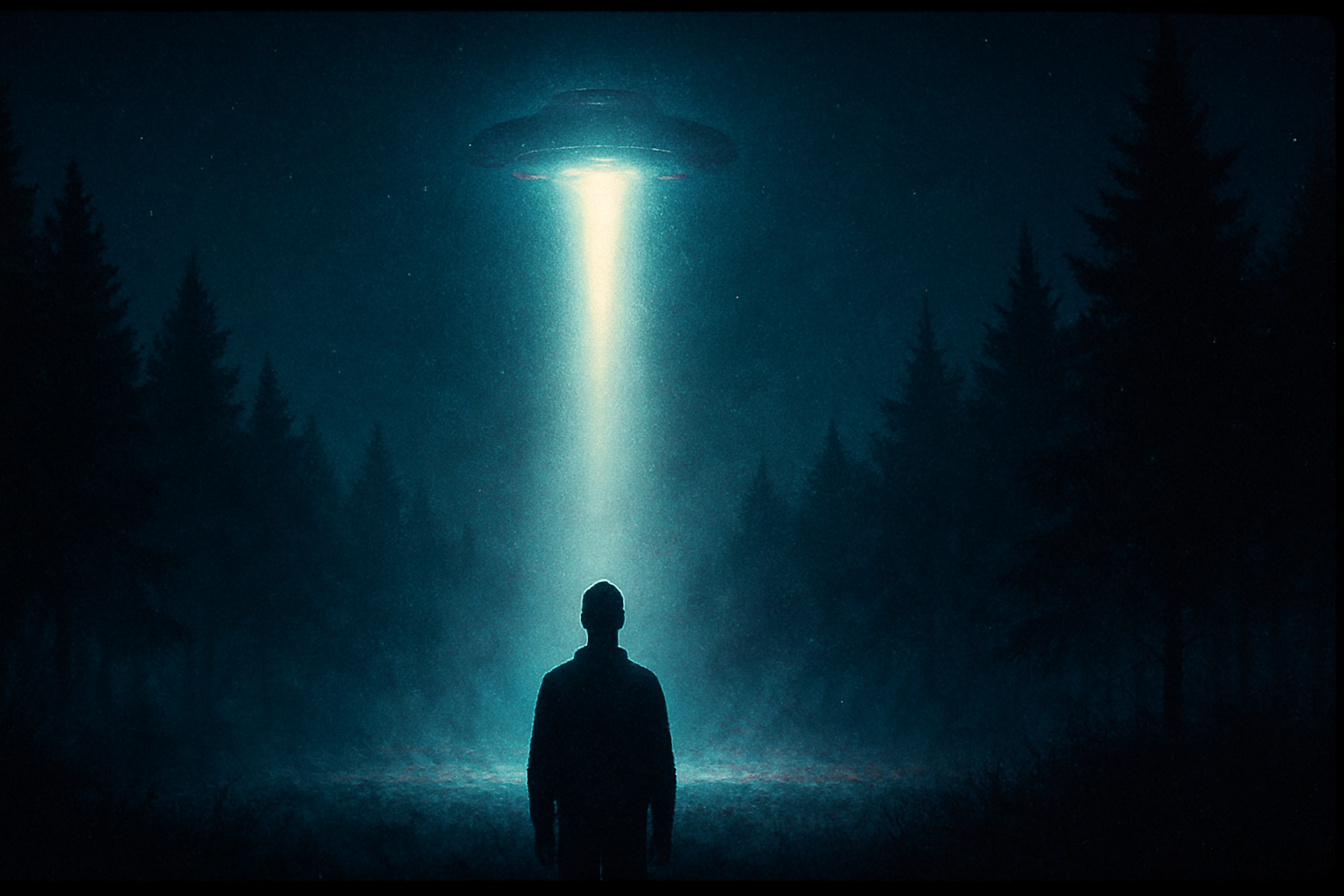
Mars Attacks! (1996)
Tim Burton's 1996 sci-fi black comedy turns the notorious 1962 Topps trading cards into a star-packed invasion farce, skewering Cold War alien-contact myths with big-brained Martians and gleaming flying saucers.
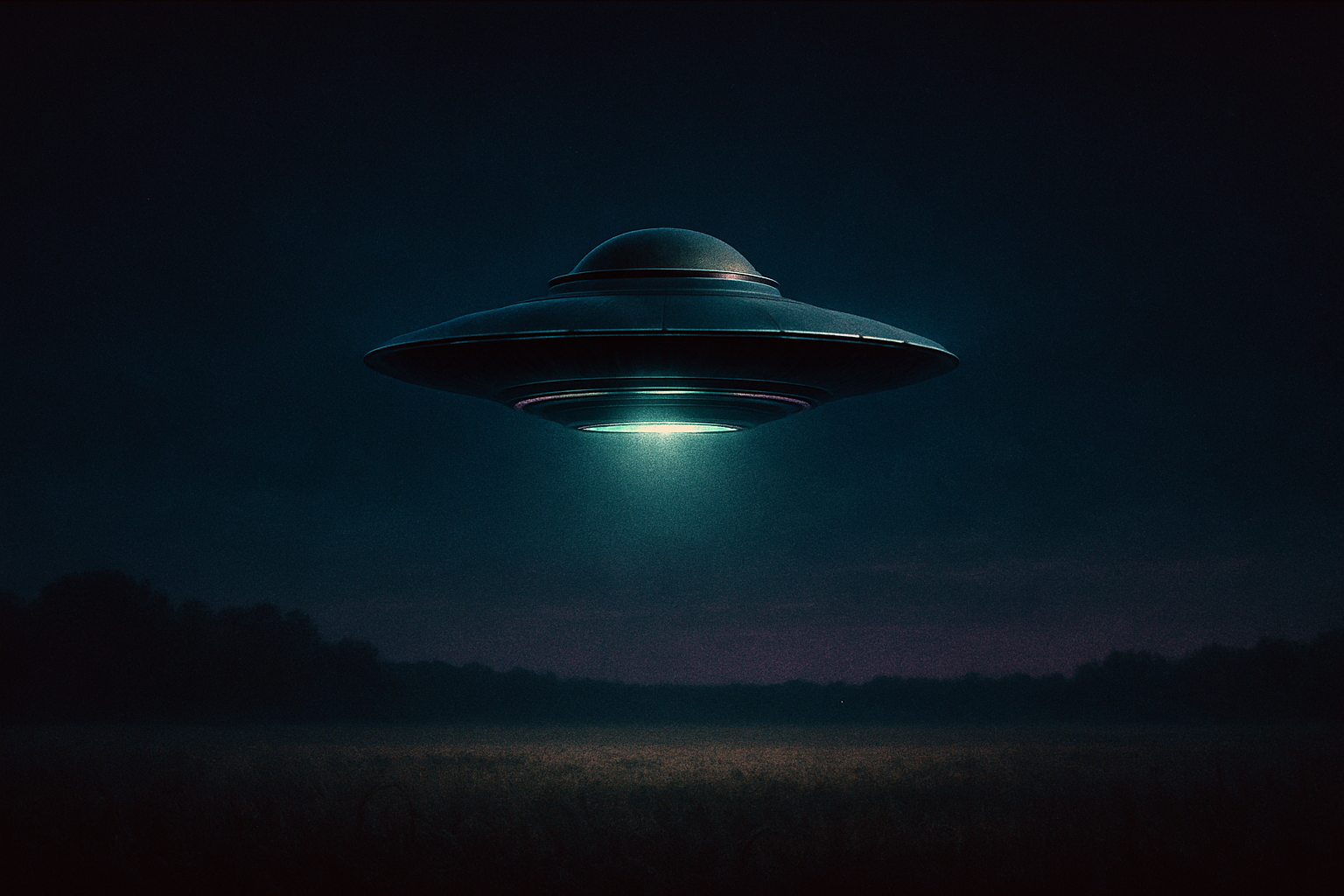
Men in Black (1997)
Barry Sonnenfeld's sci-fi comedy reworks ufology's sinister Men in Black folklore into a wisecracking buddy-cop tale about a secret agency policing alien immigrants on Earth.
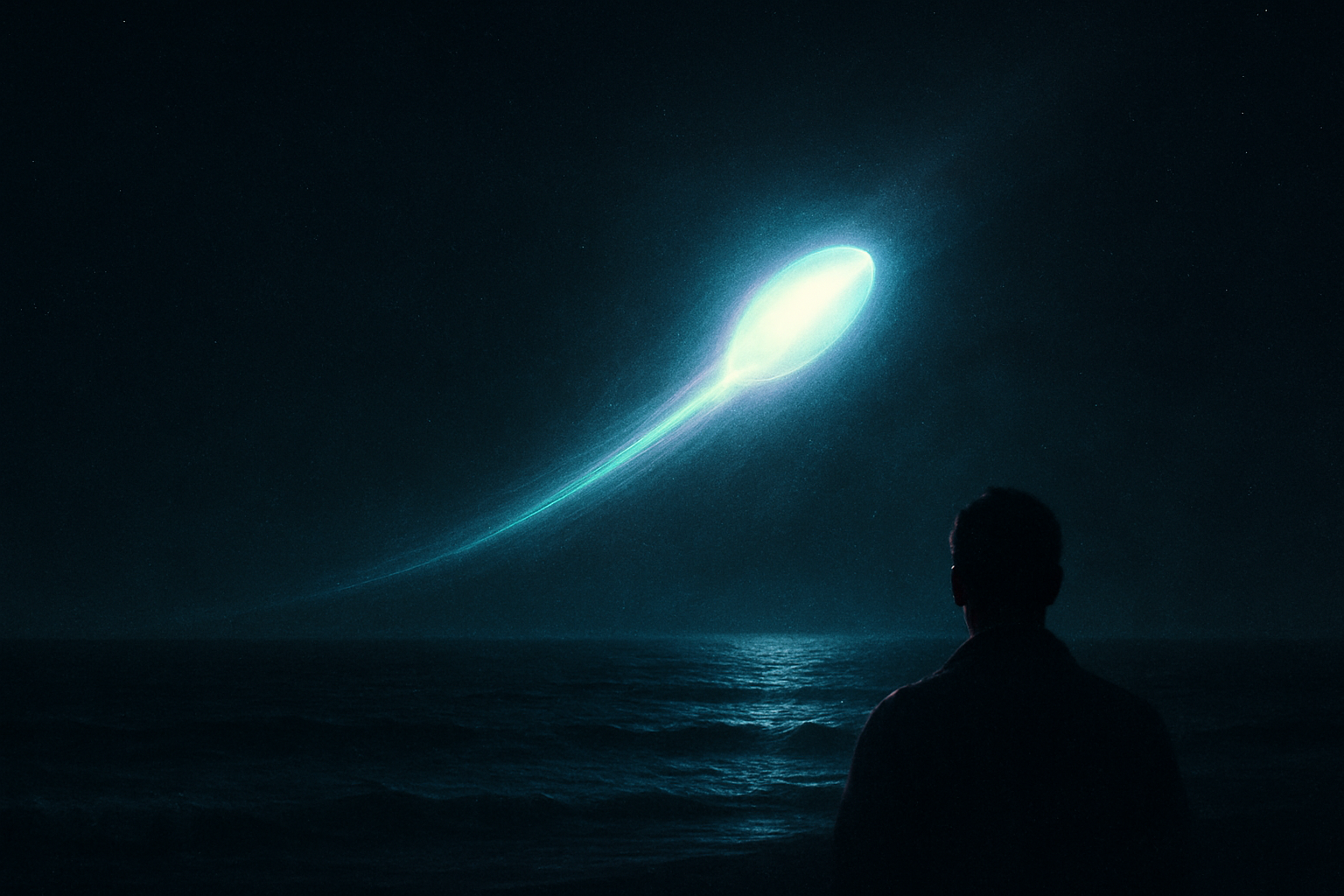
Nope
Jordan Peele's Nope reimagines the classic flying saucer as a living, territorial sky-predator that hunts by sight, turning the UFO into a mirror for our hunger for spectacle.
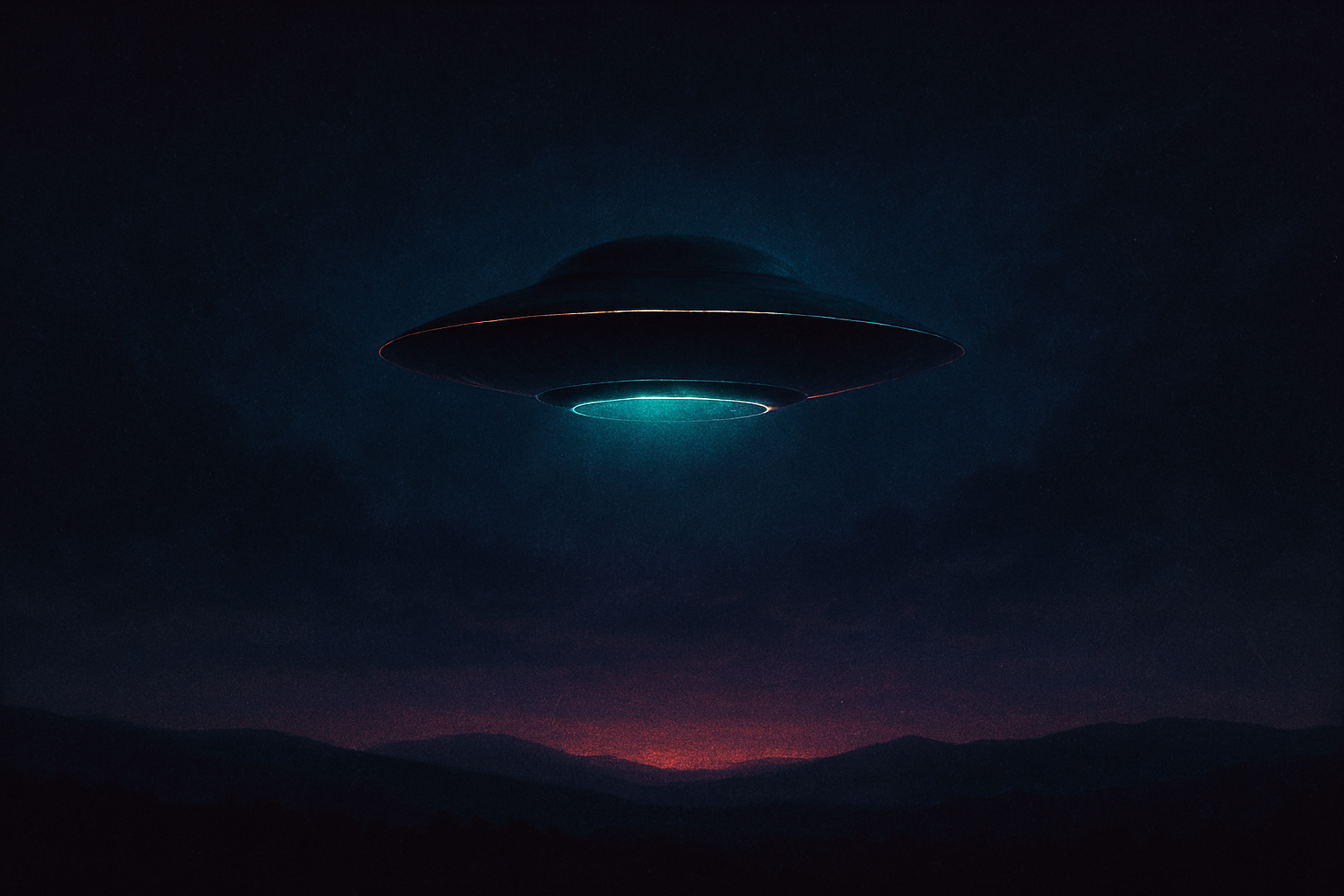
Paul: An Alien's Road-Trip Comedy
Simon Pegg and Nick Frost's sci-fi comedy sends two British geeks across the American Southwest, where they help a fugitive alien named Paul dodge the government while it gleefully riffs on greys, Area 51 and Roswell.
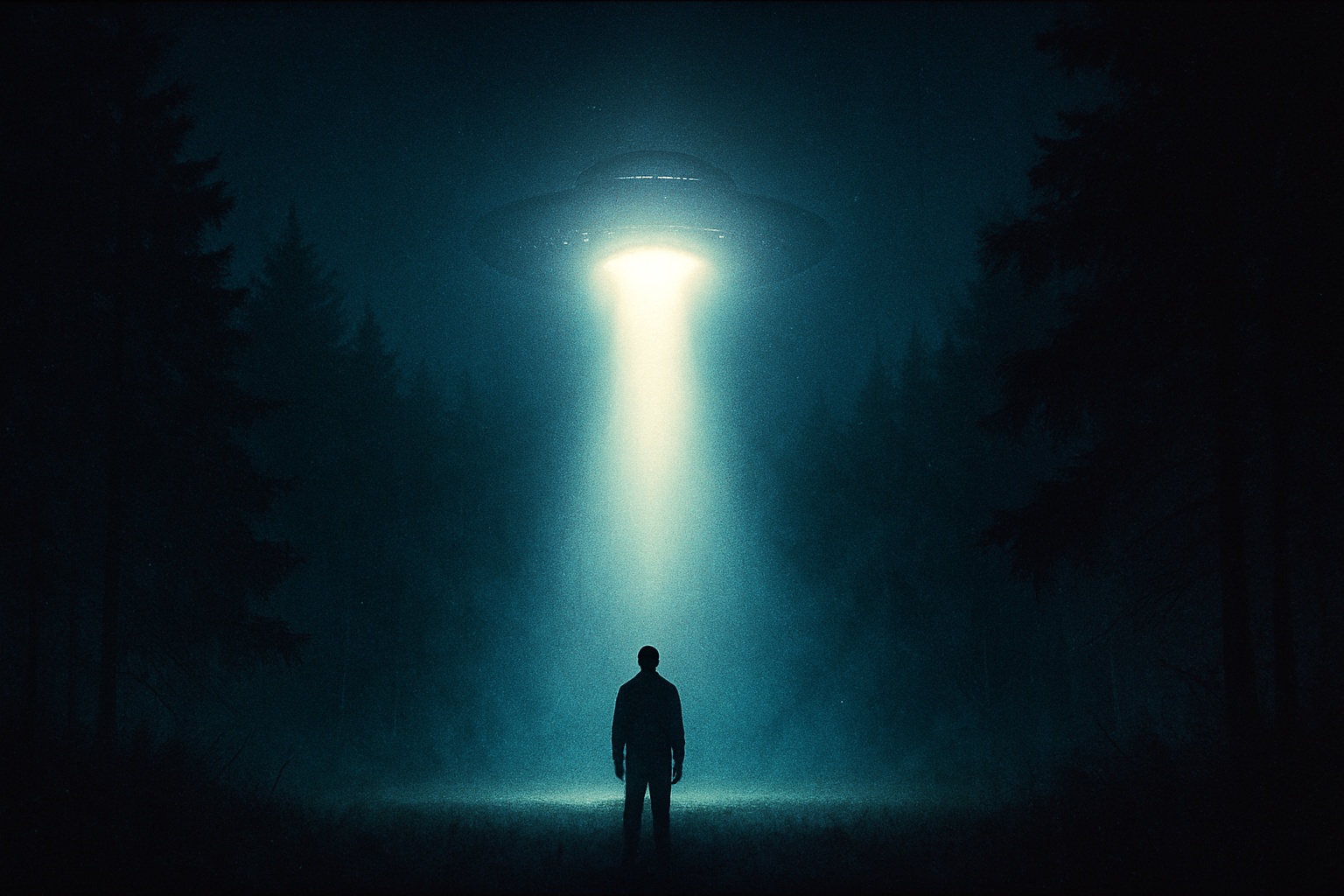
Signs (2002)
Shyamalan shrinks a worldwide alien invasion down to one Pennsylvania farmhouse — crop circles, a lost faith and a home under siege, all asking whether anything is truly coincidence.
Sphere (1998)
Barry Levinson's deep-sea thriller, adapted from Michael Crichton's novel, plants a mysterious sphere on the Pacific seabed — squarely in USO (Unidentified Submerged Object) territory.
Super 8
J.J. Abrams's 2011 sci-fi film, a love letter to Spielberg's Amblin era: a band of movie-mad kids witness a train wreck that frees an alien the military had caged for years.

The Abyss (1989)
James Cameron placed alien intelligence in the deep sea, bringing "unidentified submerged objects" (USOs) and trans-medium craft into the mainstream imagination.
The Day the Earth Stood Still (1951)
Robert Wise's 1951 classic, in which the alien emissary Klaatu and his robot Gort land a flying saucer in Washington and deliver an atomic-age ultimatum: carry your violence into space, and Earth will be eliminated.
The Fourth Kind (2009)
A pseudo-documentary abduction thriller set in Nome, Alaska, that splices staged "archival footage" with dramatizations and claims to be drawn from real cases—triggering a lawsuit over its "real footage" framing.
The Thing from Another World (1951)
An early Hollywood alien-invasion landmark: an Arctic research crew digs a crashed flying saucer and its frozen pilot out of the ice, putting crashed-disc lore and Cold War dread of infiltration on screen.
The War of the Worlds (1953)
George Pal's 1953 adaptation of H.G. Wells relocated the Martian invasion to Cold War California, defining the era's template of the hostile alien assault.
TV
Ancient Aliens (2010–)
History's long-running showcase for the "ancient astronaut" hypothesis, re-reading pyramids, the Nazca Lines and old myths as evidence of alien visitation — a pseudo-documentary that mainstream archaeology broadly rejects.
Dark Skies (1996 TV series)
"History as we know it is a lie." This 1996–97 NBC series reimagines postwar America as a hidden war between MJ-12, a government cover-up agency, and a body-snatching alien "Hive."
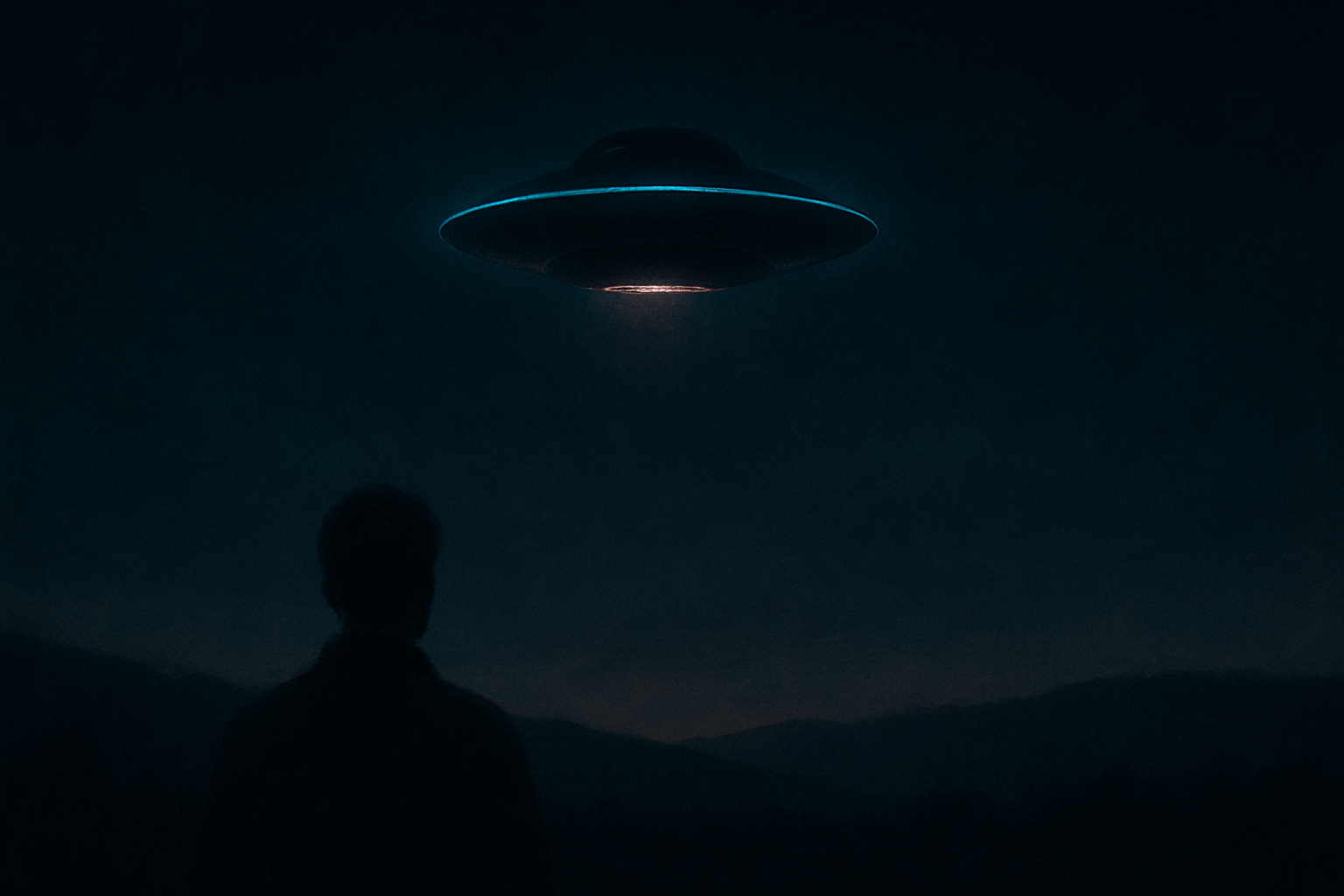
Doctor Who
The BBC's long-running science-fiction serial, on air since 1963, follows a face-changing alien time traveller, the Doctor, and turns Earth into a recurring target for invading fleets.
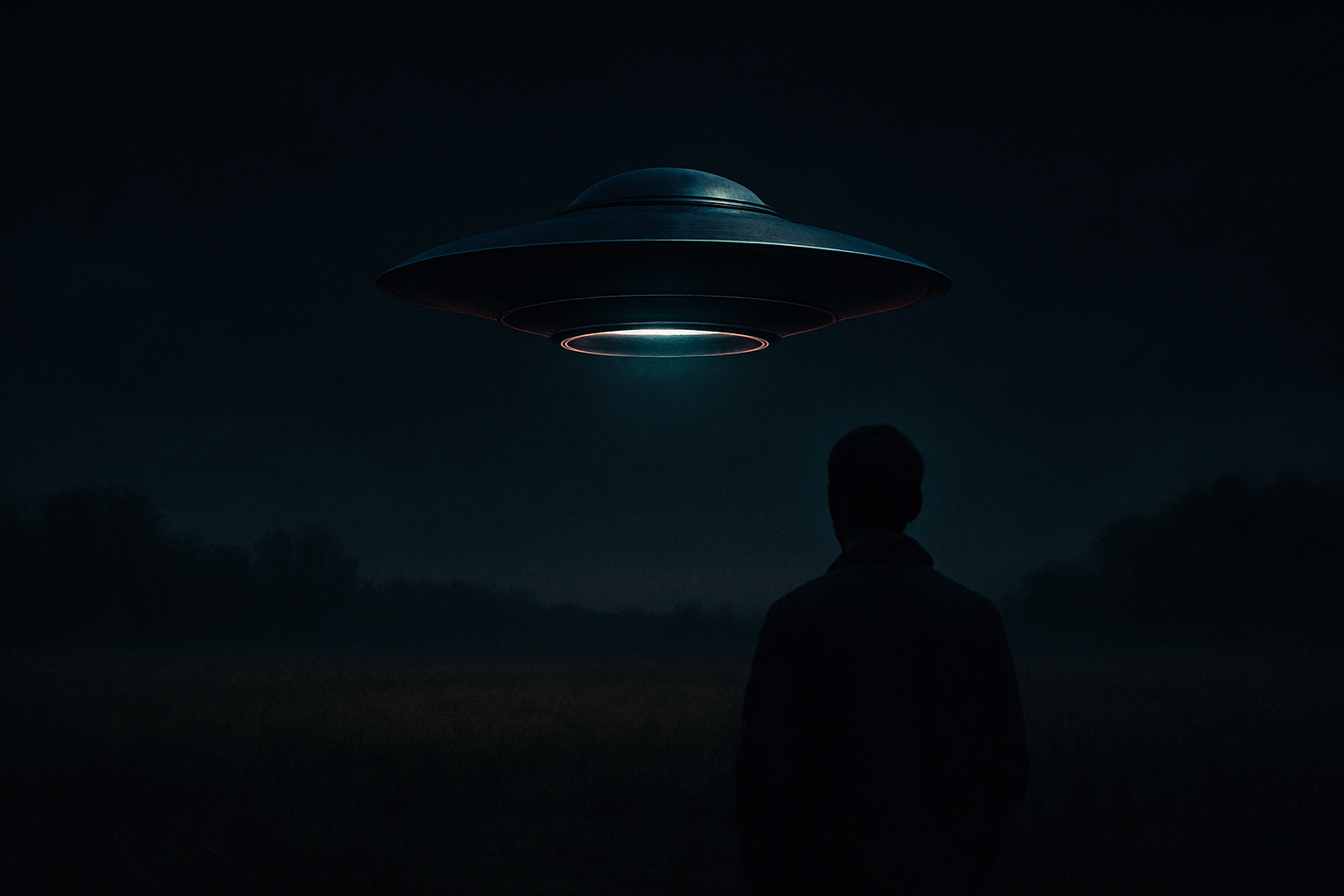
Invasion (2021– )
An Apple TV+ science-fiction series that stages an alien invasion in slow motion, through the eyes of ordinary, unconnected people scattered across the globe — trading spectacle for the texture of everyday life under threat.
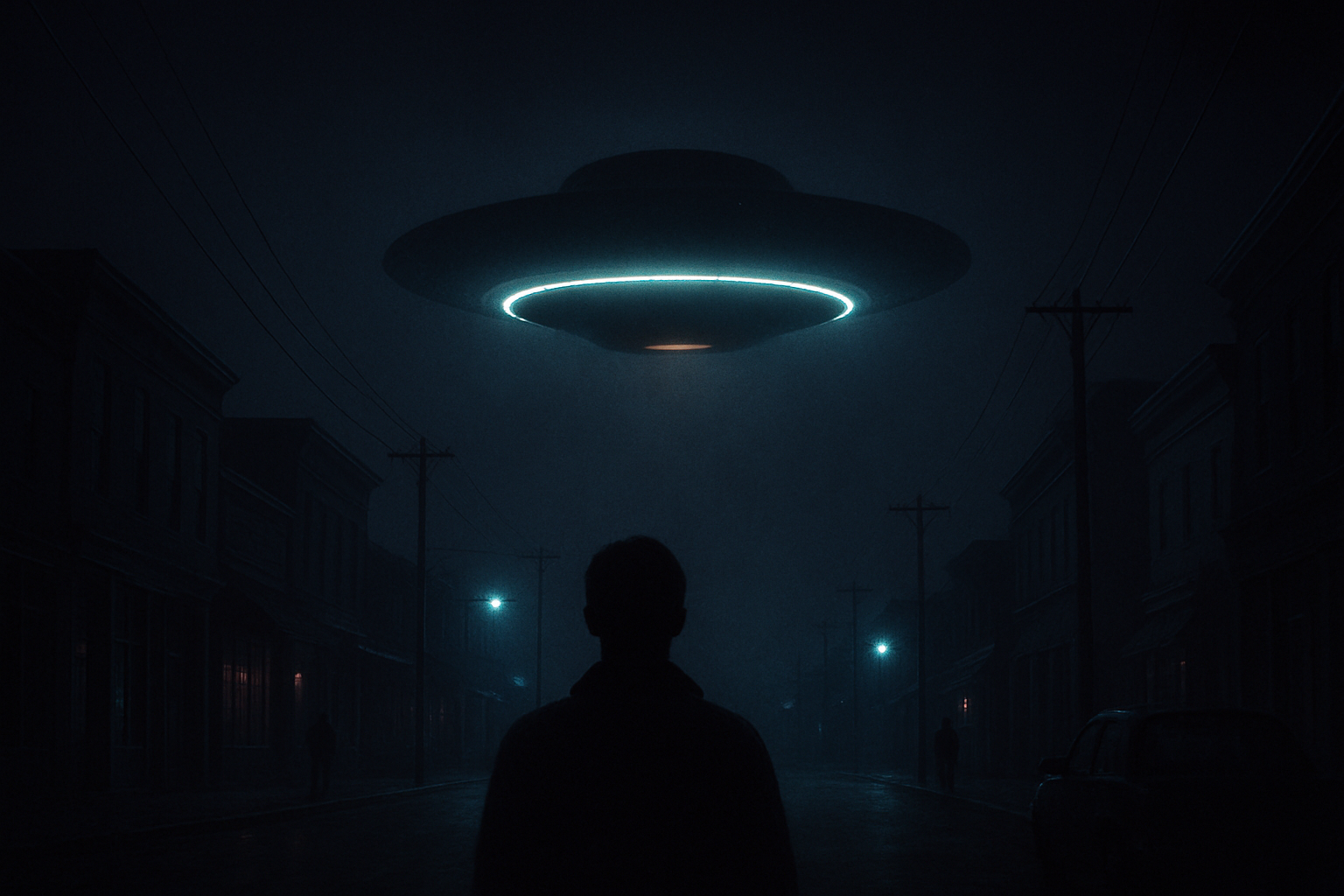
Project Blue Book (2019–2020)
A dramatized series built on the real U.S. Air Force UFO investigation of the same name, its lead modeled on scientific consultant J. Allen Hynek.
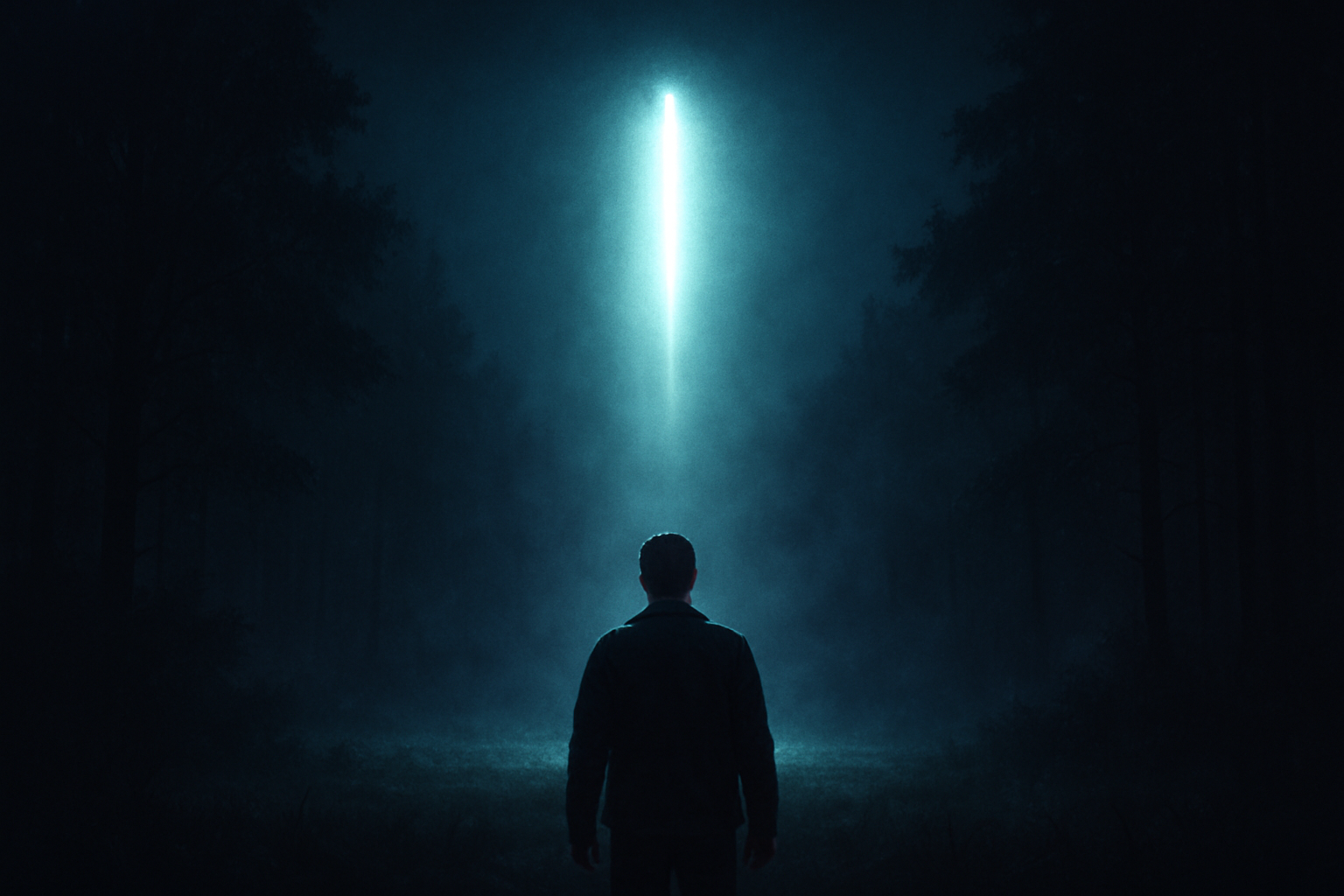
Resident Alien (2021–)
A crash-landed alien kills and impersonates a small-town doctor, only to grow a conscience while passing as human — turning the cold alien-invasion trope into a warm dark comedy.
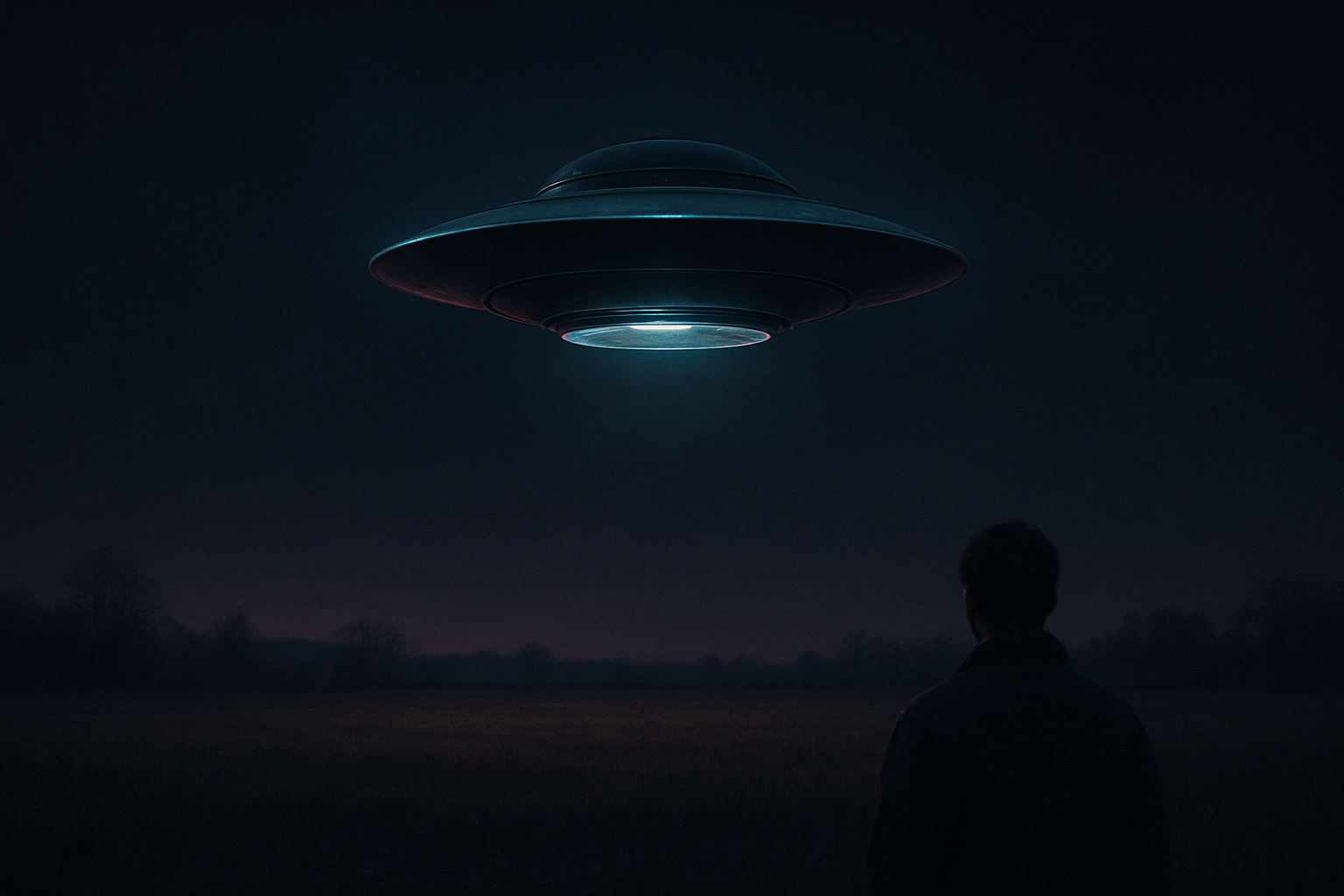
Roswell (1999–2002)
A teen sci-fi drama that relocates America's most famous UFO-crash myth to a high-school hallway: three alien "survivors" hiding in the town of Roswell fall for their human classmates while a covert government unit hunts them.
Star Trek: First Contact as Diplomacy
Gene Roddenberry's 1966 franchise reimagines alien contact as diplomacy and exploration rather than invasion, with the non-interference Prime Directive as its ethical spine.
Taken (Steven Spielberg Presents Taken)
A ten-part miniseries executive-produced by Steven Spielberg that braids the Roswell crash, alien abduction, and a secret hybrid-breeding program into a saga spanning three families and five decades.
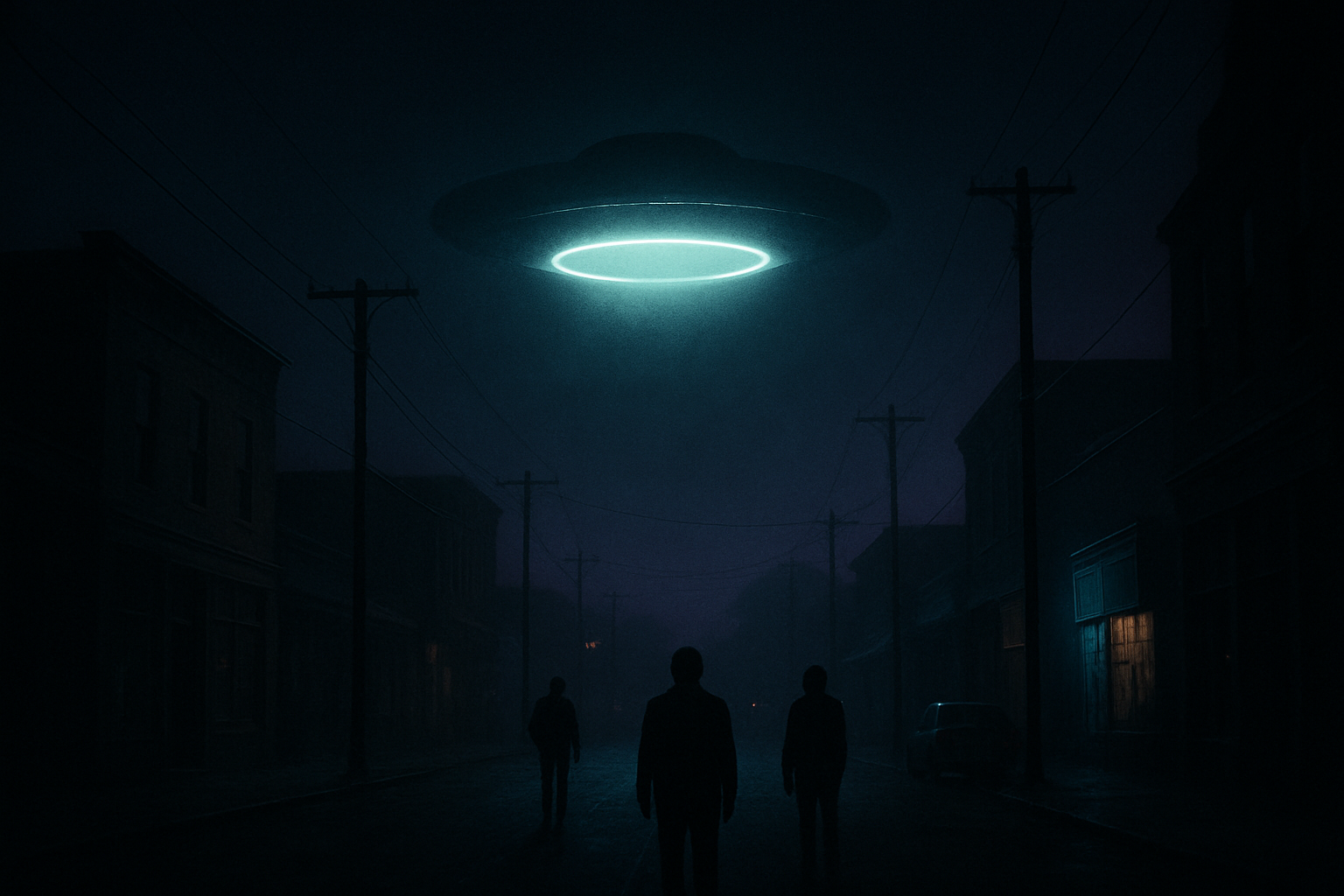
The Invaders (1967)
A 1960s American sci-fi series in which architect David Vincent witnesses a flying saucer land and realizes aliens are quietly infiltrating Earth in human form — and no one will believe him.
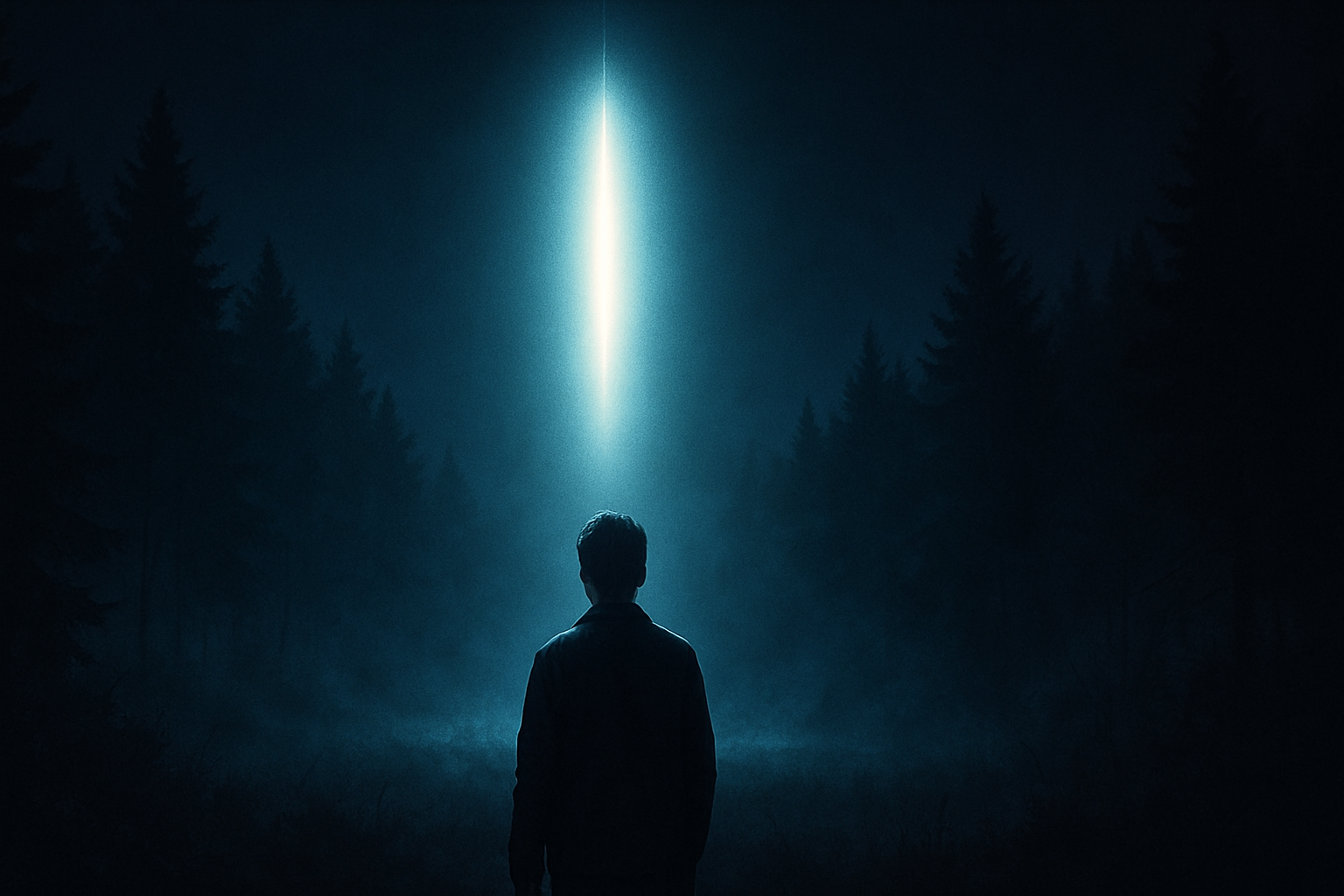
The Twilight Zone (1959)
Rod Serling's landmark CBS anthology (1959–1964) dressed Cold War anxieties in flying saucers and alien visitors; its defining episode, 'The Monsters Are Due on Maple Street,' argues the real monster is human paranoia.
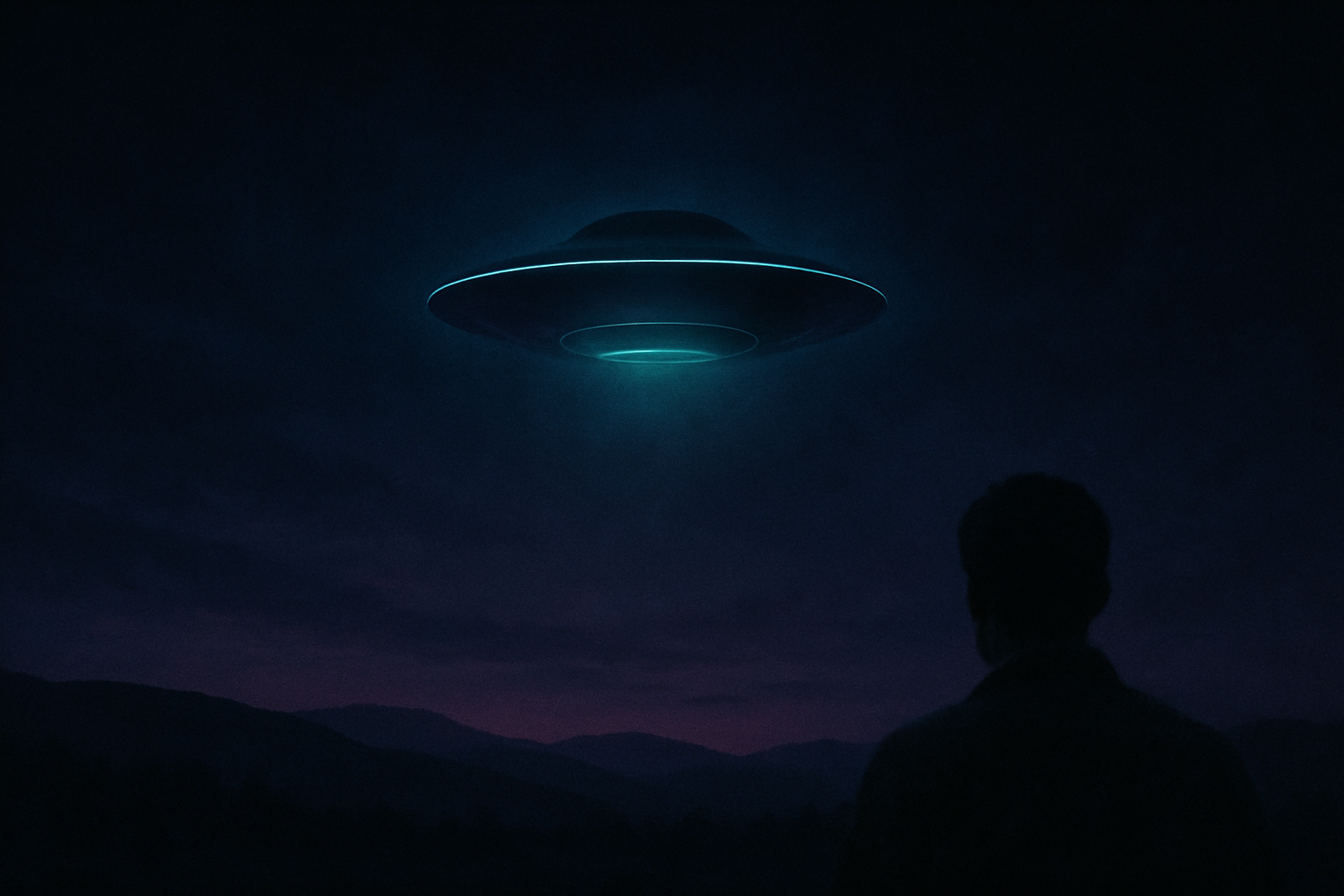
The X-Files (1993–2018)
It turned suspicion of a government cover-up of alien contact into the cultural grammar of a generation — "the truth is out there."
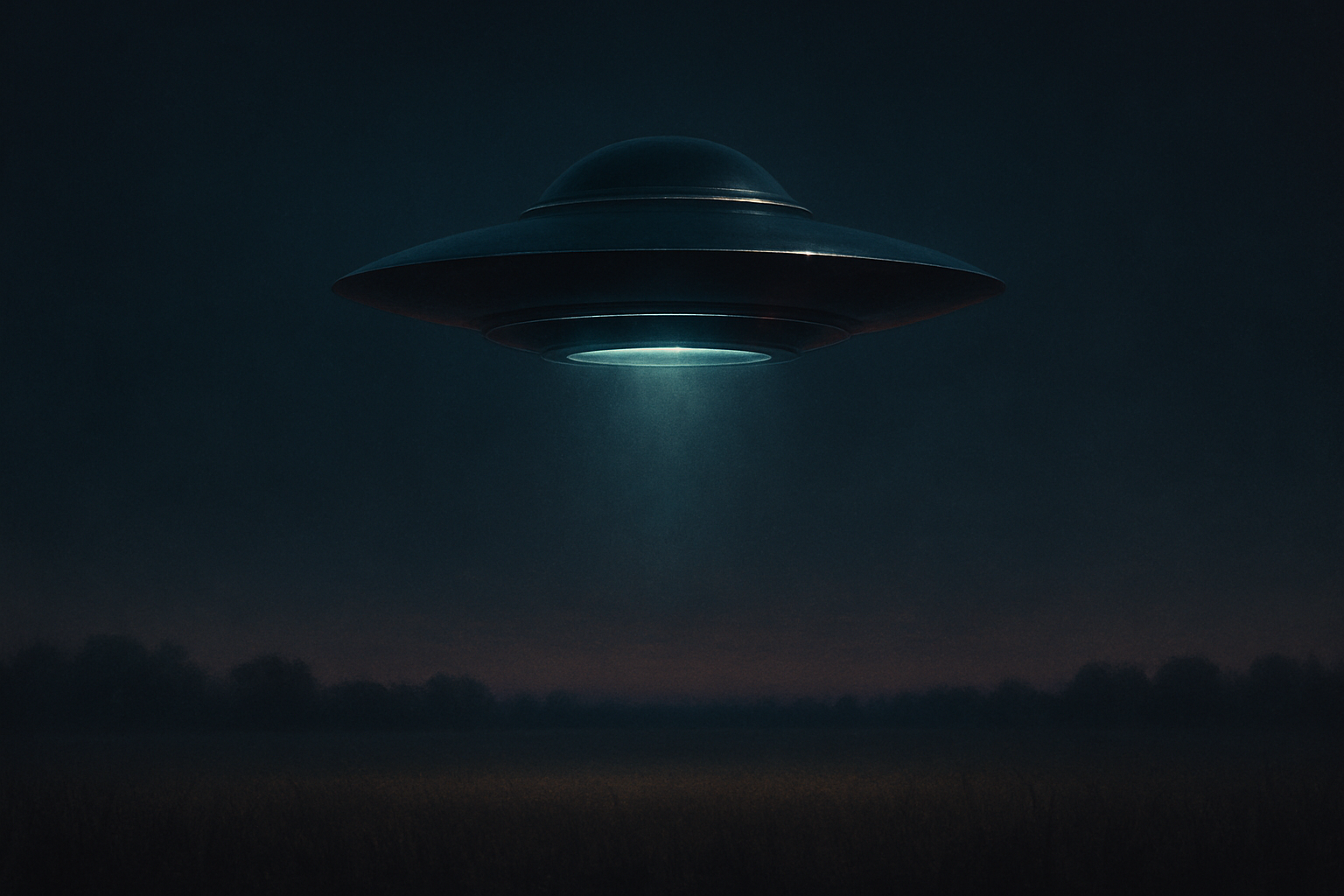
3 Body Problem (2024)
Netflix's adaptation of Liu Cixin's novel drags "first contact" away from saucer sightings and back into cold science and game theory — and floats the unsettling "dark forest" answer to why the cosmos seems silent.
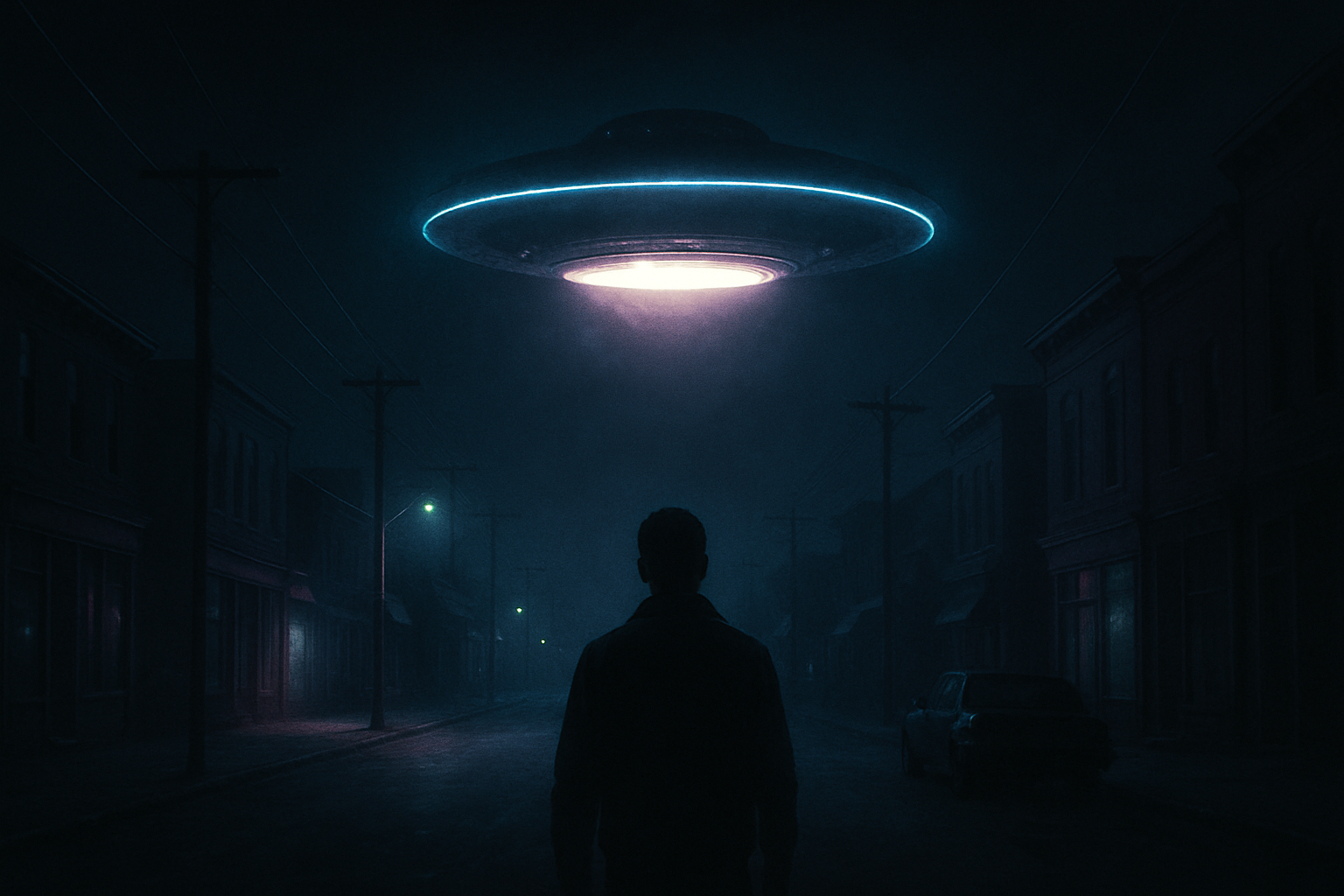
UFO (1970–1971)
Gerry Anderson's British sci-fi series invents a secret defence organisation, SHADO, fighting alien incursions — putting 'governments quietly hiding alien contact' on screen more than two decades before The X-Files.
V (1983 miniseries)
A 1983 NBC miniseries in which vast saucer motherships hover over the world's cities and the friendly 'Visitors' turn out to be reptiles in human disguise — an alien-invasion story built as an allegory of fascism.
Books
Childhood's End (1953)
Arthur C. Clarke's 1953 novel in which vast, silent motherships hover over Earth's cities as benevolent alien "Overlords" quietly usher humanity toward a final transformation.
Communion (1987)
Whitley Strieber's 1987 bestselling memoir of first-person contact with "the visitors" — and the source of the wide-eyed Grey face that became the world's default image of an alien.
Contact (1985 novel)
Carl Sagan's 1985 novel imagines humanity's first contact not as a saucer invasion but as a radio signal from Vega, grounded in real SETI science.
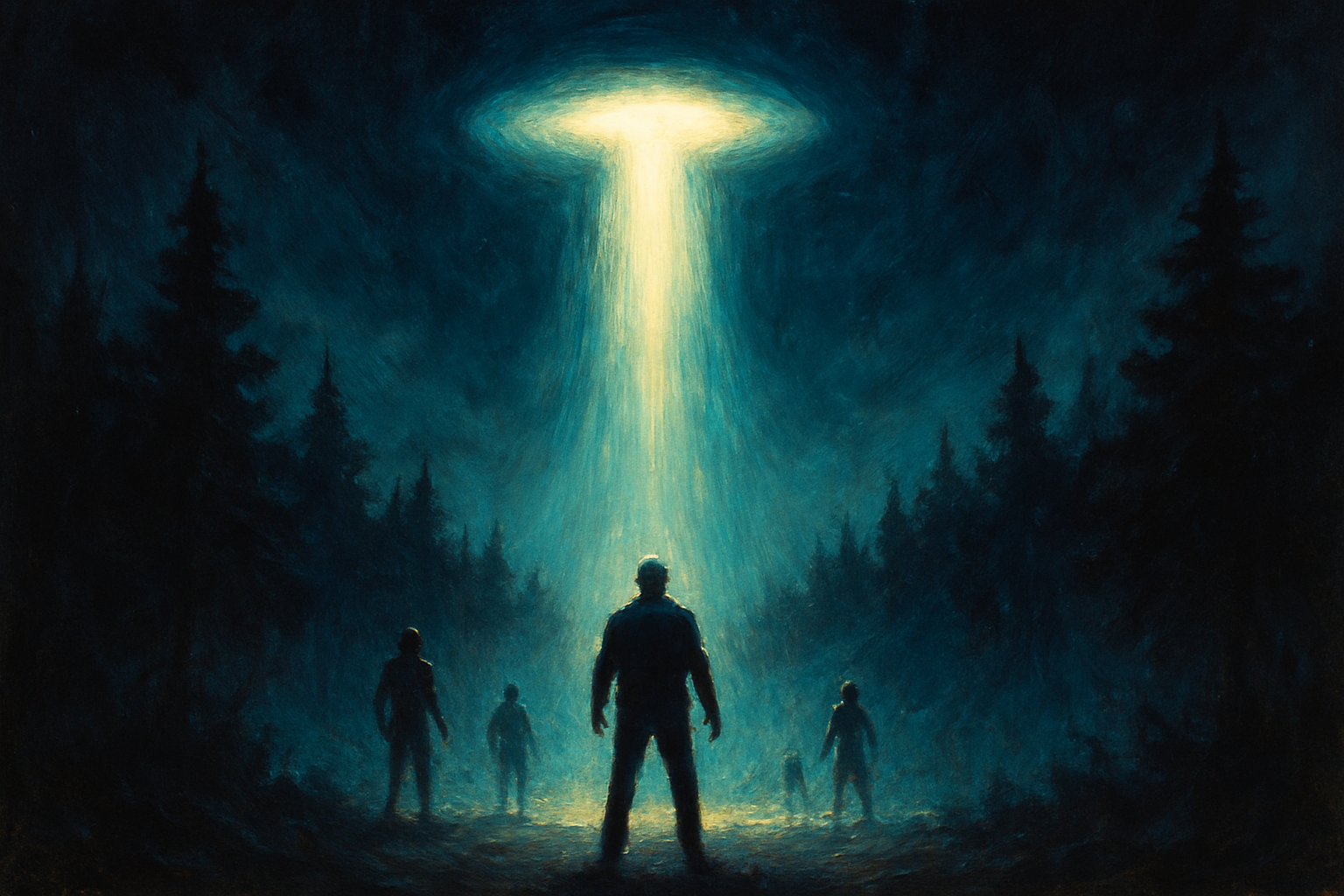
Passport to Magonia: From Folklore to Flying Saucers
Jacques Vallée's 1969 classic argues that modern UFO reports are the latest chapter in an age-old tradition of fairy and folklore encounters, unsettling the tidy nuts-and-bolts spaceship story.
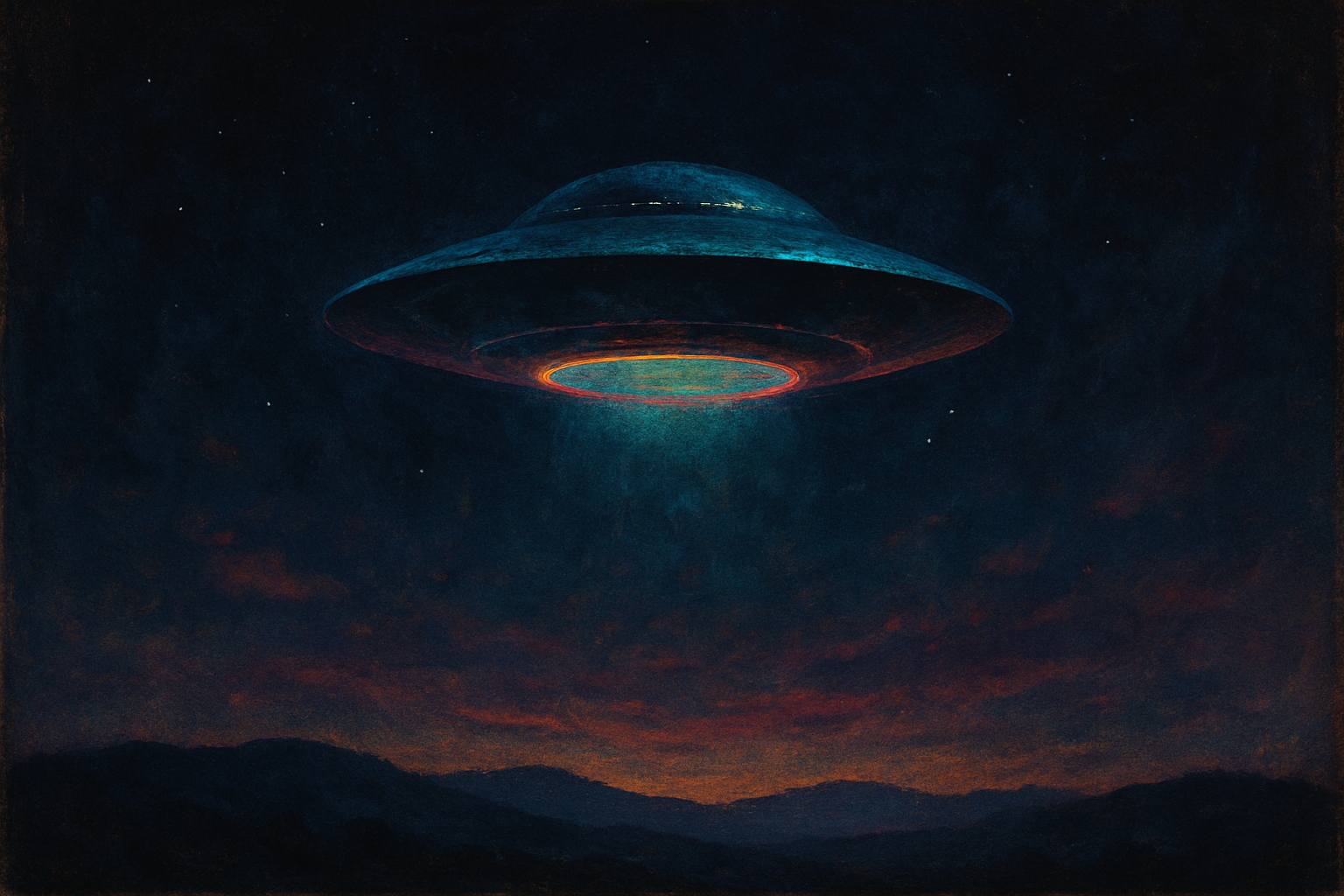
Roadside Picnic (1972)
The Strugatsky brothers' 1972 Soviet SF classic: aliens visit Earth, ignore us entirely, and leave behind six lethal, treasure-strewn "Zones."
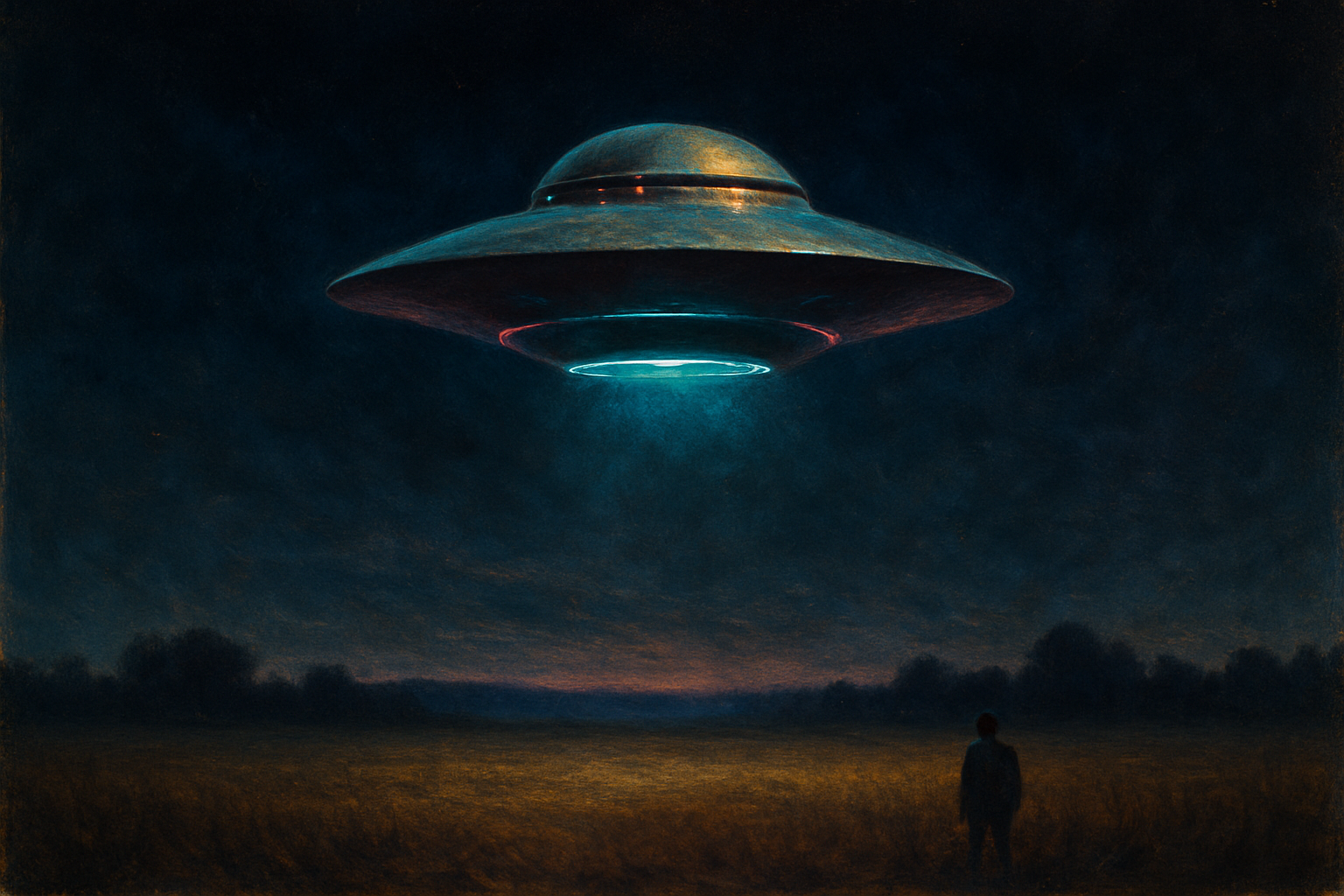
Slaughterhouse-Five (1969)
Kurt Vonnegut's anti-war classic sends its shell-shocked hero Billy Pilgrim to the planet Tralfamadore aboard a flying saucer, using alien abduction as a mirror for trauma rather than a report of contact.
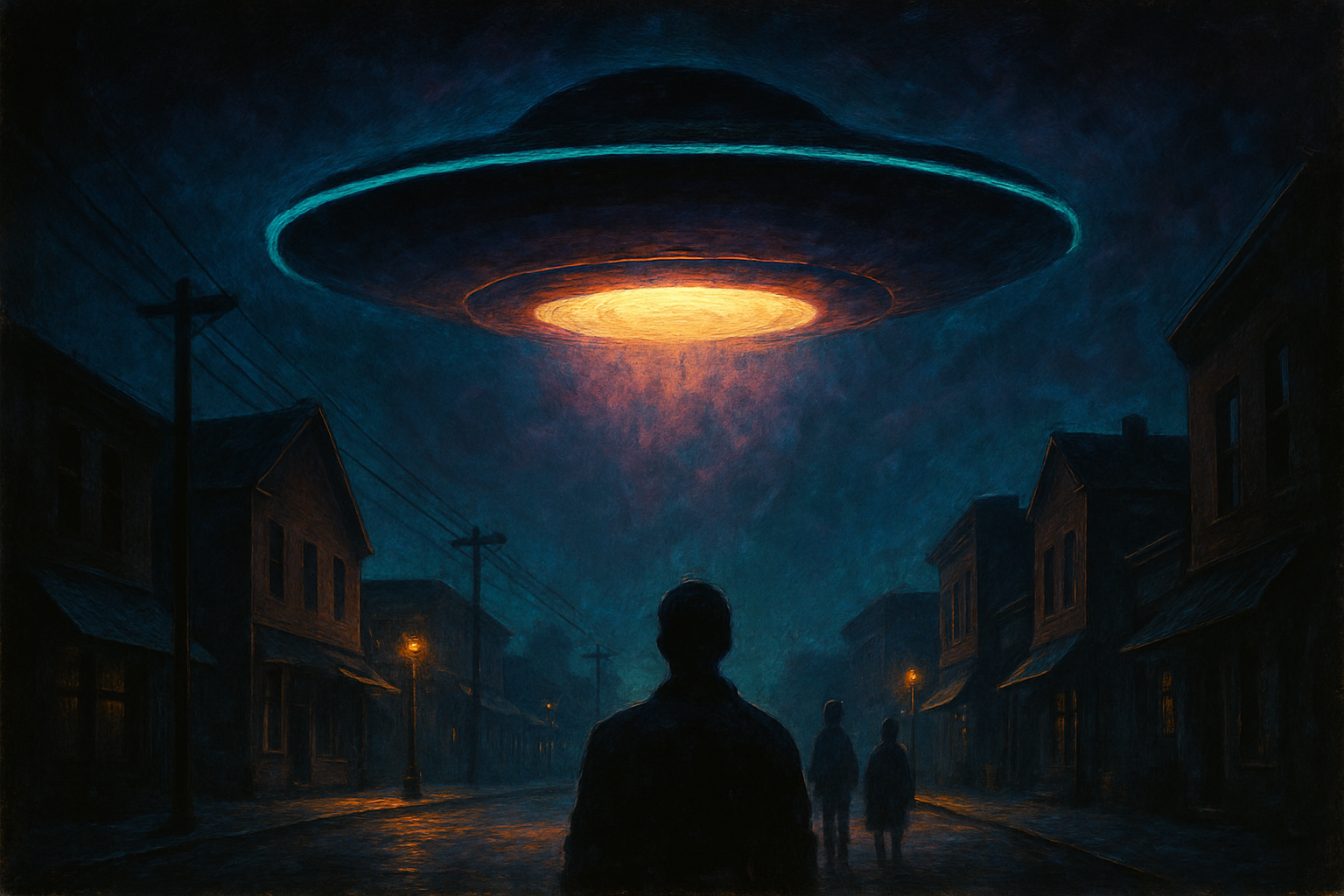
Stranger in a Strange Land (1961)
Heinlein's 1961 classic: a human born on Mars and raised by Martians returns to Earth carrying a radically alien mind and psychic powers — the book that turned the 'alien among us' into a template for a whole generation.
The Hitchhiker's Guide to the Galaxy (1979)
Douglas Adams's comic sci-fi classic. It opens by having Earth demolished by a Vogon constructor fleet to clear space for a hyperspace bypass — recasting the dreamed-of alien arrival as cold bureaucratic paperwork.
The Interrupted Journey (1966)
The 1966 nonfiction book that made the Betty and Barney Hill abduction a household story — arguably the shortest bridge between pop culture and the real case file.
The Mothman Prophecies (1975)
John Keel's 1975 first-person investigation weaves together the Mothman, aerial lights and Men in Black of Point Pleasant, West Virginia — a foundational text of American paranormal folklore.
The War of the Worlds (1898)
H.G. Wells's 1898 novel, widely regarded as the founding work of the alien-invasion genre: Martians fall to Earth in cylinders and stalk the land in three-legged war machines. Orson Welles's 1938 radio version later sparked a much-mythologized 'panic.'
Comics
Space Battleship Yamato (宇宙戰艦大和號, 1974)
A landmark space opera shaped by Leiji Matsumoto: in the year 2199 the alien Gamilas bombard Earth with radioactive bombs, and humanity refits the WWII battleship Yamato into a starship for a desperate voyage of hope.
Superman (Action Comics #1, 1938)
In 1938's Action Comics #1, Superman rockets to Earth from a dying world as an infant — a craft that may be the most-seen "arriving spaceship" in all of fiction.
UFO Robo Grendizer (Goldorak)
Go Nagai's 1975 super-robot manga and anime that recasts the flying saucer as both invader (the disc-shaped "saucer-beasts") and savior, and became a defining cultural phenomenon across Europe and the Arab world.
Watchmen (1986)
Alan Moore and Dave Gibbons's landmark graphic novel, whose finale stages a fabricated alien "squid" attack on New York to freeze the Cold War — treating the extraterrestrial threat as a lie to be dissected.
Games
Area 51 (2005)
Midway's 2005 first-person shooter turns the secret base into a hotbed of Grey aliens, an alien virus and a recovered-craft conspiracy — with voice work by David Duchovny and Marilyn Manson.
Destroy All Humans! (2005)
It flips the 1950s alien-invasion B-movie: you play Crypto, a saucer-flying alien, skewering Cold War panic, government cover-ups and Area 51 lore along the way.
Half-Life (1998)
A landmark first-person shooter that builds its horror from a physics experiment gone catastrophically wrong—tearing open teleport rifts to the alien borderworld of Xen.
Mass Effect (2007)
BioWare's 2007 space-opera RPG. You play Commander Shepard, uncovering a recurring galaxy-wide "harvest" just as humanity takes its place among the stars.
Prey (2017)
Arkane's 2017 immersive sim strands the player aboard Talos I, a station orbiting the Moon, against the Typhon — aliens that can disguise themselves as everyday objects.
X-COM: UFO Defense (UFO: Enemy Unknown)
A landmark 1994 strategy game in which you run X-COM, a secret force fighting an alien invasion — intercepting saucers, recovering wreckage, autopsying aliens and reverse-engineering their tech. It turns post-Cold-War UFO paranoia into a playable global-defense system.
Urban legends
The Area 51 Legend
How a genuine, now-acknowledged U.S. Air Force test site in the Nevada desert became popular culture's headquarters for the alien-craft cover-up.
Black-Eyed Children (BEK)
A US urban legend born on 1990s internet forums: pale, wholly black-eyed children who knock after dark and insist that you "let them in."
Cattle Mutilations (1970s–)
A panic legend that swept the American West from the 1970s: cattle found dead, their soft tissue removed with seemingly surgical precision and the carcasses apparently drained of blood, blamed on aliens and unmarked black helicopters — yet official inquiries kept pointing to natural predation and decay.
Dulce Base (1979–)
A New Mexico legend of a secret underground alien base — a debunked hoax lineage traceable to official disinformation and the one man it destroyed.
Hangar 18 (the Wright-Patterson storage legend)
Hangar 18 is an American urban legend holding that the debris and alien bodies from the 1947 Roswell crash were secretly locked away in a hangar coded "Eighteen" at Wright-Patterson Air Force Base in Ohio.
Majestic 12 (The MJ-12 Documents)
An anonymous roll of film in 1984 unveiled the alleged "MJ-12" documents, claiming a secret twelve-man panel managed recovered alien wreckage after Roswell — papers the FBI and document examiners judged to be forgeries.
Men in Black (The MIB Legend)
The "Men in Black" are ufology's most enduring urban legend: black-suited visitors claiming government authority who warn witnesses into silence. The motif is widely traced back to the 1947 Maury Island affair.
Reptilians (Shape-shifting Reptilian Conspiracy)
A modern conspiracy belief that shape-shifting reptilian aliens from Draco secretly rule humanity by posing as world leaders — popularized by David Icke, with no credible evidence behind it.
The Space Brothers & the Contactees
In the 1950s a wave of American "contactees" claimed face-to-face meetings with benevolent "Space Brothers" from Venus and beyond—fair-haired, Nordic-looking pilots of silver saucers bearing a message of peace and nuclear disarmament.
The Greys (Archetype)
Small, grey-skinned beings with bulbous hairless heads and huge black almond eyes: the Greys aren't from any single work but the "default alien" that coalesced across media after 1961.